
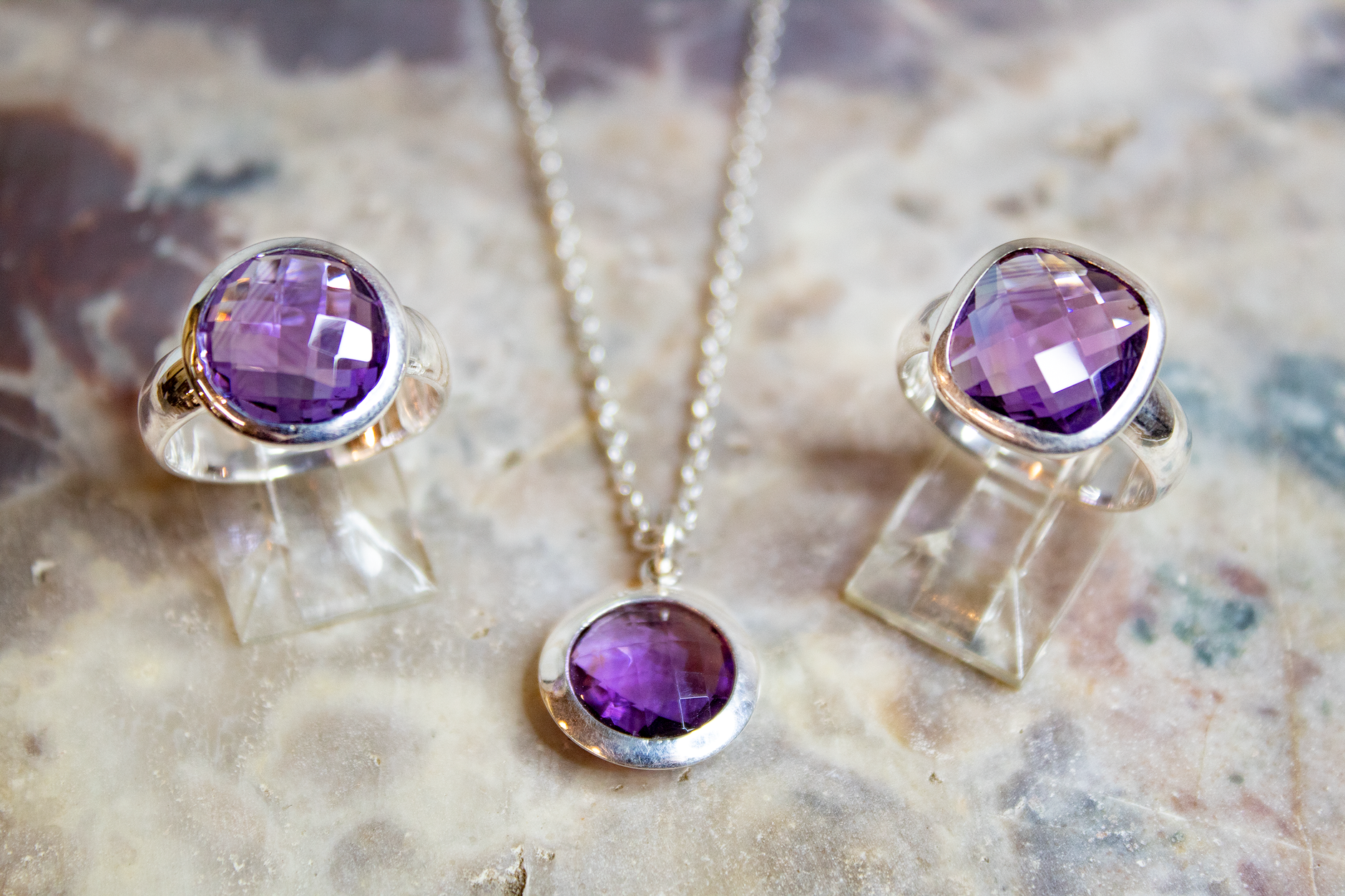
The best adjustable gemstone ring closes securely, sits snugly below the knuckle, and protects its stone with an appropriate setting. An adjustable gemstone ring has a shank—the metal band—that changes or opens to accommodate the finger, but safe wear depends on its mechanism, fit, gemstone, cleaning needs, and repair support. Do not treat "adjustable" as a guarantee of comfort or durability. Examine how the ring operates, whether the setting suits the gem, and who can service the mechanism before buying.
Table of Contents
- Understand the adjustment mechanism
- How should the ring fit?
- Match the setting to the gemstone
- Clean without harming the setting
- Plan for inspection and repair
Understand the adjustment mechanism
Adjustable shanks are not one standardized design. Stuller, for example, describes its CLIQ hinged shank as opening and closing around the finger's base for a snug fit, particularly for people with large knuckles or arthritis.
Ask the seller to demonstrate the exact opening and closing procedure. The mechanism should feel controlled, and the closed ring should remain secure during ordinary hand movement without pinching the finger. Before purchasing, confirm:.
- How the shank opens, closes, and locks
- Whether adjustment requires tools or professional help
- Which parts are covered by the seller's service policy
- Whether a local jeweler can repair that specific mechanism
How should the ring fit?
A properly fitted ring must clear the knuckle while remaining snug where it rests. The Gemological Institute of America notes that finger size can change with temperature, humidity, altitude, and time of day in its ring-sizing guidance. A hinged shank can help when the knuckle is much wider than the finger base.
A conventional ring sized only to pass the knuckle may rotate once it reaches the narrower wearing position. Test the ring when your hands feel typical rather than unusually swollen or cold. Close it fully, flex your fingers, and check for pinching, unwanted rotation, or a gap that lets the ring shift freely.
Match the setting to the gemstone
The shank secures the ring to your finger; the setting secures the gemstone. Raised prongs can catch fabric and require periodic checks, while additional properly finished prongs provide more backup if one is damaged. For diamonds, GIA explains that six prongs offer more redundancy than four, while a bezel surrounds the stone and helps shield its girdle from impacts.
Pointed shapes benefit from V-prongs or bezels, according to GIA's diamond protection guidance. Gem durability also matters. Opal and tanzanite face greater impact risk in rings, so protective settings and special-occasion wear may be more suitable than constant use. inspect vulnerable corners and exposed stone edges before accepting the ring.
Clean without harming the setting
For most rings, use warm water, mild soap, and a soft brush. Avoid bleach, chlorine, abrasives, and toothpaste because they can damage metal or compromise prongs.
Ultrasonic cleaning is not a universal shortcut. GIA warns that vibration can dislodge stones from insecure mountings and may harm fracture-filled, porous organic, impregnated, or certain heat-treated gems in its ultrasonic-cleaner guidance. Use this conservative routine when the gem's treatment or durability is uncertain:.
- Place the ring in warm, mildly soapy water
- Brush gently around the setting without forcing the prongs
- Stop if the stone moves or a prong catches the brush
- Ask a jeweler to clean it when the gem identity or treatment is unknown
Plan for inspection and repair
Check the ring before wear if it has been struck, caught on fabric, or started closing differently. Warning signs include a moving stone, raised prong, unreliable closure, stiff hinge, unusual gap, or repeated rotation despite a previously comfortable fit. A hinged-shank repair requires relevant bench experience.
Stuller instructs jewelers to keep soldering heat away from hinges to preserve flexibility and to test hinge operation afterward, making service compatibility an important buying question in its repair guidance. Ask the seller to identify an authorized or experienced repair option before the warranty ends. Do not keep bending, forcing, or wearing a ring when its closure or gemstone setting has become unreliable.