
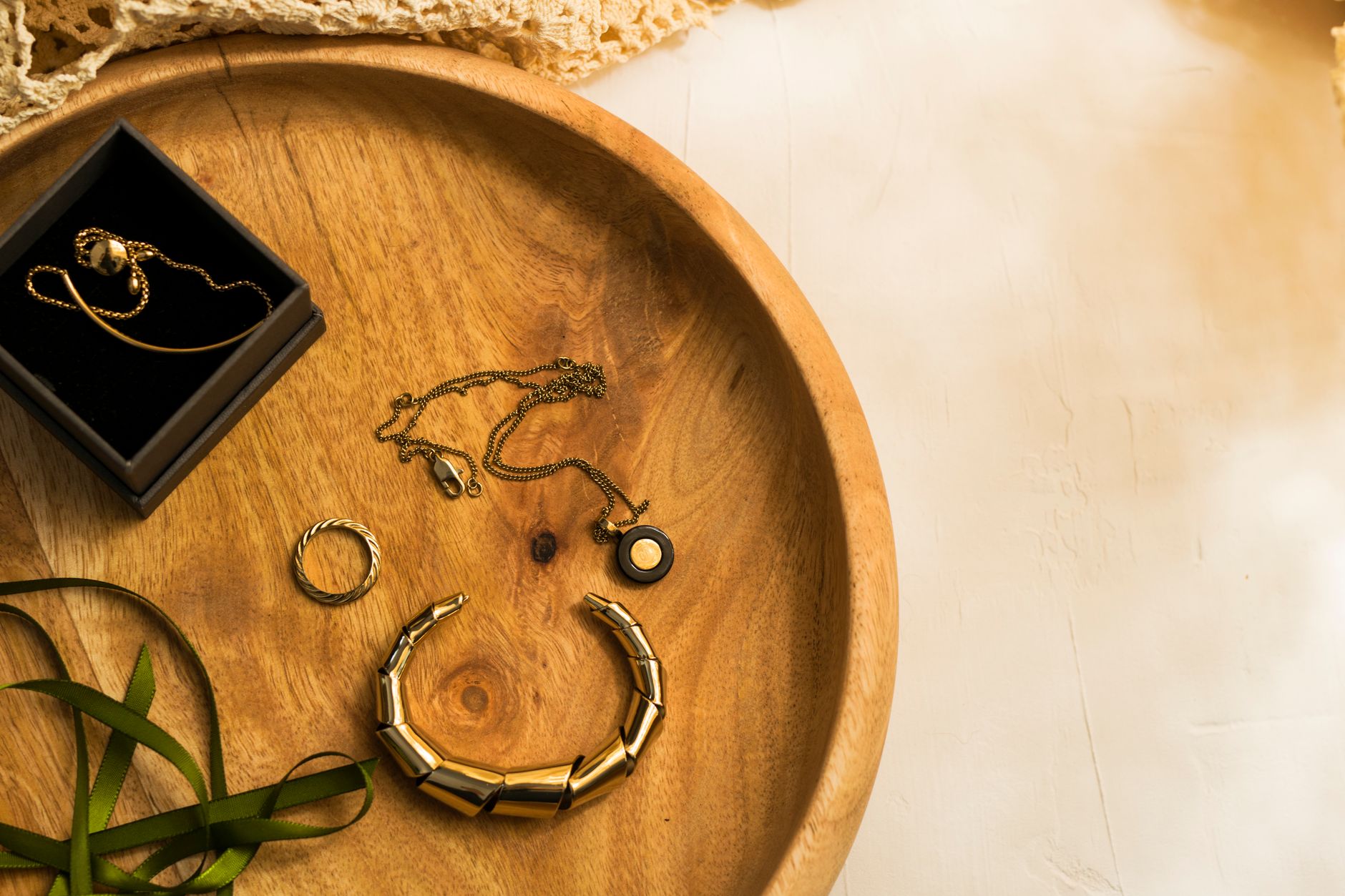
If a gold vermeil ring looks polished through, its gold coating may have worn thin enough to reveal the sterling silver beneath. Photograph the color change, its location, nearby scratches, the hallmark, and the whole ring before cleaning or polishing it again. Gold vermeil is sterling silver covered with a layer of gold. A silvery patch can indicate coating loss, but reflections, residue, tarnish, and uneven finishing can create a similar appearance.
Table of Contents
- Signs That the Gold Layer Has Worn Through
- What Else Could Cause the Appearance?
- Photographs That Show the Problem Clearly
- Preserve Evidence Before Seeking a Remedy
- What a Jeweler Can Determine
Signs That the Gold Layer Has Worn Through
Exposed silver usually appears cooler, whiter, or grayer than the surrounding gold. The boundary may be gradual rather than sharp because the coating often becomes progressively thinner before the base metal shows clearly. Wear commonly develops on raised details and surfaces that rub against fingers, desks, tools, or neighboring rings.
The underside of the band and the edges around a setting deserve close inspection. A pale area is more persuasive evidence of coating loss when it: Lighting can mislead. A smooth gold surface may reflect a white wall or window and look silver in one photograph, then return to gold when the ring moves.
- Remains visible from several angles
- Does not disappear after a gentle dry wipe
- Occurs with fine scratches or flattened detail
- Appears on a high-contact surface
- Contrasts with protected recesses that remain gold-colored
What Else Could Cause the Appearance?
Polishing compound, soap, lotion, and hard-water deposits can leave a light or cloudy film. Residue often gathers beside stones, inside engraving, or along the inner edge of the band instead of following normal contact points. Dark gray or black discoloration may be tarnish on exposed silver. It can also appear where the coating is damaged or where substances collect beneath settings.
A photograph alone may not distinguish tarnish from debris. A new or lightly worn ring with an uneven color could have inconsistent coating or finishing. By contrast, a slowly expanding patch on the underside of an older ring is more consistent with ordinary abrasion. Chemicals and repeated friction can accelerate surface damage. Household cleaners, abrasive jewelry cloths, swimming-pool chemicals, cosmetics, and contact with harder jewelry are possible contributors, but appearance alone cannot identify a single cause.
Photographs That Show the Problem Clearly
Start with an untouched record. Photograph the ring before applying cleaner, polish, toothpaste, or a treated cloth, since further rubbing may enlarge the patch or remove useful residue. Take a short, systematic set: Use bright, indirect daylight or a diffused lamp against a plain neutral background.
Avoid filters and strong direct flash. Tap the affected area to focus, move the phone closer without using excessive digital zoom, and take several angles to rule out reflections. Keep the original image files. Cropped copies are useful for pointing out the defect, but originals preserve the wider context and image information.
- One photograph of the entire ring from above
- One view of each side and the underside
- A close-up of the affected patch
- A matching close-up of an unaffected gold-colored area
- An angled view that shows scratches and surface texture
Preserve Evidence Before Seeking a Remedy
Stop polishing once coating loss is suspected. Conventional metal polish removes material, and even a polishing cloth can make a small worn area larger. Store the ring separately in a clean, dry container. Keep the receipt, product description, care instructions, packaging, and any earlier photographs showing its condition.
Record when the change first appeared and how often the ring was worn. If contacting the seller, describe observations rather than asserting an unproven cause. For example: "A silver-colored patch has appeared on the underside and remains visible under different lighting." Include the wide view, close-up, hallmark, and proof of purchase. Do not use an acid test or scratch test on the ring. Those methods can leave permanent marks and may complicate a return, warranty request, or professional assessment.
What a Jeweler Can Determine
A jeweler can inspect whether the pale area is residue, exposed sterling silver, or another form of surface damage. Magnification may reveal coating loss, abrasion lines, pits, or remaining material in protected recesses. Visual inspection may not establish the original coating thickness or prove why it failed. Those questions can require specialized surface testing and comparison with the seller's specifications.
If the ring has sentimental value, ask about cleaning, replating, stone security, and the effect of refinishing before authorizing work. Replating can restore color, but polishing performed beforehand may soften engraving, edges, and fine texture. For a return or warranty request, obtain the seller's decision before allowing repair. Once another jeweler polishes or replats the ring, the original condition may no longer be available for inspection.