
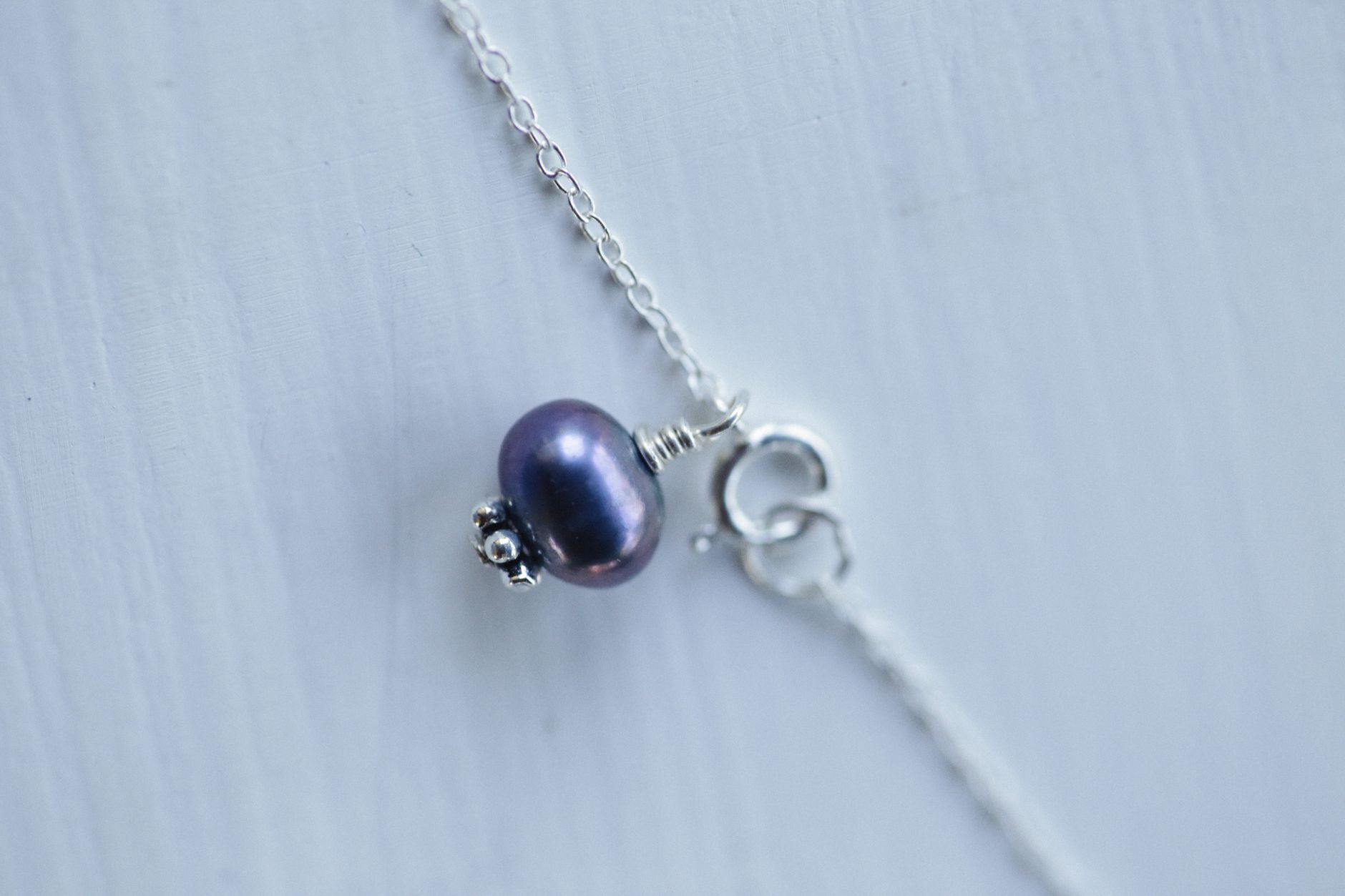
A jeweler can inspect and photograph the failed clasp under magnification, then use X-ray fluorescence (XRF) to analyze its metal without damaging it. XRF identifies elements by measuring the X-rays a material emits, avoiding filing, cutting, or acid testing. These checks may reveal visible damage, coatings, plating, or unexpected metals. They cannot reliably prove why the clasp failed or whether every matching piece has the same weakness.
Table of Contents
- What can a visual inspection show?
- What does XRF reveal?
- Where can XRF mislead?
- Why not pull-test the original clasp?
- What should you ask the jeweler to do?
What can a visual inspection show?
A jeweler can examine the clasp under magnification and directional lighting. Detailed photographs can preserve the clasp's condition and record surface damage, coatings, and other visible features without altering it, consistent with GIA's examination methods. Ask for images of the complete clasp and close-ups of the failed area.
The record is most useful when it distinguishes observations from conclusions—for example, documenting a visible separation without claiming what caused it. Visual inspection has limits. Surface evidence may suggest where the failure occurred, but it does not measure the clasp's breaking strength or establish the condition of unseen material.
What does XRF reveal?
XRF can identify the elements present in precious-metal jewelry and may detect plating. The Sheffield Assay Office describes XRF as non-destructive and says it can confirm fineness using certified reference materials, identify base-metal elements, and measure plating thickness. That makes XRF useful when the clasp's material is disputed.
It can help assess whether the tested area contains gold, silver, platinum-group metals, or base-metal elements without removing a sample. Request a written report that identifies the tested location. A reading from the clasp should not automatically be treated as a composition result for every link, joint, or decorative component.
Where can XRF mislead?
XRF is a surface-sensitive composition test, not an infallible description of everything beneath the surface. GIA found that thick gold plating, or gold plating over a gold base, can produce misleadingly high apparent purity results in some circumstances, as its 2025 laboratory note explains. Treat the result as evidence about the tested area and method.
Ask whether the instrument detected plating, whether coating thickness affected the reading, and whether the jeweler can distinguish the surface from the underlying metal without destructive testing. An unexpected base-metal reading also does not automatically prove misrepresentation. The FTC's Jewelry Guides exempt the snap tongue—the fastening part of some bracelet and necklace clasps—from assay for quality, so that component may legitimately use a sturdier base metal.
Why not pull-test the original clasp?
A tensile-strength test is destructive. Under SATRA TM276, the jewelry loop is closed with its clasp and pulled until it breaks; the test records the maximum force and failure mode. That procedure can quantify how a sample fails, but it cannot preserve the customer's only failed clasp.
It may also erase or complicate evidence already present at the fracture or separation point. One destroyed clasp cannot establish the production quality of every matching piece. SATRA recommends testing multiple replicas when a product contains multiple components, making representative samples more appropriate for strength testing.
What should you ask the jeweler to do?
Start with tests that preserve the evidence: There is no published universal ISO pass-or-fail benchmark for spring-clasp performance. ISO/AWI 26049, intended to address technical requirements and test methods for jewelry spring clasps, remained under development as of September 2026.
- Photograph the complete item and clasp before handling or repair.
- Record close-ups under magnification and directional lighting.
- Identify the exact component and location that failed.
- Use XRF if metal content or plating could matter.
- Keep XRF findings separate from conclusions about failure cause.