
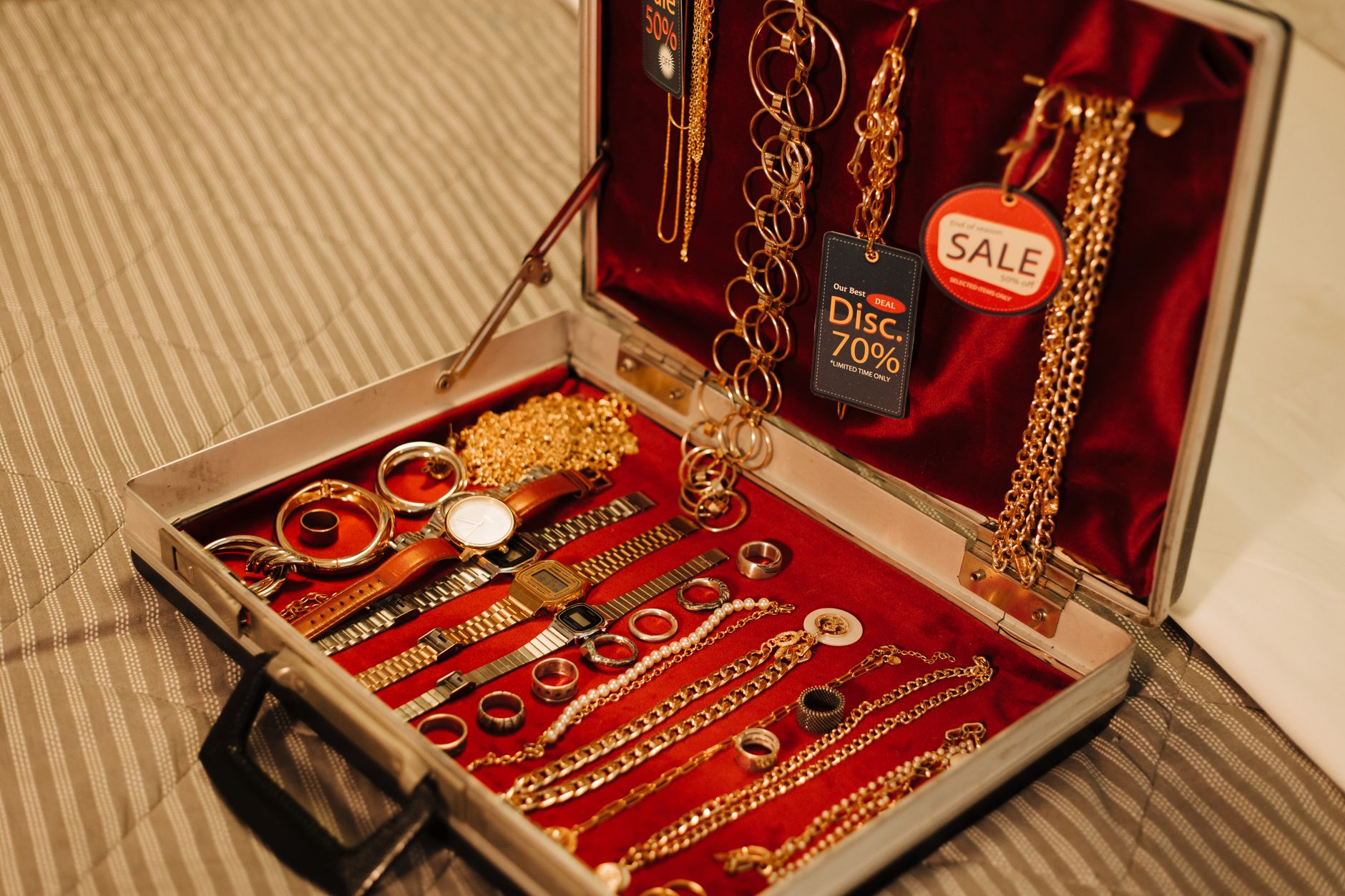
For August 2026, jewelry buyers should verify composition, origin, treatments, and return terms before paying. The essential facts are that karat describes gold content, plating is a coating, carat measures diamond weight, and diamond origin may require laboratory identification. Labels answer only part of the buying question. Written disclosures and sales terms help buyers compare pieces accurately and understand future care needs.
Table of Contents
- What do gold and silver marks mean?
- Can you identify a lab-grown diamond by sight?
- Does a higher carat weight mean a better-looking diamond?
- Which gemstone and pearl details matter?
- What should you confirm before paying?
What do gold and silver marks mean?
gold karat measures purity in 24 parts. The Federal Trade Commission explains that 18K contains 18 parts gold and six parts other metals; 14K contains 14 parts gold and 10 parts other metals. Plated jewelry is different from solid-karat gold. Gold plating eventually wears away, depending on use and coating thickness.
"Gold flashed" and "gold washed" describe thinner coatings that wear faster. "Sterling" or "sterling silver" means 92.5% pure silver and is often marked 925. Silver plate is only a silver layer over base metal. These distinctions are detailed in the FTC's precious-metal jewelry guidance.
Can you identify a lab-grown diamond by sight?
not reliably. Natural and laboratory-grown diamonds have essentially the same chemical, optical, and physical properties, according to the Gemological Institute of America's identification guidance. They can look identical, so buyers who care about natural origin need laboratory identification rather than an eye test.
GIA says its laboratory-grown diamond reports state color, clarity, growth method, and detectable post-growth treatment. It also laser-inscribes the lab-grown diamonds it examines as an added identification safeguard. Ask whether the stone is natural or laboratory-grown, then match that representation to the report. A seller's description and the laboratory document should identify the same stone type.
Does a higher carat weight mean a better-looking diamond?
No. Carat measures weight, not visible size, and it does not determine overall quality by itself. Diamond evaluation also considers cut, color, and clarity—the other three elements of the four Cs.
Two diamonds with the same carat weight can differ across those other factors. GIA advises buyers to compare all four characteristics and inspect the stone itself, not choose by weight alone, in its diamond-buying guide. Decide which qualities matter most before comparing stones. If visible appearance is the priority, do not assume the heaviest option will provide the preferred look.
Which gemstone and pearl details matter?
Some gemstone and pearl treatments can affect value or require special care. The FTC says sellers should disclose treatments that are nonpermanent, need special care, or significantly affect value. Natural pearls are rare, and most pearl jewelry uses cultured or imitation pearls.
Cultured pearls are generally valued by millimeter size and nacre quality. Buyers should obtain the pearl type in writing, according to the FTC's gemstone, diamond, and pearl guidance. For a gemstone or pearl purchase, ask the seller to record:.
- Whether the material is natural, laboratory-grown, cultured, or imitation
- The stated origin and weight
- Any disclosed treatments
- Any special care requirements
- The pearl type, when applicable
What should you confirm before paying?
The FTC advises shoppers to research seller complaints or reviews and obtain the return or refund policy in writing. A verbal assurance is not a substitute for documented terms that can be checked after the sale.
Review the sales paperwork before completing the purchase. Confirm that it records the represented origin, weight, treatments, and care statements. For a laboratory-grown diamond examined by GIA, keep the report that identifies its growth method and any detectable post-growth treatment.