

Picking the right belt is fundamentally about matching three elements: the buckle hardware that anchors your look, the leather or strap material that determines longevity and feel, and the overall proportion that either elevates or undermines your outfit. For luxury jewelry collectors, the belt often serves as a secondary canvas for precious metal craftsmanship—a chance to wear fine gold, silver, or platinum hardware that complements rather than competes with primary pieces. A heritage-quality belt with a hand-finished bronze buckle or a delicate 14k gold closure can outlive the wardrobe it dresses, provided you understand what makes construction matter and how materials age.
The mistake most people make is treating belts as purely functional accessories. They buy the first option that fits their waist and move on. But a belt that costs $40 and one that costs $400 often differ in how the leather is tanned, how the holes are punched, whether the stitching preserves structural integrity after five years of daily wear, and whether the buckle mechanism will still catch securely a decade from now. The difference between a disposable belt and a heirloom-quality one hinges on decisions you can verify before purchasing.
Table of Contents
- WHAT MAKES BELT HARDWARE MATTER MORE THAN MOST PEOPLE REALIZE
- LEATHER QUALITY AND THE HIDDEN COST OF SHORTCUTS
- WIDTH AND PROPORTION FOR LUXURY JEWELRY COORDINATION
- MATCHING METALS AND FINISHES WITH YOUR EXISTING COLLECTION
- COMMON DURABILITY FAILURES AND HOW TO AVOID THEM
- PERSONALIZATION AND MONOGRAMMING IN LUXURY BELTS
- CARE AND LONGEVITY—THE REAL MEASURE OF VALUE
- Conclusion
- Frequently Asked Questions
WHAT MAKES BELT HARDWARE MATTER MORE THAN MOST PEOPLE REALIZE
The buckle is where a belt reveals its true quality tier. On entry-level belts, buckles are often stamped pot metal with a thin plating that wears through within months, exposing a dull, oxidized base metal underneath. By contrast, luxury buckles use solid brass, stainless steel, or—for the highest-end pieces—precious metals like gold or silver. A solid brass buckle will develop a natural patina over years that many people find more beautiful than the original finish; a gold-plated buckle that’s too thin will show wear in specific contact points where your hands grip it most often.
The mechanism matters equally. A traditional pin buckle, where a metal prong pierces a hole in the leather, is the simplest and most durable design—it has endured for centuries because it works. Sliding buckles and ratchet systems offer micro-adjustments but introduce more moving parts and potential failure points. If you’re spending on luxury hardware, a solid-cast pin buckle in brass or bronze will outlast a novelty adjustable system in pot metal. Look for buckles with smooth edges and consistent finishing; rough surfaces or visible seams in the casting usually indicate lower quality production.
LEATHER QUALITY AND THE HIDDEN COST OF SHORTCUTS
Belt leather exists across a spectrum of durability that directly correlates with price, though not always in obvious ways. Full-grain leather—where the hide’s natural surface is preserved—costs more upfront but ages beautifully and gains character with use. It shows scratches, scuffs, and creases that many people initially see as damage but that actually constitute a wear patina unique to how you move and sit. Top-grain leather has the outer surface sanded and re-finished, which hides flaws but removes the leather’s natural breathability and ages less gracefully; after three years, it often looks exhausted rather than lived-in. Bonded leather and synthetic alternatives are the warning zone.
These materials are made from leather scraps glued together with polyurethane, and they will fail—typically at the buckle attachment point where stress concentrates. You might get two years of casual wear, but the leather will crack at the fold, the glue will separate, and the belt becomes unwearable. For a luxury belt, this is a sunk cost that provides no value. Tannage method matters too; vegetable-tanned leather costs more because it’s slower to produce but ages predictably and smells genuine. Chrome-tanned leather is faster and cheaper but can feel plastic-like and rarely improves with age.
WIDTH AND PROPORTION FOR LUXURY JEWELRY COORDINATION
Belt width affects how it sits on your frame and how much visual weight it carries. A narrow belt (under 1 inch) works as a subtle detail—ideal for coordination with delicate jewelry like fine gold chains or small pendant necklaces. A wider belt (1.5 inches to 2 inches) becomes a statement and can dominate a look if the rest of your jewelry is too delicate. This is where taste and proportion converge; a luxury jewelry collection built around statement pieces—chunky gold cuffs, large gemstone rings—pairs better with a wider belt that shares visual presence. A collection of understated fine jewelry pairs better with thinner, more refined belts.
Length measurement is often overlooked. Most belts are sold in even sizes, but waist measurements vary even within the same size category. A belt that’s slightly too short will ride uncomfortably and fail prematurely because the stitching at the end-point bears stress it wasn’t designed for. A belt that’s too long creates excess material at the fold, which catches and creases unnecessarily. When buying, measure from the buckle prong to the hole you actually use; that should be roughly 1.5 to 2 inches in, not at the very tip of the belt, which leaves no room for variation in how your clothing fits.
MATCHING METALS AND FINISHES WITH YOUR EXISTING COLLECTION
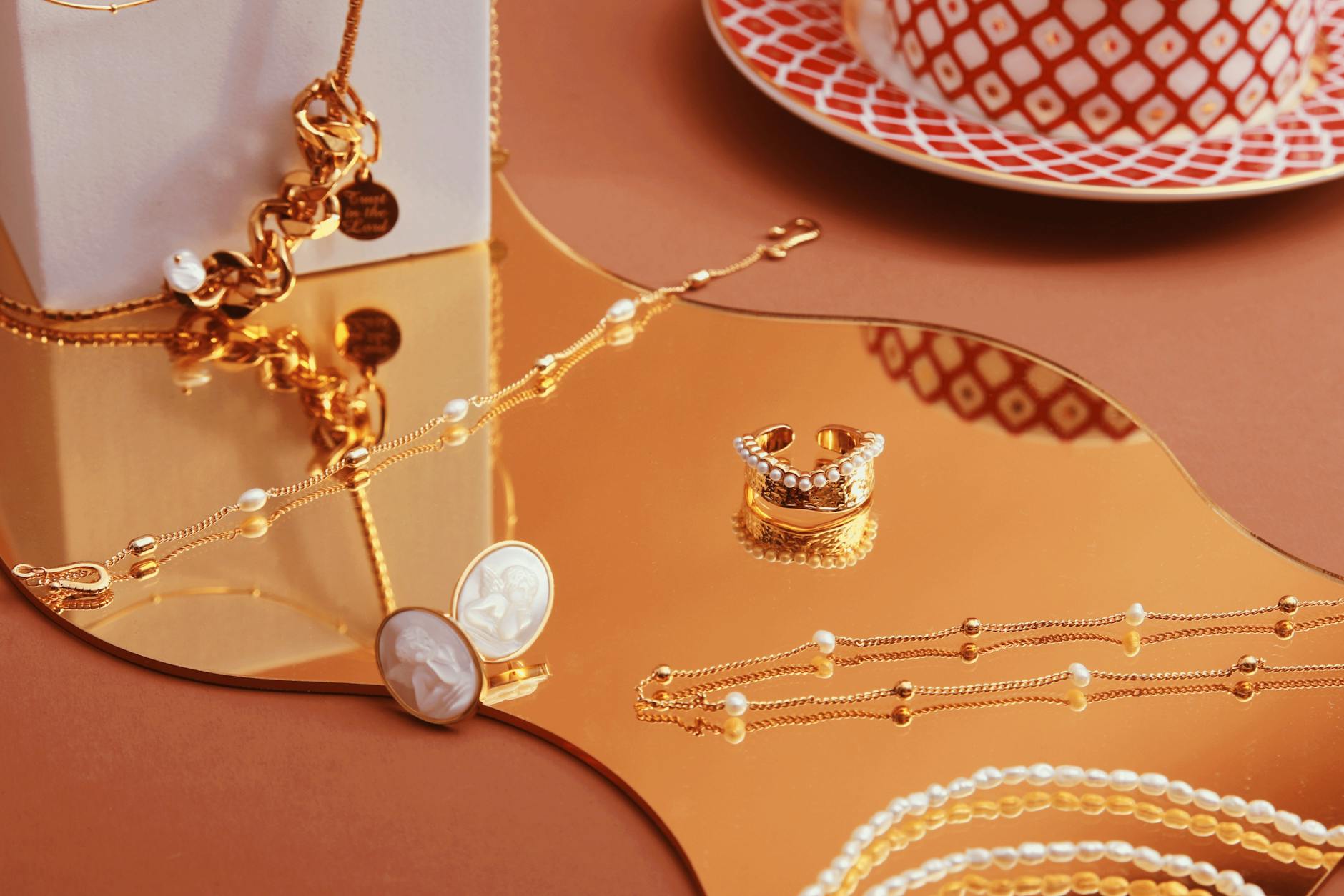
If you own fine jewelry, your belt buckle should either echo its metal or contrast intentionally. Mixing finishes—wearing yellow gold rings with a white gold belt buckle with a silver watch—reads as accidental rather than curated. The simplest approach: choose a buckle metal that matches your primary jewelry metal. If you wear mostly 18k gold pieces, a gold buckle makes intuitive sense. If your collection is mixed, a neutral like brushed stainless steel or bronze works as a bridge that doesn’t conflict.
Finish selection matters as much as metal choice. Polished finishes require maintenance; they show fingerprints and water spots and need periodic polishing to maintain their original shine. Matte, brushed, and oxidized finishes are more forgiving and often look more sophisticated because they don’t demand constant upkeep. A patinated bronze or brushed silver buckle requires nothing beyond casual cleaning and actually improves as it ages. For jewelry enthusiasts who already maintain fine pieces, adding a high-maintenance belt finish can feel like overkill.
COMMON DURABILITY FAILURES AND HOW TO AVOID THEM
The most common belt failure point is the buckle attachment—where the leather folds around the buckle loop. This area endures constant flex when you bend and sits, and poor construction here means the stitching separates or the glue gives way within a year. Quality belts use either a wrap construction (the leather wraps completely around the buckle loop) or rivets in addition to stitching. Check the underside of the belt; if you see only three or four stitches holding the buckle loop in place, that’s insufficient. Look for at least eight to ten stitches, ideally with reinforcing rivets or a secondary stitching line. The second-most-common failure is the pin buckle itself becoming loose.
This typically happens because the prong is shallowly seated in the buckle frame, allowing it to rock side-to-side with each use. Eventually, metal fatigue causes it to crack or the connection to weld fails. A quality buckle will have a deeply seated, smooth pin with no play when you apply side pressure. If a buckle wiggling is obvious when you examine it in-store, it will only worsen with use. Some luxury belt makers use friction-fit pins with no welds or screws, relying on precise engineering; others use visible set-screws or rivets. Both can work if executed correctly, but visible fasteners are easier to diagnose for quality.
PERSONALIZATION AND MONOGRAMMING IN LUXURY BELTS
Many high-end belt makers offer personalization—embossing your initials on the leather or even custom buckles with your initials cast in precious metal. This adds cost (typically $50 to $200 for engraving, more for custom casting) but creates a piece that’s unmistakably yours and less likely to be confused with someone else’s if left in a coat room. The limitation: a personalized belt loses versatility when resold, and monogrammed luxury goods can feel dated if your taste or initials change.
If you choose personalization, placement matters. Initials on the underside of the belt (visible only to you) are timeless and private. Initials on the visible side date quickly and read as fashion rather than craftsmanship. A custom buckle with a symbol or crest—a family crest, personal insignia, or understated hallmark—ages better than lettering and feels more like a heirloom piece.
CARE AND LONGEVITY—THE REAL MEASURE OF VALUE
A luxury belt’s lifespan is directly tied to maintenance, but the required care is minimal if you understand it. Full-grain leather improves with occasional conditioning using mink oil or a quality leather balm, applied every six to twelve months depending on climate. This keeps the leather supple and prevents cracking. Polished metal hardware benefits from occasional wiping with a microfiber cloth, and tarnished silver or bronze buckles can be lightly cleaned with a soft brush and water.
These are five-minute tasks that cost almost nothing. The forward-looking reality: well-made belts increasingly come from heritage European makers or independent craftspeople rather than mass-market brands. As fast fashion dominates retail, the market for quality belts has consolidated into either ultra-luxury brands (which command premium prices) or small-batch makers whose work is comparable in quality but more transparent in construction. For jewelry collectors, supporting the latter often represents better value and more direct relationships with makers who stand behind their work.
Conclusion
Picking the right belt comes down to four verifiable factors: solid hardware construction without compromise, full-grain leather that ages rather than degrades, proportions that complement rather than compete with your jewelry, and metal finishes that coordinate intentionally with your existing pieces. A quality belt made well will serve as reliably at fifty years as it does at five, which means the cost-per-wear on a $300 leather belt often undercuts a $40 disposable replacement purchased every two years. The final step is to buy from a maker whose construction you can inspect and whose warranty is realistic.
A maker who stands behind a belt for ten years of normal wear is expressing confidence in their process. One who offers only a one-year guarantee is hedging risk. Ask questions about tannage, stitching counts, and buckle sourcing; makers who know and can articulate these details take pride in their work. That transparency is often the most honest indicator of quality you’ll find.
Frequently Asked Questions
How do I know if a belt will fit correctly?
Measure from the middle of where the prong sits to where you want the belt to end after threading. That distance should match the marked measurements on the belt. The hole you use regularly should be roughly 1.5 to 2 inches from the end; if it’s much closer or further, the belt is sized incorrectly for your waist.
Should I choose a wider or narrower belt?
Width is proportional taste. Narrow belts (under 1 inch) work as subtle details with delicate jewelry. Wider belts (1.5+ inches) function as statements and pair better with bold jewelry. There’s no universal “right” answer—choose based on your existing accessories and how much visual weight you want the belt to carry.
What’s the difference between full-grain and top-grain leather?
Full-grain preserves the hide’s natural surface and develops a visible patina with age; top-grain is sanded and re-finished to hide flaws but ages less gracefully. Full-grain costs more upfront and shows wear visibly, which many people find beautiful. Top-grain hides imperfections initially but can look exhausted after a few years.
How often should I condition leather?
Depending on climate and wear frequency, apply leather conditioner every six to twelve months. In dry climates or with frequent wear, condition every six months. In humid climates with light wear, annual conditioning is often sufficient. Conditioning prevents cracking and keeps the leather supple.
Are custom buckles worth the cost?
Custom buckles add $50 to $300 depending on materials and complexity. They make a belt unmistakably yours and feel heirloom-quality if done well. The tradeoff: they reduce the belt’s versatility and resale value. A personal symbol or crest ages better than lettering.
How do I choose a belt metal that matches my jewelry collection?
Match the buckle metal to your primary jewelry metal. If your collection is mixed, use a neutral like brushed stainless steel or bronze that bridges metals. Polished finishes require maintenance; matte or brushed finishes are more forgiving and age better.