
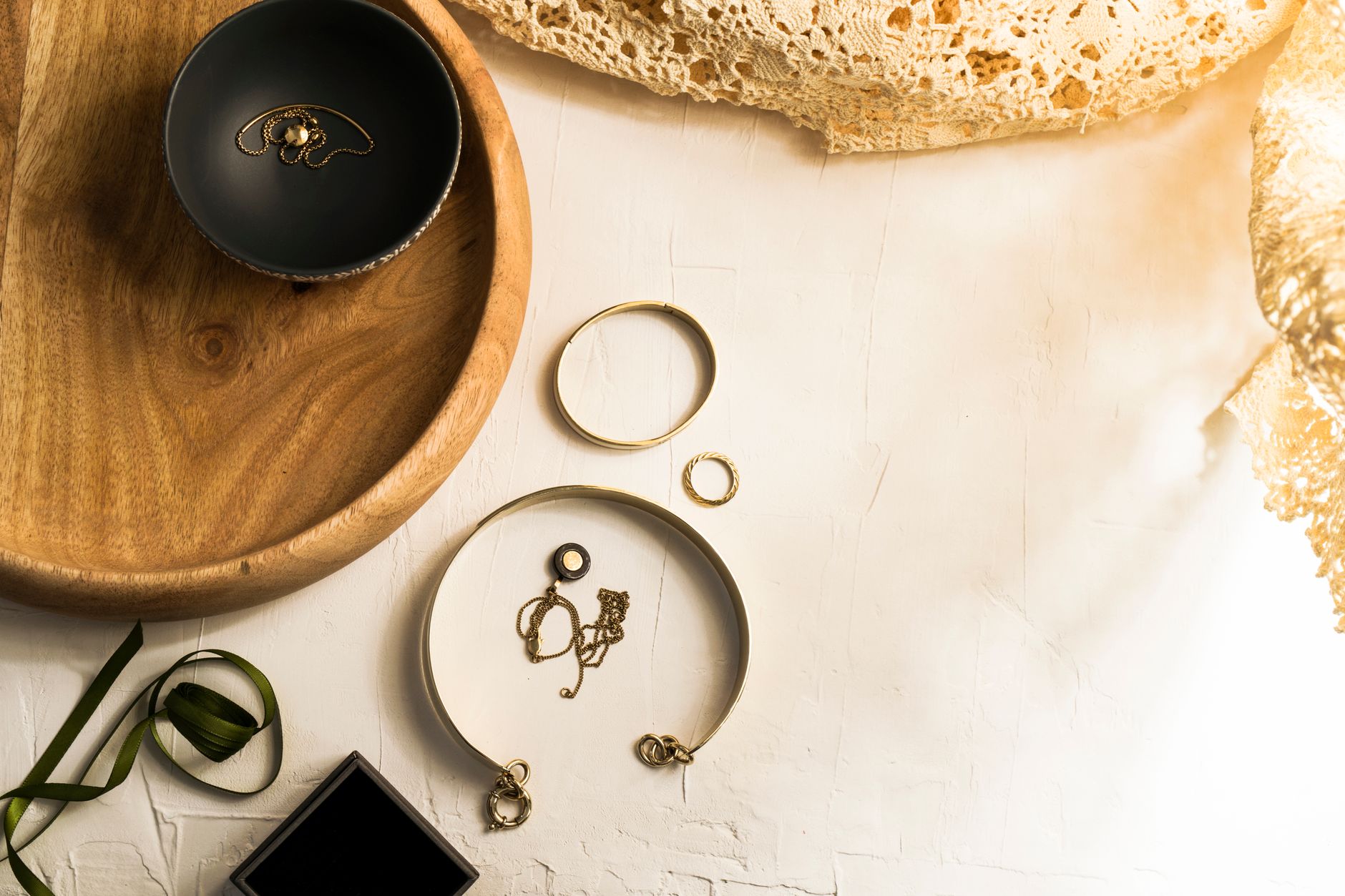
A gold vermeil necklace is sterling silver coated on its significant surfaces with a relatively thick layer of gold. Under U.S.
Federal Trade Commission guidance, vermeil uses gold of at least 10 karats and a minimum plating thickness equivalent to 2.5 microns of fine gold. Vermeil offers a gold appearance without the cost or weight of solid gold, but its surface can still wear away. The base-metal mark, stated plating thickness, and accurate product description matter more than luxurious-sounding marketing.
Table of Contents
- What metal lies beneath the gold?
- How thick is the gold finish?
- Does vermeil use pure gold?
- Which hallmarks should appear?
- Is a vermeil necklace the right choice?
What metal lies beneath the gold?
True vermeil has a sterling-silver base. A 925 or "sterling" mark means the alloy contains 925 parts silver per thousand; other metals provide strength. This base distinguishes vermeil from ordinary gold-plated jewelry, which may use brass, copper, stainless steel, or another alloy.
"Gold plated" describes a finish, not the metal underneath. Silver can tarnish where the coating wears thin or where unplated areas meet air and moisture. Some necklaces may also contain small functional parts made from other materials, so buyers with metal sensitivities should request a complete materials list.
How thick is the gold finish?
Manufacturers measure plating in microns, or thousandths of a millimeter. In U.S. trade guidance, vermeil requires a minimum thickness equivalent to 2.5 microns of fine gold across significant surfaces. Thickness and purity describe different things.
Microns measure how much coating is present; karats measure the proportion of gold within that coating. A thick 14-karat finish and a thin 24-karat finish can behave differently despite the higher karat number. A seller who calls a necklace vermeil should state the thickness clearly. Terms such as "heavy gold finish," "premium plating," or "vermeil-style" do not supply a measurable specification.
Does vermeil use pure gold?
Vermeil does not require pure 24-karat gold. The coating may be 10K, 14K, 18K, or another qualifying gold alloy, depending on the market and product description. Higher-karat coatings contain more gold but are generally softer.
Lower-karat coatings contain more alloying metals, which can improve hardness while changing color and sensitivity risks. Color alone cannot establish purity. rose gold usually gains its pink tone from copper, while white gold relies on pale alloying metals and may receive an additional surface treatment. The seller should disclose both the gold karat and any separate coating.
Which hallmarks should appear?
The most relevant hallmark is usually 925, S925, or "sterling," because the permanent body of the necklace is silver. A vermeil coating does not turn the piece into solid gold, so a stand-alone 14K or 18K mark could create the wrong impression. Some makers add marks such as "vermeil," "gold over silver," or abbreviations identifying the finish.
Practices vary by country, maker, necklace size, and local marking rules, so an absent stamp does not automatically prove misrepresentation. Check whether the clasp, tag, and seller's description agree. Warning signs include:.
- A vermeil claim paired with a brass, copper, or stainless-steel base
- A gold-karat stamp with no indication that the necklace is plated
- No stated plating thickness
- Conflicting metal descriptions across the listing and packaging
- Claims that vermeil will never tarnish, fade, or wear
Is a vermeil necklace the right choice?
Vermeil suits buyers who want a sterling-silver core, a substantial gold coating, and a lower price than solid gold. It may not suit someone seeking permanent gold color, frequent exposure to water, or jewelry intended for decades of continuous wear. Sweat, fragrance, cosmetics, chlorine, abrasion, and repeated polishing can shorten the coating's life.
Store the necklace dry, wipe it gently after wearing, and avoid silver polish on the gold surface. Before buying, ask for four facts: the base metal, gold karat, plating thickness, and materials used in the clasp or other components. If the seller cannot confirm all four, treat "gold vermeil" as an unverified marketing claim.