
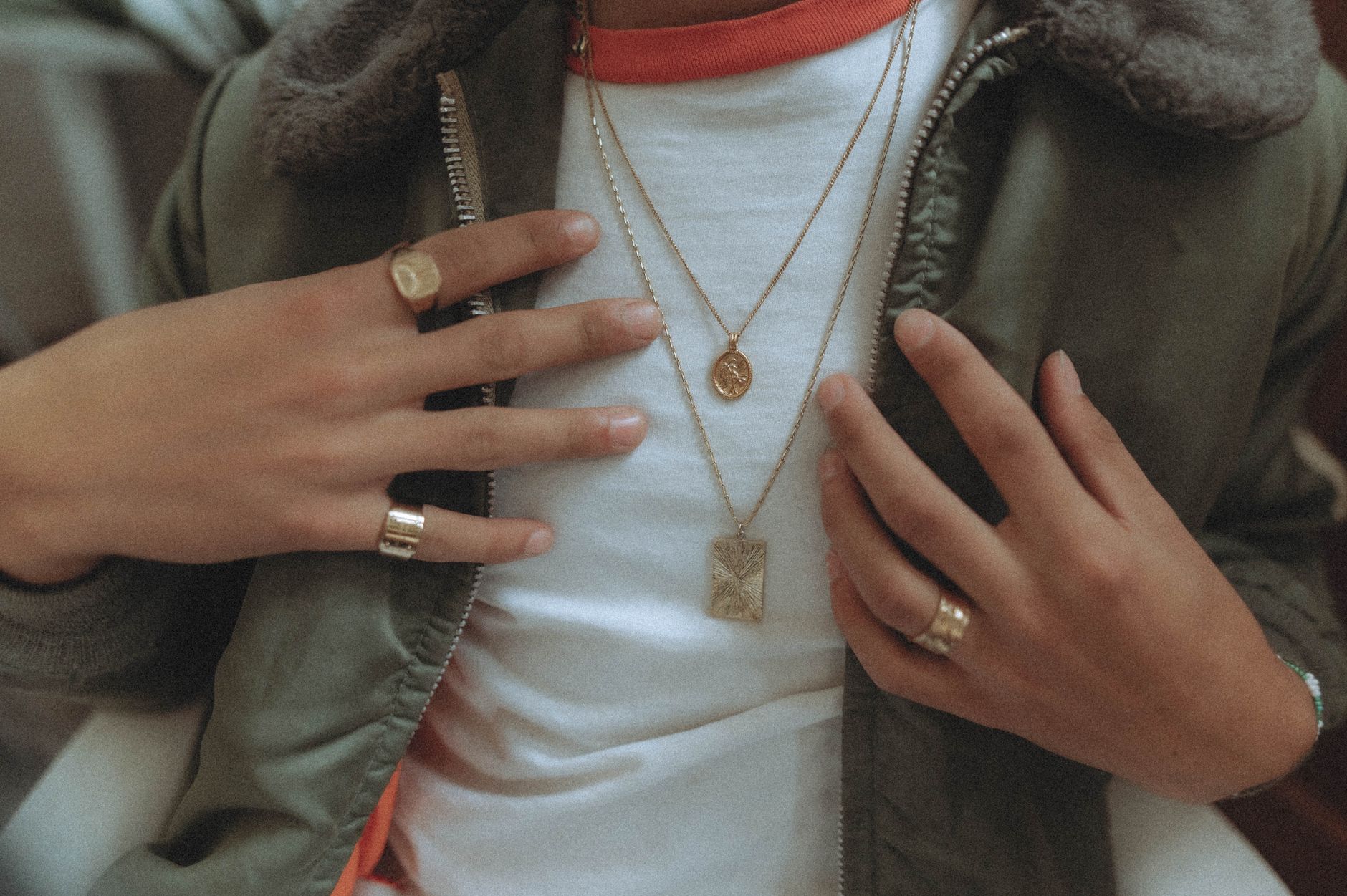
A 14K gold vermeil ring is sterling silver coated with a substantial layer of 14-karat gold. In common U.S.
usage, that coating must be at least 2.5 microns thick for the ring to qualify as vermeil. The ring is not solid 14K gold, and "14K" describes only the outer gold alloy. Check the seller's specifications and the ring's silver hallmark to confirm what you are buying.
Table of Contents
- What Metal Is Under the Gold?
- What Does 14K Mean on Vermeil?
- Why Does the 2.5-Micron Thickness Matter?
- How to Read the Hallmarks
- A Practical Buying and Verification Check
What Metal Is Under the Gold?
Vermeil uses sterling silver as its base. Sterling silver contains 92.5% silver, with other metals added for strength, so qualifying rings commonly carry a "925" or "STERLING" mark. A brass, copper, stainless-steel, or unspecified base may still be gold plated, but it is not vermeil under the usual U.S.
definition. "Gold over brass" and "gold-plated sterling silver" therefore describe different products, even when their surfaces look identical. The silver base gives vermeil more precious-metal content than ordinary plated jewelry. It can also tarnish where the gold wears thin, although the discoloration may be removable with careful cleaning.
What Does 14K Mean on Vermeil?
Fourteen-karat gold is an alloy containing 14 parts gold out of 24, or about 58.3% gold by mass. The remaining metals affect its color, hardness, and resistance to wear. On a vermeil ring, this alloy forms only the exterior layer.
The label does not mean that 58.3% of the entire ring's weight is gold or that the ring has the resale value of solid 14K jewelry. Gold color is not proof of karat. Yellow, rose, and white 14K coatings can all qualify, provided the stated gold fineness and coating requirements are met.
Why Does the 2.5-Micron Thickness Matter?
A micron is one-thousandth of a millimeter. A 2.5-micron vermeil layer is still thin, but it is substantially heavier than a decorative "flash" coating that may wear away quickly. Thickness affects durability, not permanence.
Rings face frequent friction from gripping, washing, lotions, countertops, and contact with neighboring jewelry. Their coating usually wears faster than plating on earrings or pendants. No hallmark can prove coating thickness by itself. Look for a written specification such as "2.5 microns" or "2.5 μm," and be cautious when a seller uses "vermeil" without identifying the base metal or thickness.
How to Read the Hallmarks
A genuine vermeil ring will often show "925" or "STERLING" because sterling silver is the structural metal. It may also carry a maker's mark, country mark, assay-office symbol, or wording such as "14K over sterling." Do not interpret "925" as evidence that the ring lacks gold. It identifies the silver beneath the coating.
Likewise, "14K" by itself usually suggests solid 14K gold, so a lone 14K stamp conflicts with a seller's claim that the piece is plated. Marks vary by country, ring size, and manufacturer, and some legitimate pieces have incomplete or worn stamps. A hallmark supports the description but does not independently establish every feature.
A Practical Buying and Verification Check
Ask the seller to state the construction in plain terms before comparing vermeil with solid gold or ordinary plating: If the description remains unclear, request written confirmation or have an independent jeweler examine the ring. Basic acid testing can damage the finish, while surface-only testing may identify the gold coating without establishing the metal beneath it.
- Base metal: sterling silver, ideally identified as 925.
- Gold fineness: 14K, rather than an unspecified "gold tone."
- Coating thickness: at least 2.5 microns under the common U.S. standard.
- Treatment: disclosure of protective coatings, nickel, or other materials that may affect wear or skin sensitivity.
- Warranty: clear terms covering plating defects, wear, and replating.