
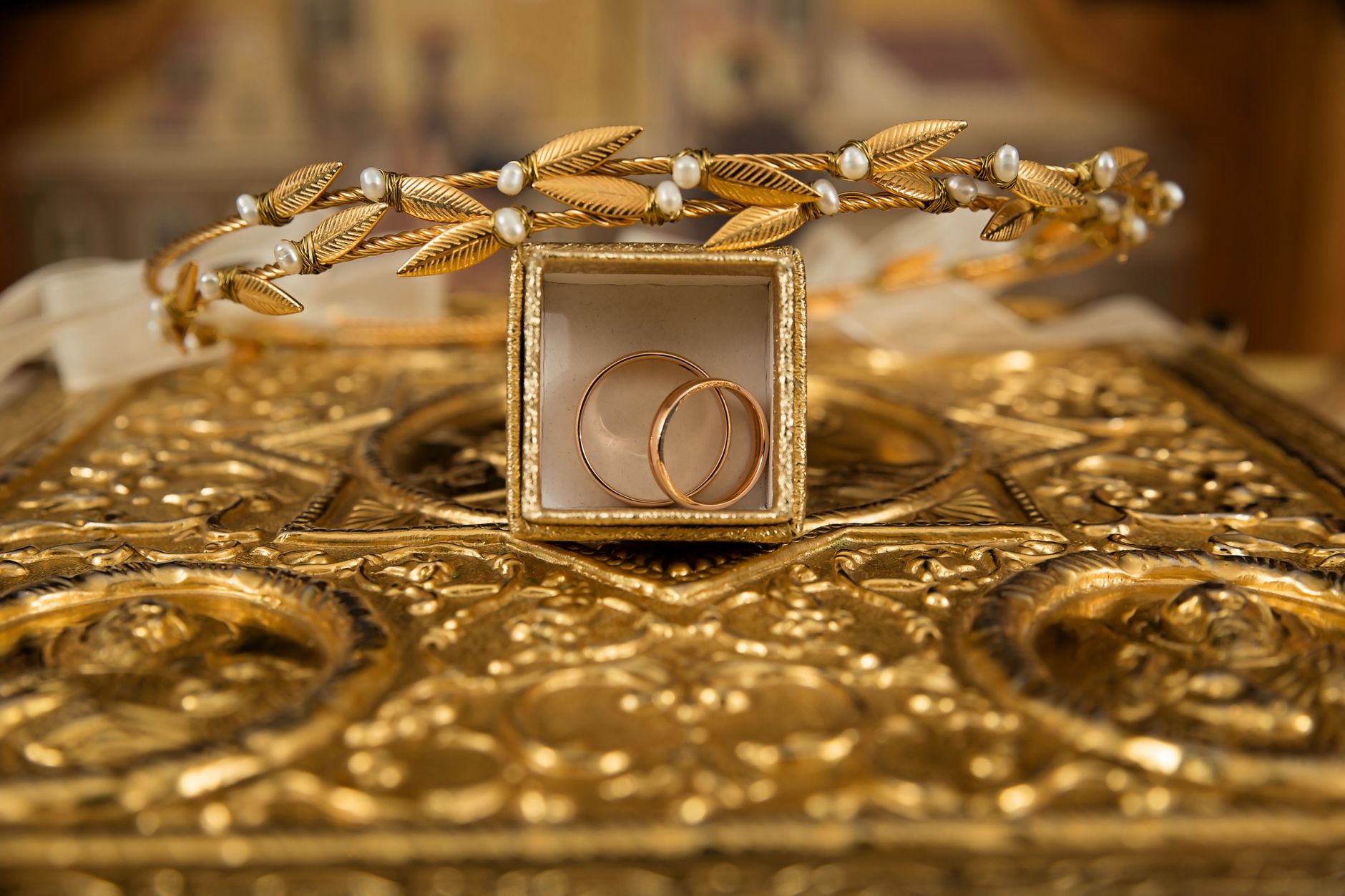
A gold vermeil gemstone ring has a sterling silver base covered with a comparatively thick layer of gold and set with one or more gemstones. Under U.S.
guidance, the gold must be at least 10 karat and 2.5 microns thick for the ring to be described as vermeil. That construction offers the appearance of gold without the cost of a solid-gold setting. However, vermeil remains plated jewelry: wear can eventually expose the silver beneath, and terminology may differ outside the United States.
Table of Contents
- Sterling silver forms the base
- What does 2.5-micron thickness mean?
- What hallmarks can reveal
- Checks before buying
- Wear, care, and repair limits
Sterling silver forms the base
In U.S. usage, vermeil requires sterling silver beneath the gold. Sterling silver normally contains 92.5% silver, with other metals added to improve strength because pure silver is relatively soft. A gold-coated ring made from brass, copper, stainless steel, or an unspecified alloy is gold-plated jewelry, not gold vermeil under the U.S.
definition. This distinction affects value, care, possible metal sensitivities, and whether the piece can be sold accurately as vermeil. The gemstone does not determine whether the ring qualifies. A vermeil setting may hold a natural, laboratory-grown, treated, or imitation stone. The seller should identify the stone separately instead of letting "vermeil" imply anything about its origin or quality.
What does 2.5-micron thickness mean?
A micron is one-thousandth of a millimeter. The U.S. minimum of 2.5 microns makes vermeil thicker than many lightly plated or "gold flash" finishes, but it does not make the outer layer permanent. Thickness matters because the gold surface loses material through friction and contact with sweat, cosmetics, cleaning products, and chemicals.
Ring shanks and raised edges usually face more abrasion than recessed details. A listing that says only "thick gold plating" gives no measurable assurance. Ask for both the stated thickness and gold fineness, such as 14-karat gold at 2.5 microns. A higher karat layer contains more gold, but it may also be softer; thickness, design, and use all influence wear.
What hallmarks can reveal
A "925," "Sterling," or equivalent silver quality mark indicates the underlying metal, not the thickness or karat of the gold coating. A maker's or sponsor's mark may identify the party responsible for the quality mark, depending on the country. Vermeil markings are not perfectly standardized across markets. Sellers may use descriptions such as "14K vermeil," "18K vermeil," or "925 silver with gold vermeil," while other pieces may carry only a silver mark. An unqualified "14K" or "18K" stamp should not be treated as proof that the entire ring is solid gold.
Common plating abbreviations such as GP, GEP, or HGE describe other forms of gold-coated jewelry. They do not establish that the base is sterling silver or that the coating reaches the U.S. vermeil thickness. Hallmarking rules also vary by jurisdiction. A legitimate imported ring may use different compulsory marks, exemptions, or terminology, so examine the written metal disclosure and seller documentation alongside the stamp.
Checks before buying
Treat "vermeil" as a construction claim that the seller should be able to explain. Product photographs alone cannot confirm the base metal, plating thickness, or gemstone identity.
Check these details before purchasing: Nickel-sensitive buyers should also ask about the complete construction. The silver alloy, solder, plating underlayers, or exposed areas may contain metals not named in a short product title.
- Confirm that the base is sterling silver, not merely "silver tone."
- Look for a stated gold fineness of at least 10 karat in the United States.
- Ask whether the coating is at least 2.5 microns thick.
- Verify whether the gemstone is natural, laboratory-grown, treated, or imitation.
- Read the warranty for plating wear, resizing, repairs, and replating.
Wear, care, and repair limits
Remove a vermeil ring before swimming, showering, cleaning, exercising, or applying lotions and perfume. Store it dry and separate from harder jewelry, then wipe it gently with a soft cloth rather than using abrasive silver polish. Once the gold wears through, the exposed sterling silver may darken through tarnish.
That change does not necessarily mean the ring was counterfeit, but rapid or uneven loss may justify checking the seller's thickness claim and warranty. Resizing, stone tightening, polishing, and soldering can damage the finish. Before authorizing repair, tell the jeweler that the setting is vermeil and ask whether the work includes replating the entire ring to a specified micron thickness.