
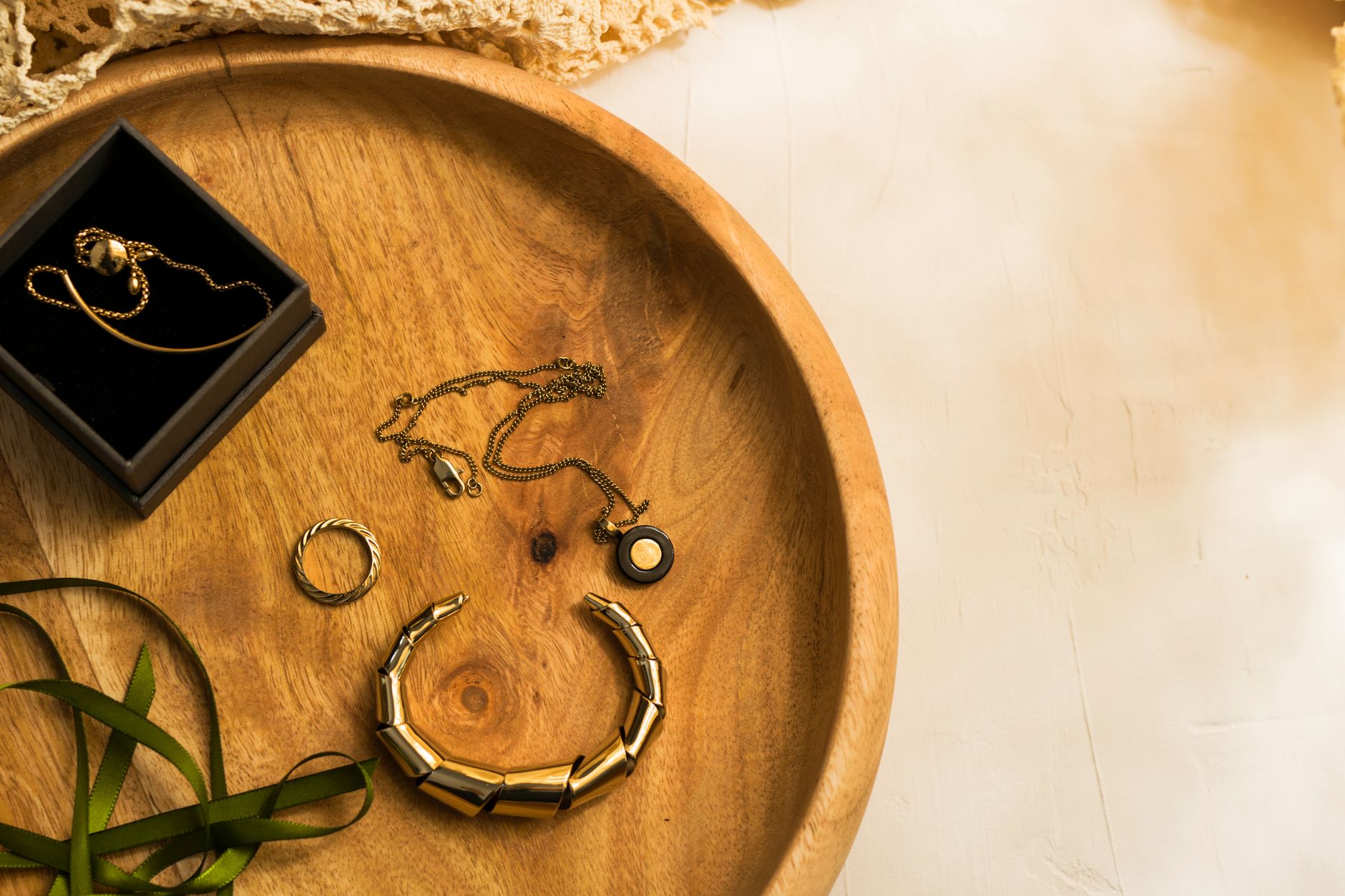
Gold vermeil earrings have a sterling silver base coated with gold; under U.S. guidance, the gold must be at least 10 karat and equal at least 2.5 microns of fine gold. A "925" or "sterling" mark describes the silver underneath, not the gold layer's karat, thickness, or durability.
Current U.S. regulations define these requirements. "Vermeil" is not a universal worldwide grade. Its meaning and permitted labeling vary by country, so buyers should compare disclosed materials rather than relying on the name alone.
Table of Contents
- The base is sterling silver, not ordinary base metal
- What does 2.5-micron plating mean?
- Why national definitions matter
- What do the stamps and hallmarks prove?
- How vermeil compares—and what to check
The base is sterling silver, not ordinary base metal
In jewelry, "base" means the material beneath a coating. "Base metal" often means a non-precious metal such as brass, but U.S.-standard vermeil must use sterling silver. Sterling silver contains at least 925 parts silver per 1,000, with other metals added for strength. The gold coating does not turn the entire earring into gold. Scratches or worn edges may eventually reveal silver underneath.
The U.S. silver-content guidance defines sterling at 925 parts per 1,000. Some manufacturers place an intermediate metal between the silver and gold to improve adhesion or control tarnish. U.S. guidance requires disclosure when a base metal, such as nickel, sits between the sterling silver and gold. Buyers with metal sensitivities should also ask about posts, hooks, solder, and removable backs.
What does 2.5-micron plating mean?
A micron is one-thousandth of a millimeter, so 2.5 microns equals 0.0025 millimeter. That is still a thin surface layer, but it provides a measurable specification lacking from vague descriptions such as "luxury plated" or "heavily dipped." The U.S. definition calls for a minimum thickness throughout equivalent to 2.5 microns of fine gold. A stated average or nominal thickness is not necessarily the same as a minimum across all significant surfaces. Gold karat and coating thickness measure different things.
An 18-karat coating contains 18 parts gold out of 24, while microns describe layer thickness. "18K vermeil" therefore says little about wear life unless the seller also states the thickness. Wear depends on adhesion, surface preparation, friction, moisture, cosmetics, and individual skin chemistry. Earrings usually encounter less abrasion than rings, although posts, backs, and moving contact points still wear. A seller cannot reliably convert a plating thickness into a fixed number of years without knowing how the earrings will be used.
Why national definitions matter
The U.S. threshold should not be treated as an international rule. UK guidance requires gold-plated silver to be described as both silver and gold plated; "vermeil" may appear only as an additional term. It also says the coating should not exceed two microns, creating a clear difference from the U.S. definition.
The British Hallmarking Council explains the permitted UK descriptions. A product marketed as U.S.-standard 2.5-micron vermeil may therefore need different wording in the UK. For imported earrings, check which country's standard the seller is using before comparing specifications. These differences do not necessarily indicate that one item is counterfeit. They show that "vermeil" alone cannot establish composition across markets.
What do the stamps and hallmarks prove?
A "925" stamp claims that the underlying metal is sterling silver. It does not state the gold's fineness, measure the plating, or prove that an independent laboratory tested the earrings. A stamp should be considered alongside the seller's identity, written specifications, and return policy. A hallmark has a narrower legal meaning in some countries. A complete UK hallmark contains a sponsor's mark, a metal-and-fineness mark, and an assay-office mark. Gold-plated silver receives a silver hallmark, not a gold hallmark.
UK hallmarking guidance describes the three compulsory marks. Small silver items can lawfully lack a full UK hallmark when they fall below the compulsory silver weight threshold. The published threshold is 7.78 grams, so absence of a full hallmark does not automatically make a lightweight earring fraudulent. Marks such as "18K," "925," or "vermeil" may be manufacturer-applied quality claims in other markets. They still do not disclose every component. Removable backs can be swapped, and posts or hooks may use a different alloy from the decorative body.
How vermeil compares—and what to check
The main jewelry constructions differ as follows: Before buying, ask for specifications covering: To slow wear, keep vermeil away from chlorine, household chemicals, abrasive cleaners, and silver dips. Put earrings on after cosmetics have dried, wipe them with a soft dry cloth, and store pieces separately. If a listing omits the base, gold karat, or minimum micron thickness, request those specifications in writing before purchasing.
- Gold-plated jewelry has gold over another material; the base and coating thickness may be unspecified.
- U.S.-standard vermeil has sterling silver under qualifying gold of defined fineness and thickness.
- Gold-filled jewelry uses a mechanically bonded gold-alloy layer over a non-gold core under separate labeling rules.
- Solid-gold jewelry uses a gold alloy throughout, although it is not necessarily pure gold and can still scratch.
- The country or standard behind the "vermeil" claim