
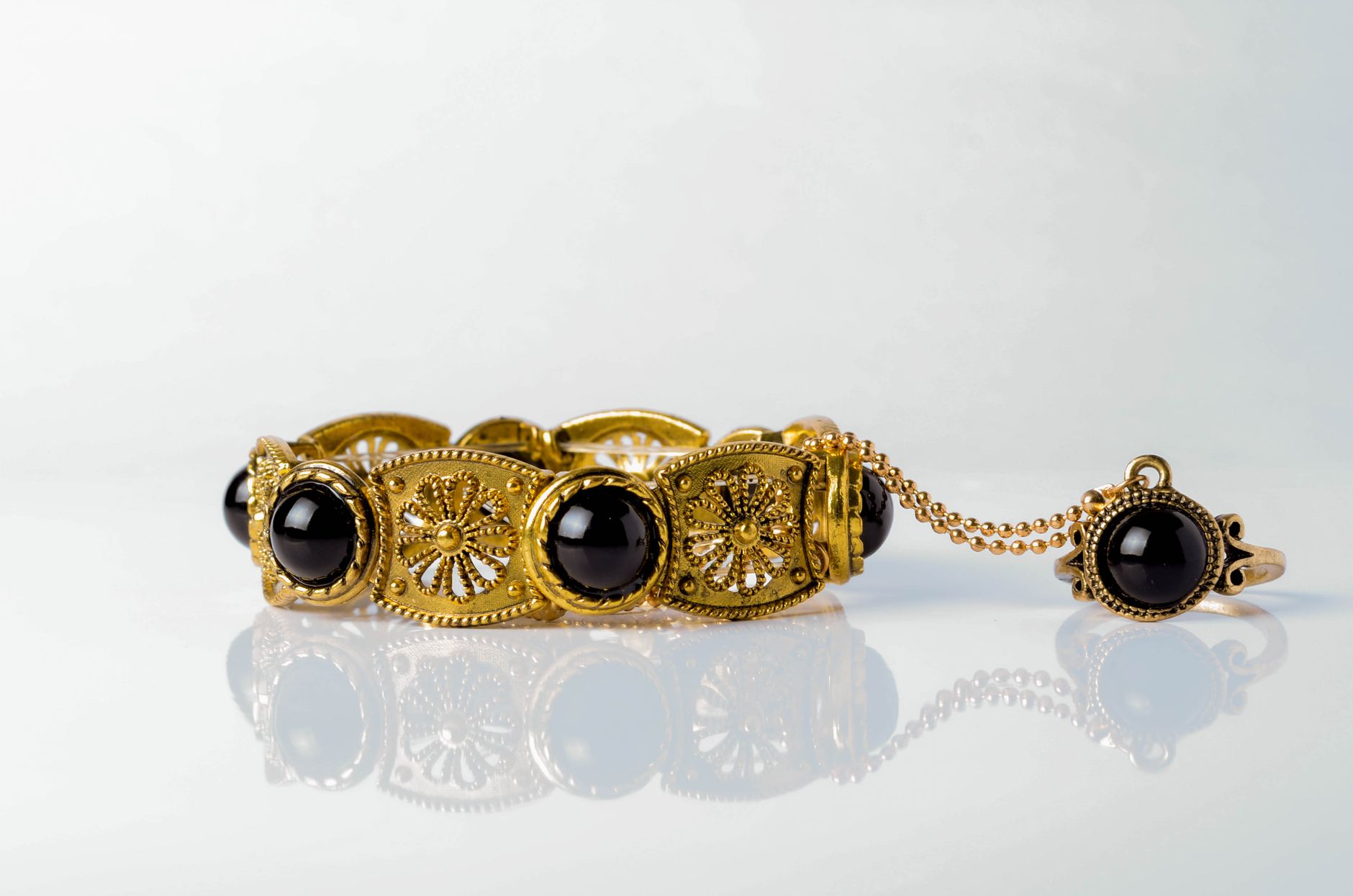
A gold vermeil ring that appears previously worn could be a return, display item, or newly made piece marked during finishing and handling. Photograph the entire ring, suspected wear, hallmarks, packaging, and any damaged plating before cleaning or wearing it. Gold vermeil generally means a sterling silver ring covered with a comparatively substantial layer of gold, although definitions vary by market. Surface marks alone cannot establish when, why, or by whom the ring was handled.
Table of Contents
- Which marks suggest previous wear?
- Wear or a plating problem?
- What should you photograph?
- How should you approach the seller?
Which marks suggest previous wear?
Repeated fine scratches around the lower half of the band can be consistent with contact against desks, counters, or other jewelry. Flattened edges, grime inside decorative recesses, and residue trapped beneath a stone may also support concern.
Look for evidence concentrated on exposed contact points: No single sign proves prior ownership. Polishing lines, tool marks, fingerprints, and small scratches can arise during manufacturing, inspection, sizing, photography, packing, or shipping.
- Clusters of scratches on the underside of the band
- Uneven gold color where fingers or surfaces would rub
- Silver-colored spots showing through the gold
- Skin oils, fibers, or debris inside the ring
- A bent shank, loose stone, or worn prongs
Wear or a plating problem?
gold vermeil is not solid gold. If its gold layer is thin, uneven, damaged, or poorly bonded, the silver beneath may become visible even without extended wear. Location helps distinguish possible causes. Broad discoloration at high-contact areas may fit abrasion, while sharp bare spots near settings or seams may point to finishing or plating defects.
Dark material can be tarnish, polishing compound, adhesive, or ordinary dirt. Color differences are especially inconclusive. Curved surfaces reflect nearby objects, and warm indoor lighting can make the same ring look yellow, rose, brown, or silver. A consistent lighting setup is therefore essential when documenting the condition.
What should you photograph?
Start with untouched evidence. Keep the ring, box, pouch, tags, shipping materials, and receipt together, and avoid polishing cloths or jewelry cleaners until the seller responds. Take these images in bright, indirect daylight or under a neutral white lamp: Use the phone's normal camera first, then add macro images if available.
Tap the damaged area to focus, keep digital zoom low, and include one wider view showing where each close-up belongs. A ruler can provide scale, but it should not cover the defect. Save the original files rather than relying only on screenshots or compressed messages. Photograph the parcel label separately and redact personal details from copies posted publicly.
- Full-ring views from the top, bottom, and both sides
- Close-ups of every scratch, bare patch, stain, or deformation
- The inside and outside of the band
- Hallmarks, metal stamps, maker's marks, and size markings
- Stones, prongs, bezels, and hard-to-reach recesses
How should you approach the seller?
Contact the seller promptly and describe observable facts instead of asserting that someone wore the ring. For example: "The underside has clustered scratches, and two areas appear silver-colored through the gold finish." State the outcome you want, such as an inspection, replacement, refund, or written explanation. Ask whether the ring was sold as new, returned merchandise, a display sample, or a resized piece, and whether cleaning it would affect return eligibility.
Keep the order confirmation, listing description, photographs, and correspondence. If the seller requests a return, document the ring and package immediately before shipment, use the instructed method, and retain tracking and acceptance records. A qualified jeweler may identify exposed base metal, loose settings, poor plating, or repair work under magnification. However, even an expert examination may not determine exactly when a scratch occurred or prove that a previous customer wore the ring.