
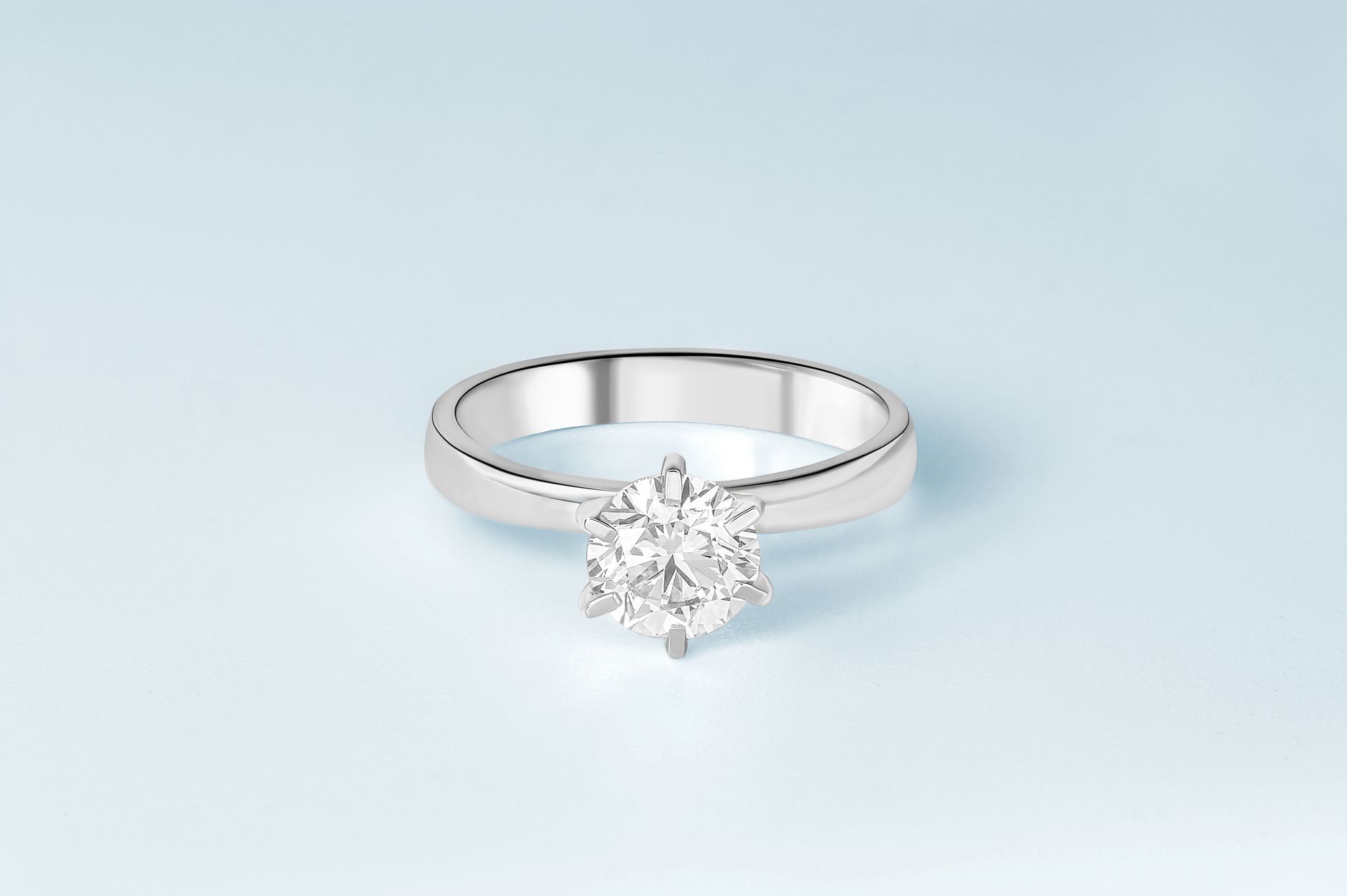
A secure, comfortable solitaire gemstone ring pairs the stone's shape and treatment with the right setting. A solitaire is a ring with one focal center stone; its setting determines how that stone is held, protected, and worn. Before buying, compare edge protection, prong count, setting height, snag risk, and cleaning limits. Obtain treatment information, because an altered gemstone may require different care or repair methods.
Table of Contents
- Choose the setting for the stone
- Check comfort before buying
- Match cleaning to the gemstone
- Know what repair can—and cannot—do
- Use a treatment record as a care document
Choose the setting for the stone
A full bezel surrounds the gemstone's edge with metal, offering maximum edge protection. A partial bezel exposes more of the stone but provides less coverage, according to the Gemological Institute of America's ring-setting guide. Prongs reveal more of the gemstone, but their number and shape matter.
Four prongs can secure a stone, while six add retention if one prong breaks. That added margin may be prudent for a larger center stone. Pointed cuts need protection at their most vulnerable areas. Choose V-prongs for heart, princess, pear, and marquise cuts because the metal wraps around the points and reduces chipping risk.
Check comfort before buying
A beautiful setting can still be irritating in daily wear. Raised or poorly finished prongs may catch hair and fabric, while properly shaped and positioned prongs minimize snagging.
Inspect the ring from the side as well as the top. Then check: Do not treat snagging as merely cosmetic. A catching prong can signal poor finishing, damage, or a developing security problem that deserves a jeweler's inspection.
- Whether any prong feels sharp or rough
- Whether the setting catches on a soft cloth
- Whether the stone sits higher than your routine allows
- Whether the band and setting feel balanced on the finger
- Whether every prong makes proper contact with the gemstone
Match cleaning to the gemstone
Warm water, mild soap, and a soft brush suit most rings. Scrub gently around the setting, rinse carefully, and avoid pressing against prongs or exposed gemstone edges. An ultrasonic cleaner is not a universal upgrade.
Ultrasonic action can loosen an already-insecure stone and damage filled, coated, oiled, waxed, porous, or heat-sensitive gems, as the Gemological Institute of America explains in its cleaning guidance. Treatment matters even when the underlying gem appears durable. Ruby and sapphire have excellent toughness, yet fracture-filled, cavity-filled, or dyed corundum can be harmed by mild acids. When treatment is unknown, use conservative cleaning and seek specific instructions before using chemicals, steam, heat, or ultrasonic equipment.
Know what repair can—and cannot—do
A jeweler can tighten a loose gemstone or rebuild worn prong tips through re-tipping. Seek an inspection when the stone moves, a prong looks thinner or shorter, the ring begins catching, or the setting receives an impact. Some treatments sharply limit repair options.
The Gemological Institute of America warns that fracture-filled diamonds can suffer irreversible filler damage from steam, acid, ultrasonic cleaning, and common repair procedures. Tell the jeweler about every known treatment before work begins. Do not assume that a routine procedure for an untreated stone is safe for a filled or coated one.
Use a treatment record as a care document
Ask the seller for written treatment information and retain it with the receipt and any laboratory report. GIA colored-stone identification reports list detectable treatments for loose or mounted gems, according to its colored-stone report guidance.
Use that record whenever the ring is cleaned, resized, re-tipped, or otherwise repaired. If no treatment history is available, identify that uncertainty before authorizing heat, chemicals, steam, or ultrasonic cleaning.