
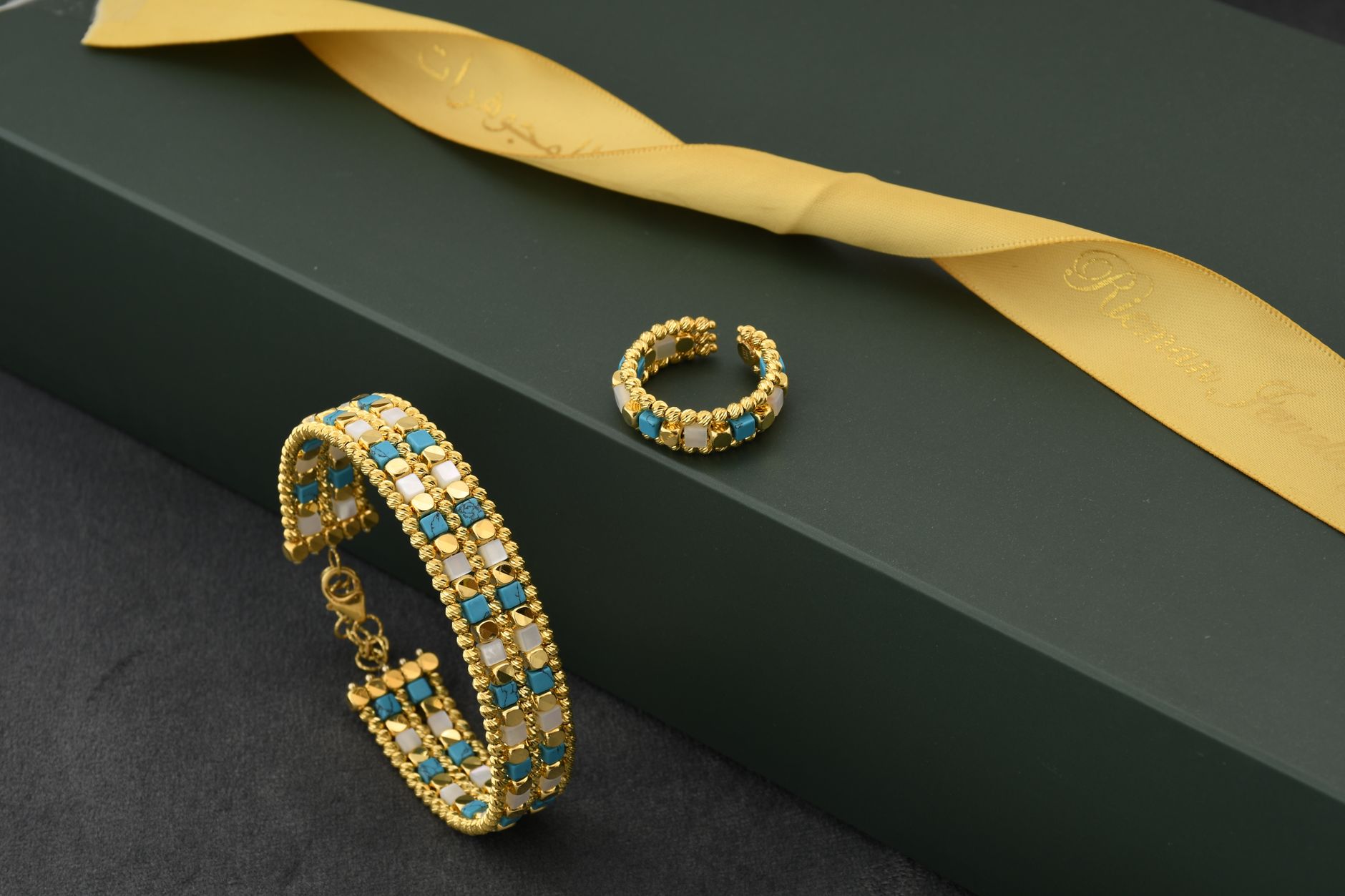
Micron-plated gold vermeil is sterling silver covered with a measured gold layer; "micron" describes thickness, not a plating method. Under the common U.S.
benchmark, vermeil requires gold of at least 10-karat fineness and a coating equivalent to 2.5 microns of fine gold. The term can still be used loosely in product listings, especially across different countries. Buyers should verify the base metal, gold fineness, coating thickness, and meaning of any stamped marks.
Table of Contents
- What base metal makes jewelry vermeil?
- What does the micron measurement mean?
- Does the gold karat change the finish?
- What do hallmarks actually prove?
- How should buyers assess a vermeil listing?
What base metal makes jewelry vermeil?
Vermeil uses sterling silver as its base rather than brass, copper, or stainless steel. Sterling silver contains at least 92.5% silver and commonly carries a "925" or "Sterling" mark. gold over another base metal is gold-plated jewelry, even if its coating is thick.
Gold-filled jewelry is also different: it uses a mechanically bonded gold layer and does not require a sterling-silver core. A sterling base gives vermeil some underlying precious-metal value. It does not make the piece solid gold, and exposed silver can tarnish where the coating eventually wears away.
What does the micron measurement mean?
One micron, written as 1 μm, equals 0.001 millimeter. A 2.5-micron coating is therefore 0.0025 millimeter thick—substantial for plating, but still extremely thin compared with solid metal. The U.S. vermeil benchmark describes a minimum coating equivalent to 2.5 microns of fine gold on all significant surfaces.
A listing that says "one-micron gold over 925 silver" describes plated sterling silver but does not meet that benchmark. Thickness affects how much wear the coating can tolerate, but it cannot predict an exact lifespan. Rings and bracelets experience more friction than earrings or pendants, while sweat, chlorine, cosmetics, and abrasive polishing can accelerate wear. Microns also do not reveal the coating's total gold weight. Calculating that requires the plated surface area, coating thickness, gold-alloy composition, and density.
Does the gold karat change the finish?
Gold fineness describes the proportion of gold in the surface alloy. Common vermeil finishes include 14K and 18K, while the U.S. benchmark permits gold alloys of at least 10K.
Higher karat does not automatically mean a longer-lasting finish. It usually produces a richer yellow color, but higher-purity gold is softer; the other metals in the alloy also affect color, hardness, and possible skin sensitivity. An "18K vermeil" description applies to the coating, not the whole piece. Once the finish wears through, the visible metal underneath is sterling silver rather than 18K gold.
What do hallmarks actually prove?
A "925" or "Sterling" stamp identifies the silver base. It does not establish the gold's karat, confirm the coating's thickness, or prove that every significant surface was coated. Marks such as "14K" or "18K" can describe a gold finish when accompanied by wording such as "vermeil" or "gold plated." A standalone karat mark may imply solid gold, so the complete product description matters more than an isolated stamp. Other abbreviations identify different constructions.
"GP" or "GEP" generally indicates gold plating, "HGE" means heavy gold electroplate, and "GF" refers to gold-filled material. PVD identifies a coating process, not a particular base metal or guaranteed thickness. Hallmarking rules vary by country, and some small pieces may have limited markings. Stamps can also be incorrect or counterfeit, so a hallmark should support—not replace—a clear seller disclosure and reliable testing.
How should buyers assess a vermeil listing?
A useful listing states measurable specifications rather than relying on phrases such as "premium," "luxury plated," or "micron gold." Before buying, check for: Treat an unexplained "micron-plated vermeil" claim cautiously because it may omit the actual number of microns. Ask whether the stated thickness is physical coating thickness or fine-gold equivalent, and which national standard the seller follows.
To preserve the finish, remove vermeil before swimming, bathing, exercising, or applying perfume and lotion. Wipe it gently with a dry, soft cloth; silver polish and abrasive compounds can remove gold along with tarnish.
- A sterling-silver or 925 base
- The gold alloy's stated karat
- A numerical coating thickness
- Clarification that the thickness applies across significant surfaces
- A maker or responsible-party mark where local rules require one