
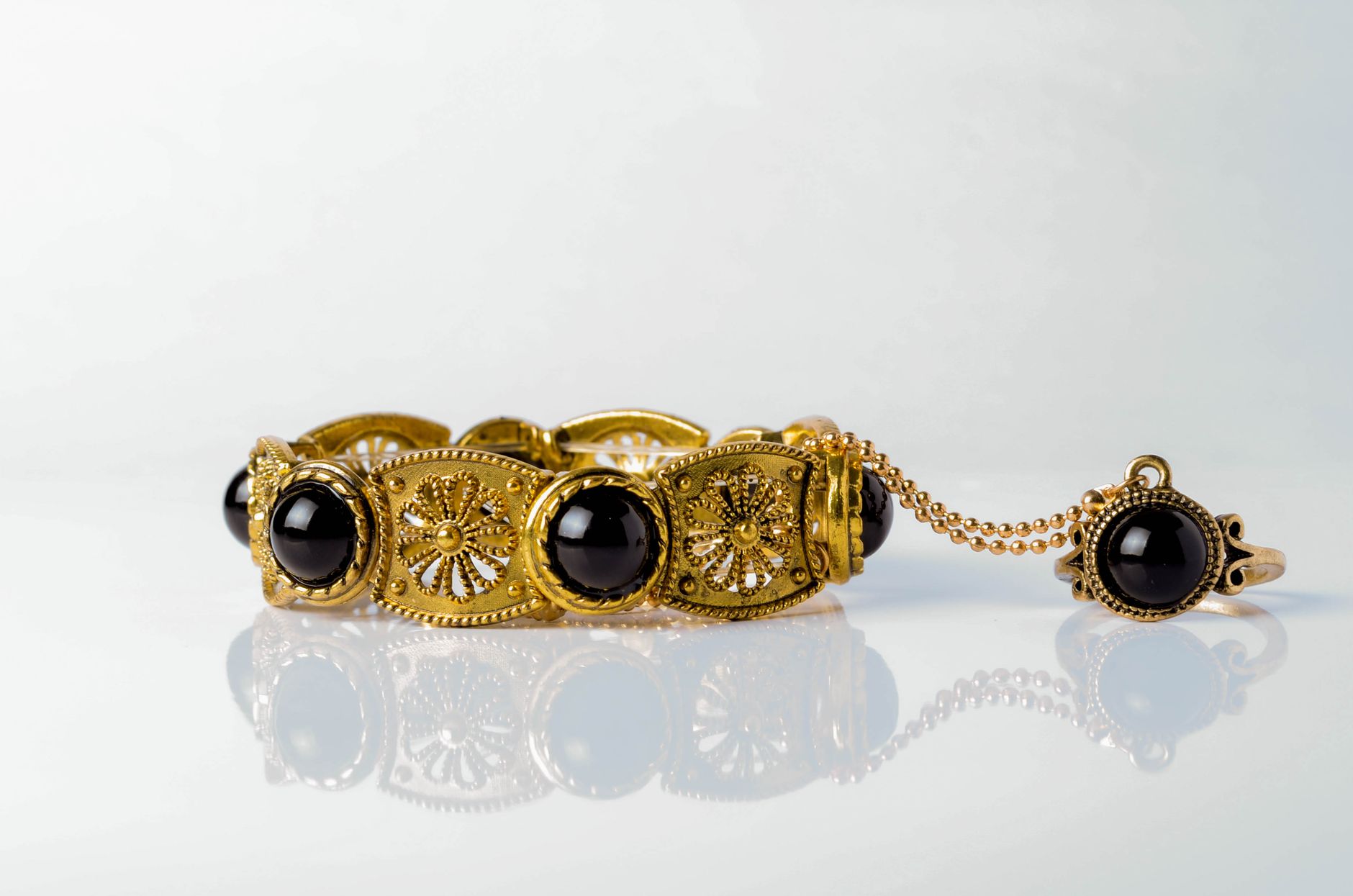
A rose-colored patch on a new gold vermeil ring could be residue, reflected color, tarnish, uneven plating, or an exposed copper-toned intermediate layer. Photograph the entire ring, the patch from several angles, its location near any edge or seam, and all packaging before cleaning or wearing it. Gold vermeil generally means a sterling silver item covered with a substantial layer of gold, although legal thickness and fineness requirements vary by market. The patch alone does not prove that the ring is counterfeit or made from an undisclosed base metal.
Table of Contents
- What could cause the rose color?
- How to inspect it without changing it
- What should the photographs show?
- What do stamps and listing language establish?
- When to return it or seek testing
What could cause the rose color?
First rule out reflection. Polished gold can mirror skin, clothing, a phone case, or warm indoor lighting so strongly that a normal surface looks pink. A patch that moves or disappears as you rotate the ring is probably reflected color rather than a fixed defect. A stationary patch may be surface residue or localized tarnish. Adhesive, polishing compound, skin products, packaging material, and chemical exposure can change how the finish reflects light. Do not assume residue will wipe away safely; cleaning could alter both the ring and your evidence.
If the color remains visible under neutral light, the gold coating may be uneven, abraded, or incomplete. Some plated jewelry uses an intermediate layer between silver and gold. A copper-toned layer could appear rose if the outer gold is thin or missing in one spot. The location offers clues. Color along an edge, raised detail, prong, or inside curve may indicate friction or incomplete coverage. A sharply bounded spot near a soldered joint could instead reflect a repair, finishing, or plating inconsistency.
How to inspect it without changing it
Handle the ring by an unaffected area with clean, dry hands. Avoid polishing cloths, jewelry dips, alcohol, toothpaste, abrasives, and ultrasonic cleaners until the seller responds. Even gentle rubbing can remove residue, widen a worn area, or make the original condition harder to establish. Examine the patch under indirect daylight and a neutral white lamp.
Rotate the ring slowly while keeping your eyes on the boundary. Record whether the color stays fixed, changes with the viewing angle, or appears only under one light source. Use a loupe or phone magnifier without scraping the surface. Look for scratches, pits, peeling, bubbles, a visible boundary, or color concentrated on a high point. Those features are more informative than color alone.
What should the photographs show?
Take both context images and close-ups. A macro photograph without an overview may not establish where the patch sits, while a distant image may not capture its edges.
Use a plain white or neutral gray background and disable beauty filters or aggressive color effects. Keep one wider image in each lighting setup so the seller can judge white balance from the background and the rest of the ring.
- Photograph the whole ring from the top, both sides, and underside.
- Capture the patch straight on and at two oblique angles.
- Repeat the close-up under indirect daylight and neutral artificial light.
- Place the ring beside a ruler for scale without covering the affected area.
- Photograph stamps, maker's marks, fineness marks, and the inside of the band.
What do stamps and listing language establish?
A "925" or "sterling" mark indicates a claimed sterling silver base, but the stamp does not reveal the gold layer's thickness, condition, or uniformity. A gold fineness description, such as a karat value, refers to the gold alloy rather than proving that every part received an adequate coating. Save the listing exactly as it appeared when you bought the ring. Relevant wording includes "vermeil," "gold over sterling silver," "gold plated," "rose gold," coating thickness, gold fineness, care instructions, and any finish warranty.
Screenshots can preserve details that may later change or disappear. Compare the patch with the advertised finish, not merely with your expectation of yellow gold. If the listing describes a deliberately warm or rose-toned alloy, some variation may be intentional. A single contrasting patch with a clear boundary is harder to explain as normal overall color variation.
When to return it or seek testing
Contact the seller promptly if the patch is fixed, visible in neutral light, or accompanied by peeling, bubbling, deep scratches, or exposed material. Send representative images rather than dozens of near-identical files, and ask whether the seller recommends replacement, return, or inspection before cleaning. If the value justifies independent assessment, a qualified jeweler or precious-metal testing service can examine the surface and metal composition.
Ask whether a proposed test is nondestructive; scratch, acid, or filing tests can permanently mark a vermeil ring and may affect return rights. Keep the ring unworn while the issue remains open. Store it separately in its original packaging, retain all correspondence, and do not authorize polishing or replating until responsibility for the original patch is documented.