
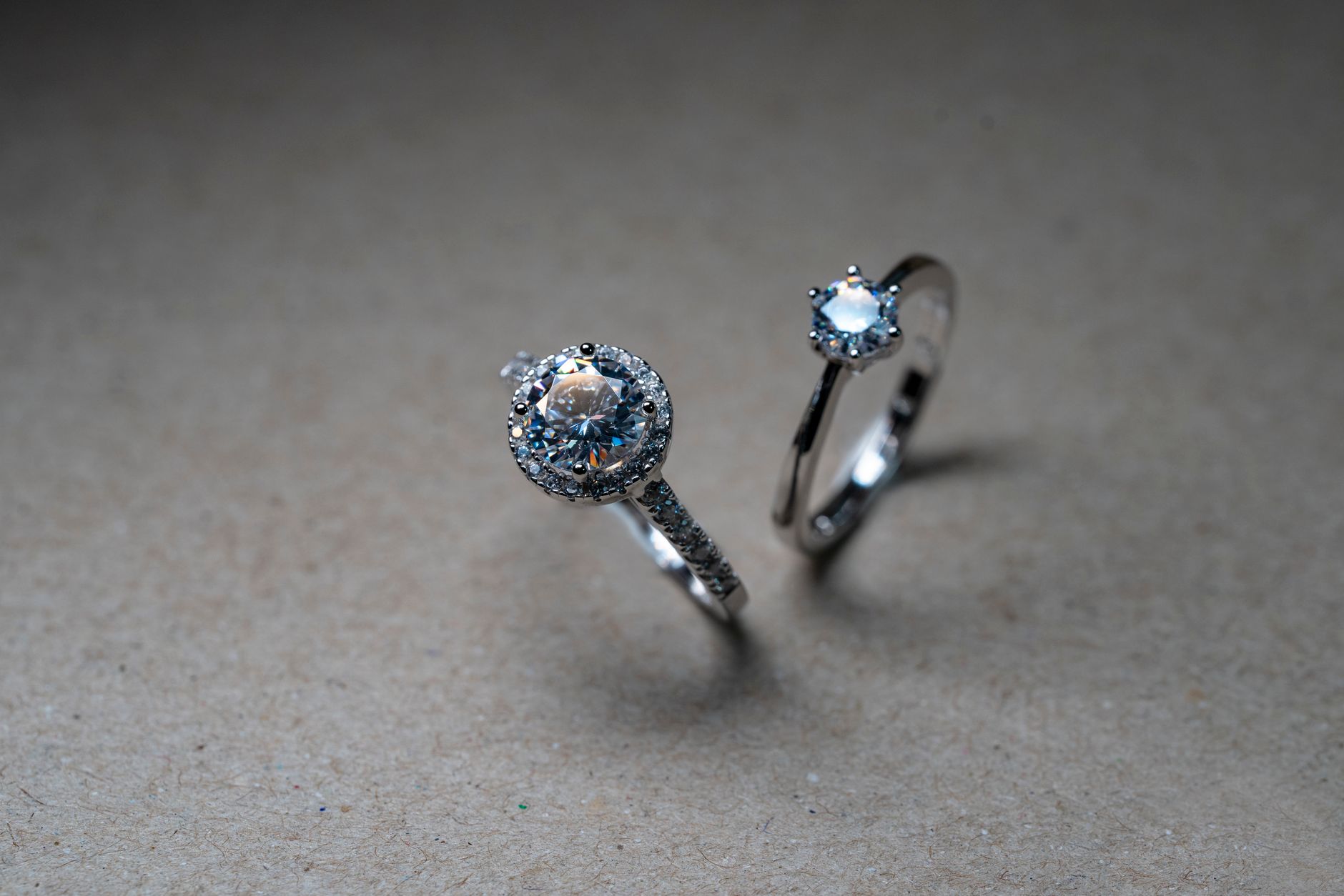
White gold rings are yellow gold mixed with white metals and finished with a rhodium coating for a bright-white look, while platinum rings are made mostly of solid platinum. Platinum stays white through the metal, while white gold relies on its thin surface layer. That difference shapes upkeep, weight, price, and comfort. The right choice depends on how much maintenance you accept, how the ring should feel, and how your skin reacts to certain alloys.
Table of Contents
- What is inside each ring?
- How does daily wear look different?
- Why does platinum feel heavier and cost more?
- How can you check the metal when shopping?
- Which metal suits sensitive skin?
What is inside each ring?
White gold starts as yellow gold alloyed with white metals such as palladium, nickel, or silver. It then receives electroplated rhodium for a bright-white finish. CaratYes describes this coated structure and Pt950 platinum construction in its CaratYes comparison of platinum and gold rings.
Ring platinum is typically Pt950, meaning 95 percent platinum plus 5 percent iridium or ruthenium. Under the FTC Jewelry Guides, 16 CFR Part 23, unqualified use of platinum requires at least 950 parts per thousand pure platinum. Lower-platinum alloys need qualified disclosure.
How does daily wear look different?
Worn platinum moves rather than losing much metal and develops a soft matte patina. Worn white gold can show yellowing or thinning at high-contact points as its thin rhodium layer wears away. Stanford Advanced Materials describes this wear contrast in its Stanford Advanced Materials guide to platinum and white gold.
White gold therefore needs periodic upkeep to stay bright white. CaratYes places rhodium replating about every 12 to 24 months at roughly 60 to 90 dollars per service. Platinum never needs replating because it is naturally white throughout.
Why does platinum feel heavier and cost more?
A platinum ring weighs substantially more than the same design in white gold. Reported figures are roughly 60 to 65 percent heavier than 14K white gold and about 40 percent heavier than 18K white gold of identical dimensions.
That extra metal affects price. CaratYes places platinum settings typically 800 to 1,500 dollars above comparable 14K white-gold settings. The premium remains despite platinum's lower 2026 commodity spot price because greater weight and harder fabrication raise production cost.
How can you check the metal when shopping?
U.S. retail rings use small interior stamps for identification.
Goldiew Research identifies PLAT, PT950, PT900, or 950 as platinum marks in its Goldiew guide to white gold and platinum identification. White-gold marks instead show gold content, such as 14K, 18K, 585, or 750. A shopper can use these checks:.
- Read the inside shank under good light or magnification.
- Match the mark to platinum or gold-content groups above.
- Ask for the full alloy recipe when the stamp is unclear.
Which metal suits sensitive skin?
Platinum is generally hypoallergenic and suitable for sensitive skin. Stanford Advanced Materials gives that assessment while warning that alloy recipe still matters.
The concern is mainly nickel-alloyed white gold. It can trigger reactions in nickel-sensitive wearers. Ask whether the white-gold alloy contains nickel or uses palladium instead.