
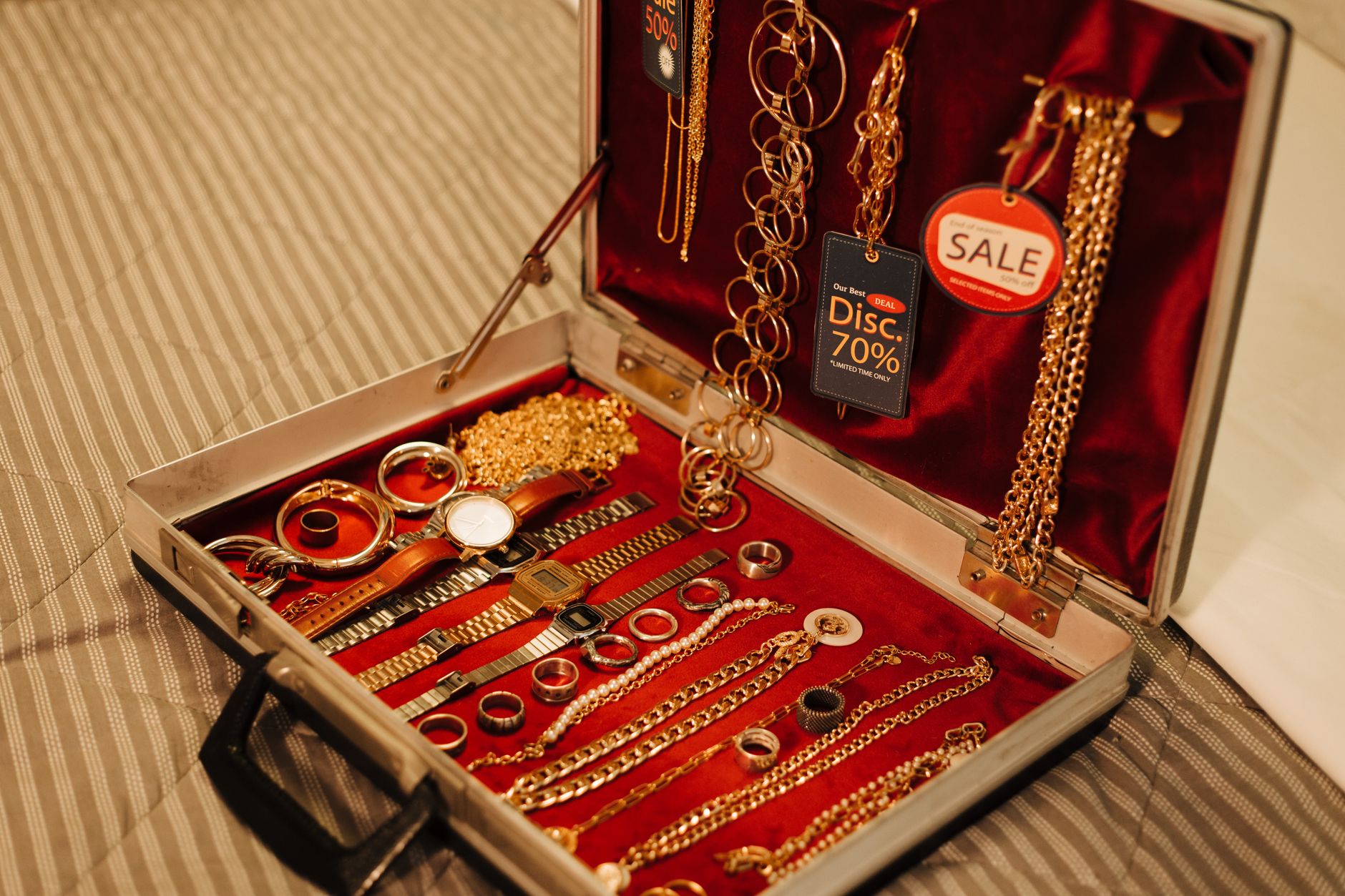
Gold spot price is the wholesale benchmark for one troy ounce of pure gold delivered in London. Jewelry costs more because the ticket adds metal alloy, workshop labor, brand margin, taxes and currency conversion. Spot gives you a starting point, not a shelf price. Learn your piece's fine-gold weight and you can judge the markup.
Table of Contents
- What does spot price track?
- How does karat change the gold you buy?
- Why do coated pieces cost far less?
- How can you judge a fair retail price?
What does spot price track?
According to the LBMA, the LBMA Gold Price is the global benchmark for unallocated gold delivered in London LBMA auction guide. It is set twice daily at 10:30 and 15:00 London time in dollars per troy ounce. The LBMA says ICE Benchmark Administration runs the price through an electronic auction.
It replaced the former London Gold Fix in March 2015. Spot covers wholesale metal only. It does not include making, shop rent, design fees or sales tax.
How does karat change the gold you buy?
The Federal Trade Commission explains that pure 24K gold is soft, so makers mix it for strength FTC buying guide. 18K holds 18 parts gold and 6 parts other metal, while 14K holds 14 parts gold and 10 parts other metal. Cornell LII's copy of the federal jewelry rule says the word gold alone means solid 24-karat throughout.
Stating the wrong karat or coating thickness is deceptive. A 10-gram 14K ring holds about 5.8 grams of pure gold. A 10-gram 18K ring holds 7.5 grams. You pay fabrication on both, but only the fine weight tracks spot.
Why do coated pieces cost far less?
Coated jewelry holds only a thin skin of gold over another metal. Cornell LII's copy of the federal rule defines vermeil precisely federal coating rule. It must be sterling silver coated with at least 10-karat gold at least 2.5 microns thick.
The melt value is tiny because the gold layer weighs almost nothing. You pay mainly for base metal, plating work and style. Vermeil, gold-filled and gold-plated differ in thickness and wear. Check stamps and listings for karat, base metal and microns before you compare prices.
How can you judge a fair retail price?
The World Gold Council reports 2025 jewelry consumption fell 18% to 1,542 tonnes while value rose 18% to a record US$172bn World Gold Council jewellery analysis. Buyers bought less weight but spent more money.
LBMA and World Gold Council analysis notes spot is wholesale, so retail adds fabrication, brand margin, taxes, duties and currency change. Compare fine-gold weight against spot-derived melt value. Use this quick check in the shop: Ask for weight, karat and fees in writing before you decide.
- Multiply weight by karat divided by 24 for fine gold.
- Convert spot to your currency and gram rate.
- Subtract melt from ticket to see labor and margin.