
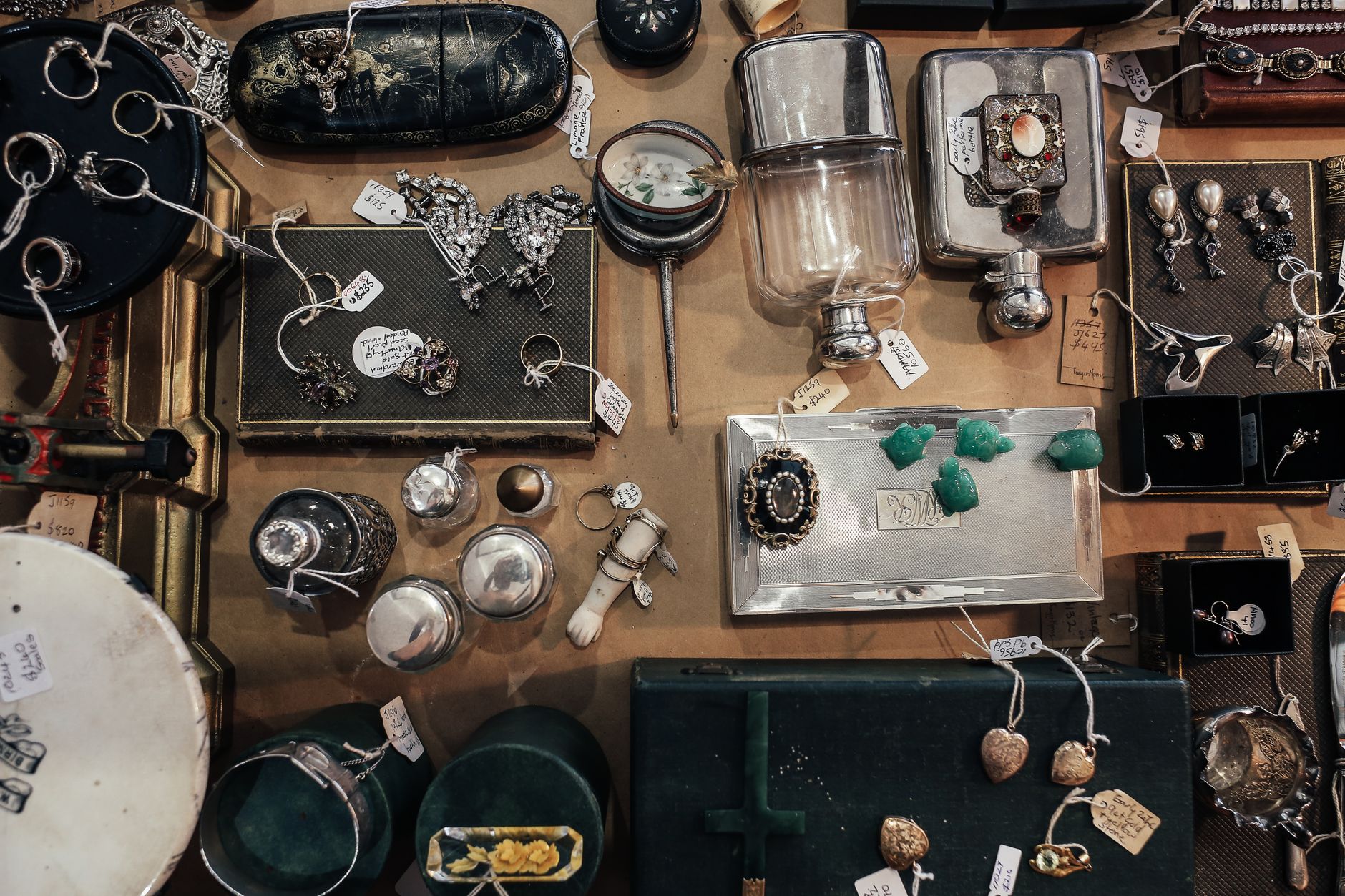
Antique jewelry generally means pieces at least 100 years old, while vintage jewelry means older pieces that fall short of that mark. Estate jewelry covers any previously owned piece and says nothing about age on its own. Sellers use these words loosely, so the label alone cannot prove age or worth. Knowing how dealers use each term helps you ask better questions and compare pieces fairly.
Table of Contents
- How old is antique versus vintage?
- Do style and materials reveal age?
- Does the label change value?
- How do you buy with confidence?
- How do you wear and care for older pieces?
- Frequently Asked Questions
How old is antique versus vintage?
Many dealers call a piece antique once it passes about 100 years. Pieces with Victorian, Edwardian, or Art Deco styling often fall in this group. The cutoff moves forward each year as time passes. Vintage usually means at least 20 to 30 years old, but younger than antique.
Mid-century cocktail rings, Retro gold bracelets, and 1970s chains are common examples. Shops vary on the starting point, so ask what date range a seller means. Estate simply means someone owned the piece before you. It can describe a ten-year-old ring or a century-old brooch. Treat it as a note about ownership, not age.
Do style and materials reveal age?
Design details often point to a period more clearly than a tag does. Filigree wirework, hand engraving, and old diamond cuts suggest earlier manufacture. Bold yellow gold, textured surfaces, and large colored stones often point to mid-century work. Construction also leaves clues. Earlier pieces more often show hand fabrication, such as slightly uneven prongs or hand-pierced gallery work.
Gallery work is the shaped metal beneath a stone that lifts and supports it. Later pieces more often show crisp casting marks and standardized findings like modern hinged backs. Materials can narrow the range but cannot date a piece alone. Platinum settings became more common in the early 1900s, while white gold grew later as an alternative. Old Mine and Old European cuts are early roundish diamond cuts with a softer, less uniform sparkle than modern rounds.
Does the label change value?
The label itself does not set worth. Rarity, condition, metal, gems, and quality of work matter far more. A scarce antique ring in fine condition can command strong interest, while a worn vintage piece with replaced stones may not. Original condition carries special weight. Matching period parts, intact enamel, tight stones, and clear hallmarks support desirability.
Major repairs, resized shanks, replaced clasps, and re-cut diamonds can reduce interest among collectors. Reproductions add confusion. Vintage-style means new jewelry made to look old. It may copy milgrain edges, filigree patterns, or antique cuts without old age. Ask directly whether a piece is period-made or later inspired.
How do you buy with confidence?
Read the listing for facts, not adjectives. Look for metal stamps, stone identities, measurements, weight, and any noted repairs. Clear photos of marks, clasps, prongs, and the back of the setting help most. Ask pointed questions before you pay.
A careful seller can answer most of these without guessing. Get independent checks for costly purchases. An appraisal assigns value for insurance, while an evaluation of authenticity addresses age and materials. For precious metals, a jeweler can also test content when stamps are worn or missing.
- What is the believed age, and what supports it?
- Which parts are original, and which were repaired or replaced?
- Are the stones natural, treated, or synthetic?
- What is the return policy if an appraiser disagrees?
How do you wear and care for older pieces?
Older mountings often need gentler handling than new ones. Thin shanks, worn prongs, wire filigree, and glued settings can fail under daily strain. Reserve fragile rings and bracelets for occasional wear. Use mild cleaning and avoid force.
Wash with warm water, a drop of mild soap, and a soft brush, then rinse and pat dry. Skip ultrasonic cleaners, harsh chemicals, and hard scrubbing around enamel, pearls, opals, and loose stones. Store each piece separately in a soft pouch or lined slot. Keep chains clasped to prevent tangles and keep harder stones away from softer gems. Ask a jeweler experienced with older pieces to check prongs and clasps before regular wear.
Frequently Asked Questions
Does antique always mean more valuable than vintage?
No. Value depends on rarity, materials, craftsmanship, and condition. A fine vintage signed piece can outweigh a common antique piece.
What does estate jewelry mean on a price tag?
It means pre-owned. The piece may be nearly new or very old, so ask for its believed age and evidence.
Should I resize an antique ring?
Pause before altering a scarce or finely detailed piece. Ask a jeweler who handles period jewelry whether sizing will harm structure, engraving, or value.