
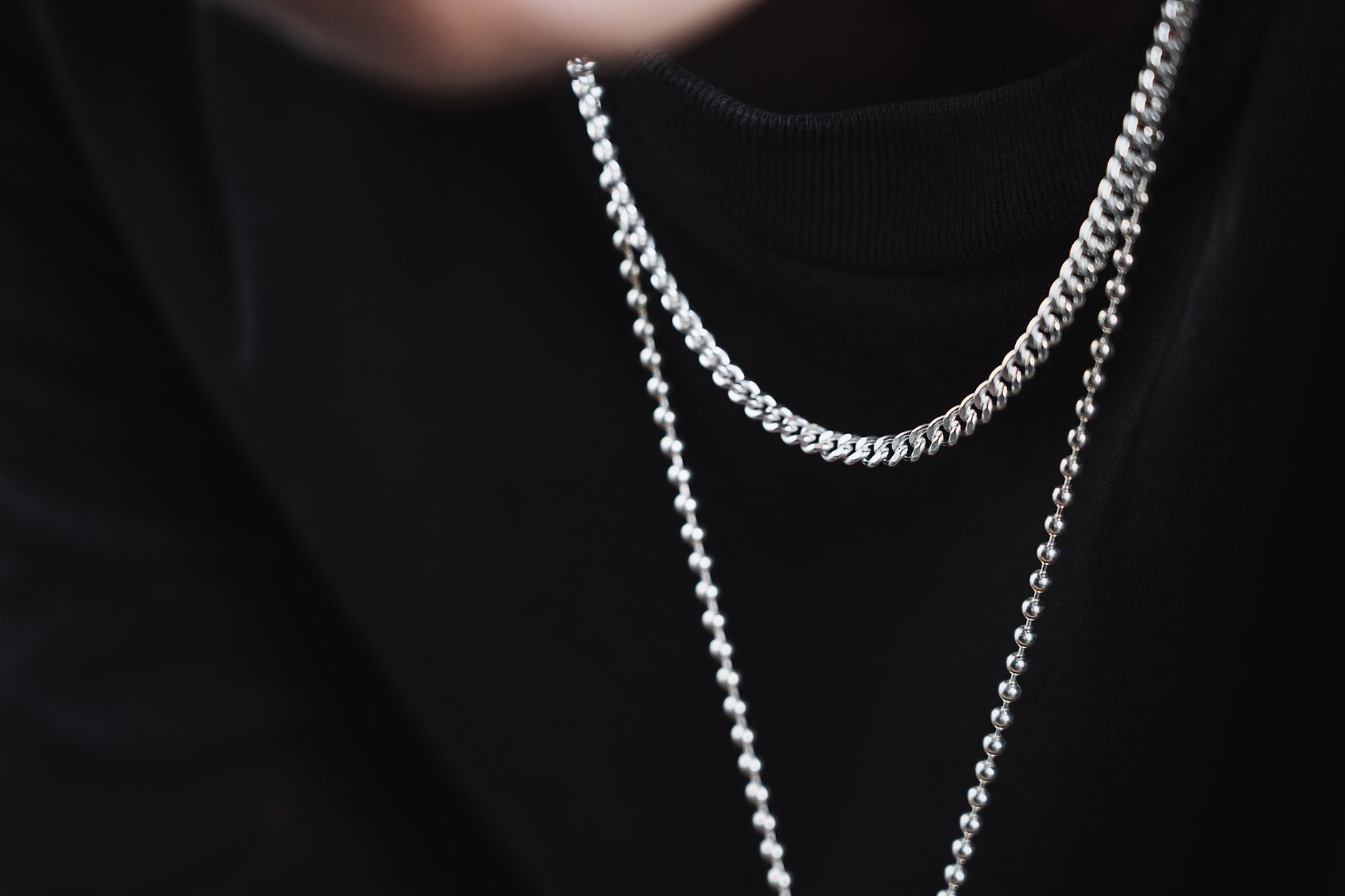
There was no single, category-wide August 2026 change for necklaces and chains. Instead, gold demand, sourcing, EU packaging rules, and nickel safety produced several developments that buyers and sellers should understand. High gold prices are pushing shoppers toward lighter pieces, while regulators expect stronger evidence behind packaging and product-safety compliance. These changes affect design choices, sourcing claims, inventory, and cross-border sales.
Table of Contents
- High prices are reshaping gold purchases
- Traceability gained attention—but no new certification
- EU packaging compliance entered a new phase
- Nickel release remains a concrete safety risk
- What should readers watch next?
High prices are reshaping gold purchases
Global gold-jewellery demand fell 17% year over year to 278.2 tonnes in Q2 2026. Yet first-half spending rose 22% to US$86 billion, according to the World Gold Council's Q2 2026 jewellery-demand report. The contrast matters: consumers spent more money but received less gold by weight. They increasingly selected lighter-weight pieces, lower-carat gold, and old-for-new exchanges.
For chains and necklaces, that trend may favor slimmer links, hollow construction, shorter lengths, and lower-carat options. However, the World Gold Council's figures cover gold jewellery generally, not necklaces and chains as a separate category. Buyers should compare pieces by more than price. Useful questions include:.
- Is the chain solid or hollow?
- What is its weight and gold purity?
- Can its clasp and links withstand the intended use?
- Does the seller offer an old-gold exchange or trade-in calculation?
Traceability gained attention—but no new certification
On August 12, the World Gold Council and Artisanal Gold Council announced a five-year partnership focused on origin verification, traceability, and mercury-free processing for artisanal gold. The partnership framework could improve the evidence behind responsible-sourcing claims over time. It does not create a new retail certification for necklaces or chains.
A seller cannot treat the announcement itself as proof that a particular product has verified origins or mercury-free production. Retailers making sourcing claims should retain documentation that connects finished jewellery to the relevant supplier and gold source. Buyers can ask whether a claim applies to the entire chain, only its gold content, or merely the seller's broader sourcing program.
EU packaging compliance entered a new phase
The EU Packaging and Packaging Waste Regulation began phased application on August 12, 2026. It affects businesses selling necklaces and chains into the EU, although major recyclability, recycled-content, and reuse measures mainly apply from 2030, according to the European Commission's implementation update. Jewellery packaging can involve several components: an outer shipping box, protective filler, a presentation box, a pouch, and printed inserts.
Sellers should not assume that a small product means insignificant packaging obligations. EU-facing businesses should begin by listing each packaging component, its material, and its purpose. they should then confirm which duties apply in each market and preserve supplier specifications rather than waiting for the later requirements to arrive.
Nickel release remains a concrete safety risk
French consumer guidance states that necklaces and chains in prolonged skin contact must not release nickel above 0.5 micrograms per square centimetre per week. Businesses must be able to demonstrate compliance with EU chemical rules known as REACH, as explained in the DGCCRF's jewellery safety guidance. A 2026 German Safety Gate notification shows why testing matters. A silver-plated snake-chain necklace, model A-2144, reportedly released nickel at up to 138 micrograms per square centimetre per week.
Authorities responded with a sales stop, consumer warning, and delisting. That alert concerned one identified product, not every plated chain or snake-chain design. Still, sellers should validate base metals, clasps, soldered areas, and plating because any skin-contact component can undermine an otherwise compliant piece. Consumers who develop irritation should stop wearing the item and retain its model, seller, and purchase details. Retailers should be prepared to connect test records to the exact product and components offered for sale.
What should readers watch next?
The clearest near-term demand test is second-half wedding and holiday buying. The World Gold Council reported stronger July activity in India after gold prices declined, while warning that elevated prices and cautious consumers could still limit recovery. For buyers, the practical question is whether a lower-priced chain reflects reduced weight, lower purity, different construction, or a genuine price change.
For sellers, the key signals are unit weight, carat mix, trade-in activity, and whether holiday demand improves without heavier discounting. Before purchasing or listing a chain, record its weight, purity, construction, sourcing evidence, skin-contact materials, and packaging components. Those details make price, durability, safety, and compliance claims easier to evaluate.