
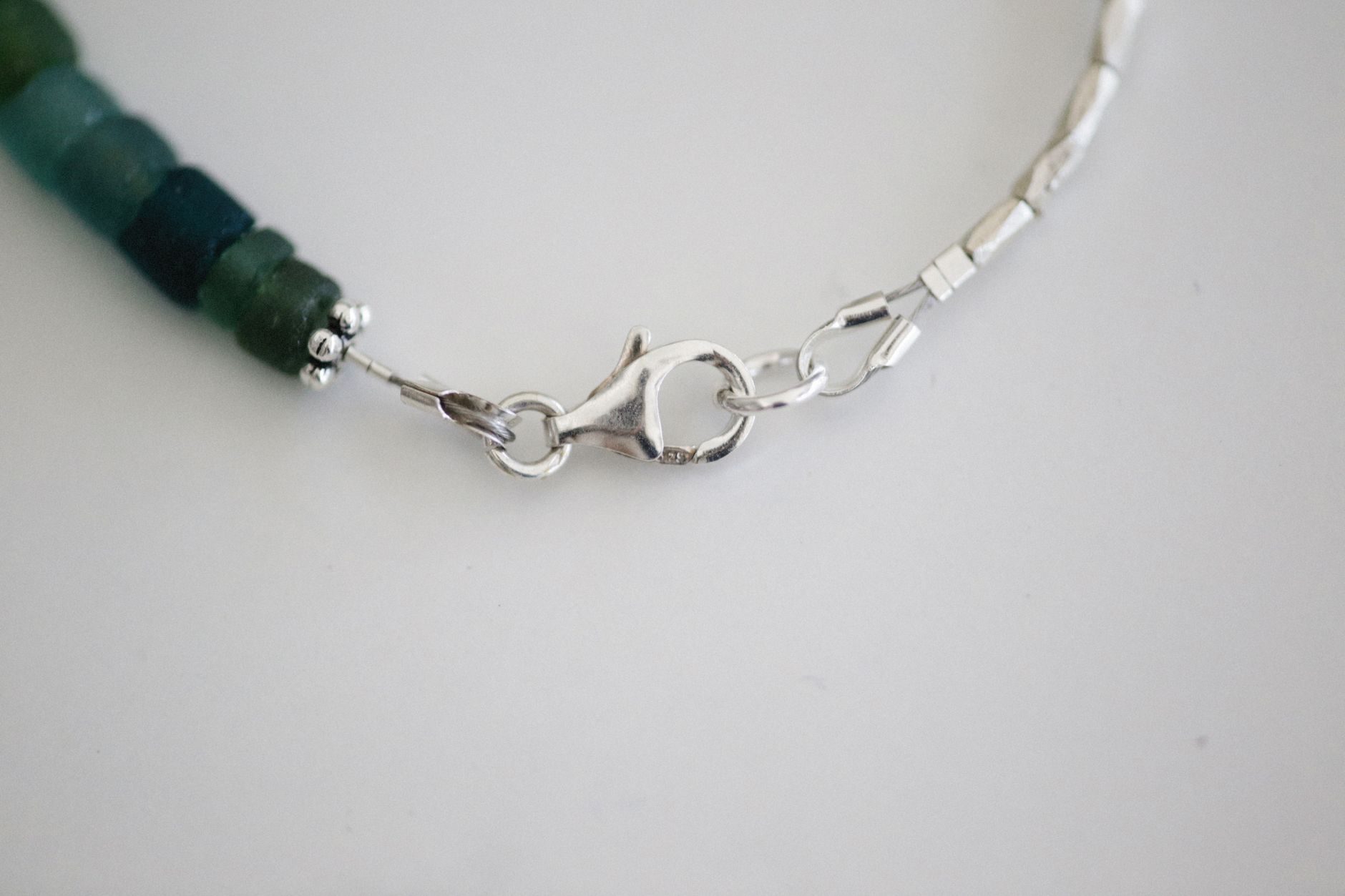
A jewelry clasp that fails during the first wear could indicate a design, engineering, or workmanship problem. However, the timing alone does not prove a defect, because jewelry can fail for reasons outside anyone's control. The title identifies no specific brand, seller, or documented incident. The Gemological Institute of America describes jewelry failure as an ongoing trade concern and notes that determining its cause requires evidence, not timing alone (GIA's quality-assurance report).
Table of Contents
- What does a first-wear failure suggest?
- What should you photograph?
- Why photograph the marks?
- What other evidence should you preserve?
- What should you ask the seller to do?
What does a first-wear failure suggest?
A new clasp should be examined as a complete assembly. The relevant evidence includes what separated, what bent, and whether the clasp still moves but no longer latches.
Those observations identify the physical failure, but they may not establish its cause. Avoid presenting the incident as proven defective workmanship when contacting the seller; describe exactly what happened and let the photographs support your request.
What should you photograph?
Take pictures before repair or other alterations. USPS claims guidance offers a useful documentation principle: photographs should clearly show the extent of damage (USPS domestic claims guidance).
Capture: Include one wider image for context and several sharp close-ups for detail. Keep the original image files so the seller can see the item's condition before repair.
- The entire necklace, bracelet, or other item in one frame
- The clasp from both sides
- The separated, bent, worn, or non-latching area in close-up
- Each loose component beside the item
- The item arranged as it was immediately after the failure
Why photograph the marks?
A metal-quality mark can help connect the item to its description. For gold jewelry, the FTC says a karat mark identifies gold content and should appear with the company name or registered trademark of the business standing behind it (FTC jewelry-buying guidance).
Photograph the mark and adjacent trademark together when possible. Also take a wider image showing where those marks appear on the jewelry, since an isolated close-up may not establish which item was photographed.
What other evidence should you preserve?
Save the receipt, order confirmation, warranty, card statement, and original listing details. The FTC recommends collecting purchase documents and keeping the originals when seeking a resolution for a defective product (FTC problem-resolution guidance).
If shipping damage is possible, retain and photograph the box, shipping label, tags, protective materials, and all contents. USPS may require damaged articles and packaging to be kept for inspection, so do not discard them while a shipping claim remains possible.
What should you ask the seller to do?
Contact the seller promptly because return periods may be limited. Send a short factual account, attach the clearest photographs, identify the purchase, and request a specific remedy: refund, repair, exchange, or credit. State when and how the item was worn, when the clasp failed, and whether any pieces were lost.
If the seller's deadline has passed, the manufacturer may need to handle the defective-item request. If the failure caused an injury or presented a credible injury risk, document how the jewelry was worn, what happened, and the injury. A CPSC safety report concerns injury or product risk, not a complaint solely about price or quality.