
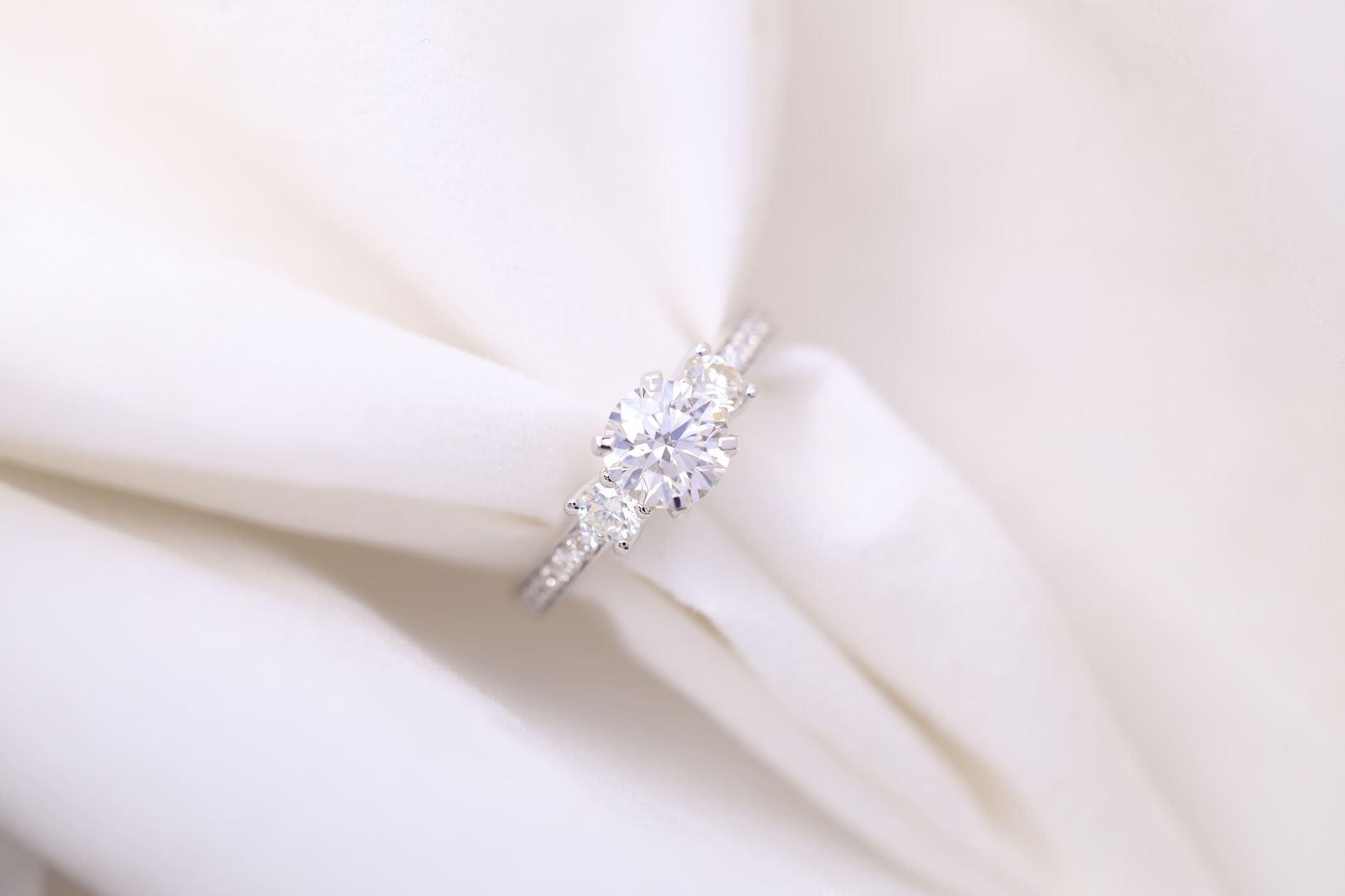
"GIA quality" is a marketing claim, not a standardized grade or proof that the Gemological Institute of America examined the jewelry. An online buyer should expect an item-specific GIA report—or clear disclosure that no such report exists—plus evidence linking the report to the stone being sold. The report should identify the gemstone and disclose relevant grading details or treatments. It does not establish the quality of the setting, verify every metal claim, guarantee value, or replace a practical return policy.
Table of Contents
- What Does "GIA Quality" Actually Mean?
- What Should an Actual GIA Report Show?
- How Do You Match the Report to the Jewelry?
- What Evidence Is Needed Beyond the Gemstone Report?
- Protecting the Purchase Before Payment
What Does "GIA Quality" Actually Mean?
gia is a gemological laboratory and education provider. It issues reports describing gemstones submitted for examination, but sellers sometimes use "GIA quality" more loosely to suggest that an item meets high standards. That phrase alone does not reveal whether GIA inspected the stone.
It may refer to a seller's opinion, an internal grading system, or a gemologist's education. None of those meanings equals an item-specific GIA report. The distinction also matters when a listing mentions a "GIA gemologist." A person's training may support professional knowledge, but it does not make the merchandise GIA-approved or GIA-graded. Ask the seller to state which meaning applies:.
- The exact gemstone has a GIA report.
- A GIA-trained employee graded the stone internally.
- The seller uses "GIA quality" only as descriptive language.
- A different laboratory examined the stone.
What Should an Actual GIA Report Show?
A credible listing should provide the report number, report type, issue information, and enough report details to identify the gemstone. For a diamond, relevant details commonly include weight, measurements, color, clarity, and whether it is natural or laboratory-grown. Depending on the stone and report, the document may also address cut characteristics, detectable treatments, inscriptions, or geographic origin. Not every report contains every category, so buyers should judge the document by its stated scope.
The seller should provide a legible copy rather than a cropped image showing only favorable grades. Buyers should also be able to check the report number through GIA's report-verification service and compare the displayed information with the listing. A GIA report is not an appraisal, guarantee, or certificate of resale value. It describes specified gemological characteristics at the time of examination; it does not promise what another buyer will pay.
How Do You Match the Report to the Jewelry?
A genuine report is useful only if it belongs to the stone offered. Compare the report's weight, dimensions, shape, cutting style, and identifying comments with the product description. Some diamonds carry a microscopic report-number inscription on the girdle, the narrow outer edge of the stone.
A qualified jeweler can check that inscription, although not every graded stone has one and settings may obstruct it. Online buyers should request item-specific photographs or video when a listing relies on stock images. For higher-value purchases, make the sale conditional on an independent inspection during the return period. Warning signs include:.
- The seller refuses to provide the complete report number.
- The report details conflict with the listed weight or dimensions.
- One report appears across several supposedly unique stones.
- The listing calls an in-house document a "GIA certificate."
- The seller says verification is unnecessary because the item is "GIA quality."
What Evidence Is Needed Beyond the Gemstone Report?
A gemstone report usually does not authenticate the entire finished piece. Buyers need separate support for metal purity, craftsmanship, branded provenance, and the condition of pre-owned jewelry. The listing should identify the metal and fineness, such as 14-karat gold or platinum of a stated purity. Clear photographs should show relevant stamps, maker's marks, clasps, prongs, solder joints, and visible wear, but a stamp alone cannot prove composition.
For branded jewelry, request original purchase records, service documents, serial or reference numbers where applicable, and detailed photographs. Packaging and unsigned appraisal papers may support a history, but neither proves authenticity by itself. An insurance appraisal serves another purpose. It may estimate replacement cost and describe the mounted item, but a seller-selected valuation does not convert an unsupported "GIA quality" claim into laboratory evidence.
Protecting the Purchase Before Payment
Read the return terms before relying on any grading claim. The policy should allow enough time for an independent jeweler or gemologist to compare the item with its report and inspect the setting.
Keep copies of the listing, photographs, report, invoice, seller messages, and return conditions. Product pages can change, and a payment dispute may depend on the exact representations made at checkout. Before paying, obtain written answers to these questions: If the seller will not replace "GIA quality" with specific, verifiable facts in writing, treat the jewelry as undocumented and price the risk accordingly.
- Did GIA examine this exact stone?
- What is the full report number?
- Is the stone natural, laboratory-grown, or treated?
- Do the photographs show the actual item?
- Can an independent professional inspect it during the return period?