
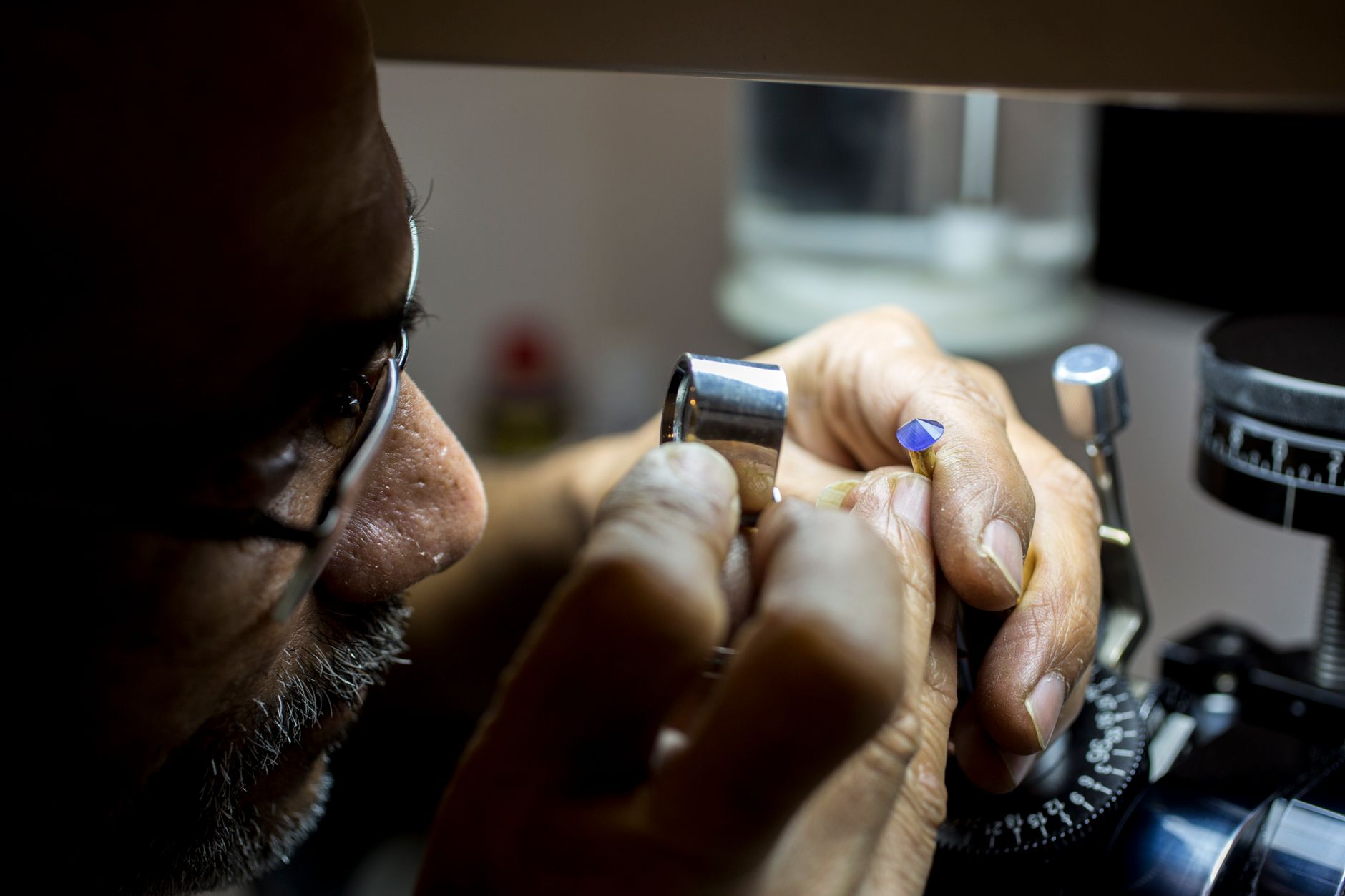
An online buyer should expect a genuine Gemological Institute of America (GIA) laboratory report and enough matching details to connect it to the gemstone for sale. Without that evidence, "GIA tested" is an incomplete marketing claim, not proof of identity, quality, treatment, or origin. The phrase does not name a particular laboratory service or reveal whether GIA examined the stone. It could refer instead to testing by the seller or to an employee's GIA education, neither of which substitutes for a report.
Table of Contents
- What should "GIA tested" mean?
- Which documents should the seller provide?
- Does the report cover the entire piece?
- What does a GIA report not prove?
- How should a buyer act on the evidence?
What should "GIA tested" mean?
Ask the seller whether GIA itself examined the gemstone and, if so, which report it issued. GIA uses "report," not "certificate," and states that it does not certify gemstones, people, or businesses. A claim such as "GIA certified" is therefore inaccurate terminology. GIA explains the distinction between reports and certification. The report type determines what GIA evaluated.
A colored stone Identification Report describes the material, whether it is natural or laboratory-grown, and any detectable treatments. An Identification and Origin Report adds a geographic-origin opinion for eligible stones when GIA can determine one. GIA lists its colored stone report services and their contents. Colored stone identification is not the same as diamond-style quality grading. Likewise, a seller's Graduate Gemologist diploma shows education; it does not establish that GIA's laboratory examined a particular ring, pendant, or gemstone.
Which documents should the seller provide?
Request the evidence before payment or before any nonrefundable period begins. A credible seller should provide: Enter the number yourself in GIA Report Check. The archived details should agree with the seller's document field by field.
Report Check confirms that a corresponding GIA record exists, but a copied number still does not prove that the advertised stone is the one GIA examined. Compare the report's photograph, shape, dimensions, weight, color description, and item type with the listing. For example, an origin-not-requested report cannot support a seller's claim that a sapphire comes from a particular country. An emerald report disclosing clarity enhancement cannot support an "untreated emerald" description.
- A clear, complete image or PDF of the GIA report, not a cropped logo or partial screenshot.
- The report number, date, and exact report type.
- The item description, including whether GIA examined a loose or mounted stone.
- The recorded species, variety, natural or laboratory-grown status, treatments, shape, cutting style, color, measurements, weight, and photograph where included.
- Any geographic-origin result the listing relies upon.
Does the report cover the entire piece?
Do not assume a report for the center stone covers every part of the jewelry. A sapphire report may say nothing about accent diamonds, an 18-karat gold claim, workmanship, repairs, total jewelry weight, or the authenticity of a designer signature. Read the report's item description closely. If it covers one loose stone that was later set into a ring, ask how the seller matched that stone to the finished piece.
Measurements, distinctive features, and a documented inscription can help, although close inspection may require a gemologist. GIA can analyze mounted colored stones, but it does not unmount and remount them. For mounted submissions, GIA records gross weight in grams rather than an exact loose-stone carat weight; carat weight may be approximated for service-fee purposes. GIA describes its handling of mounted colored stones and its limits on unmounting jewelry.
What does a GIA report not prove?
A GIA report is not a valuation or appraisal. It does not state a fair purchase price, replacement value, resale value, or insurance value. Those conclusions require separate market analysis and an appraisal suited to its intended purpose. The report also is not a guarantee, warranty, or endorsement of the seller. It records findings about the examined item using the methods available at that time.
GIA cautions that later examinations may differ because an item changed or testing methods improved. GIA states these report limitations. Geographic origin is not the same as ownership history or responsible sourcing. An origin opinion may connect a gem to a geographic source, but it does not establish every prior owner, prove lawful export, or document labor and environmental practices. Those claims require separate provenance or chain-of-custody records.
How should a buyer act on the evidence?
Make the report part of the transaction. The invoice should repeat the report number and material claims that matter to the price, including natural or laboratory-grown status, disclosed treatments, and any stated origin. Avoid relying on descriptions such as "investment grade," "museum quality," or "GIA tested" when the contract contains no measurable details.
Secure a written return period long enough for independent inspection. For a valuable purchase, ask a qualified gemologist or independent jewelry appraiser to confirm that the delivered stone matches the report and that the metal, side stones, condition, and construction match the invoice. If the seller will not disclose the complete report before purchase, treat the gemstone as unverified or decline the transaction. After delivery, keep tags attached, avoid resizing or altering the jewelry, and compare the item promptly; if any field differs, photograph the mismatch and begin the return process before the deadline.