
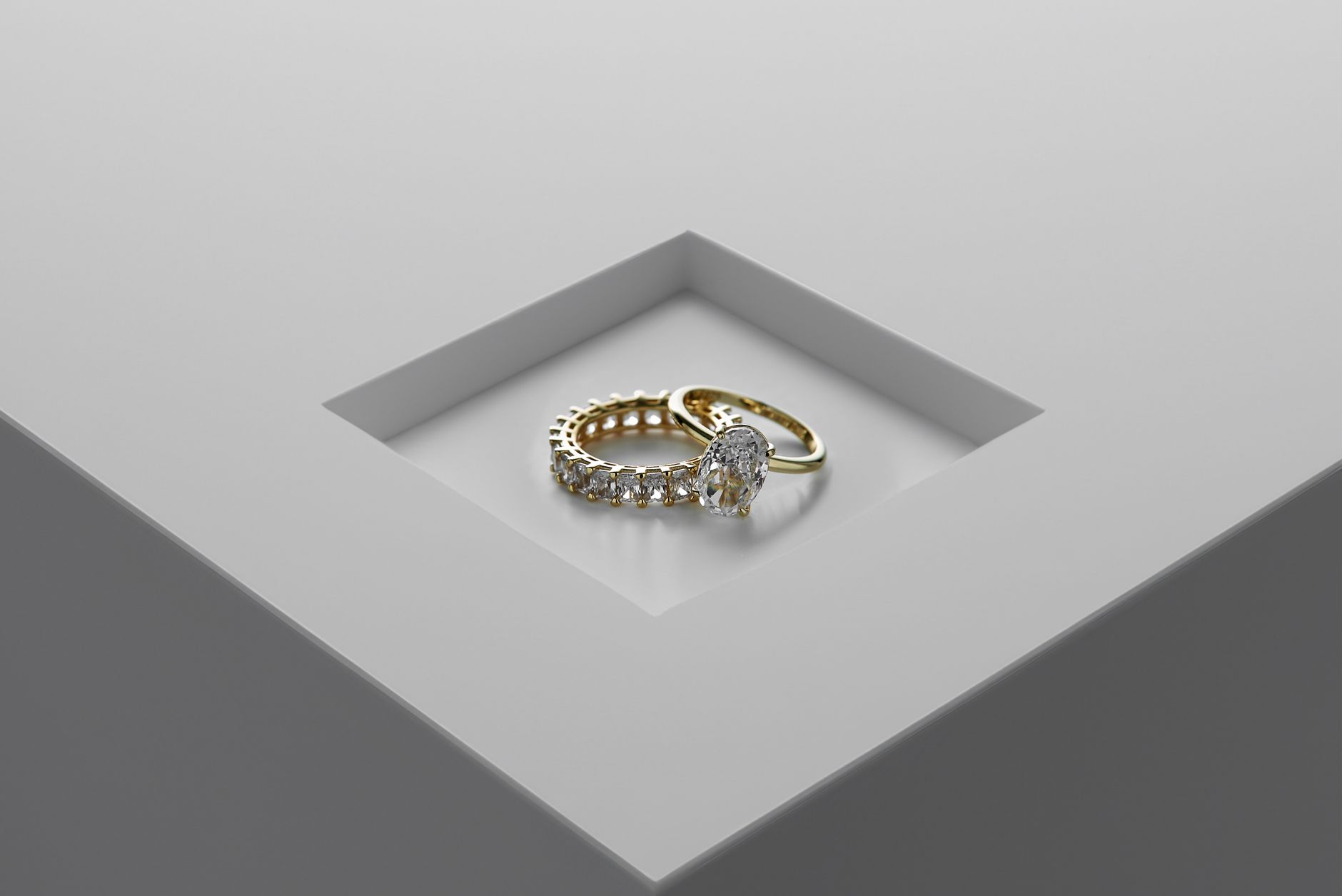
A stone that clicks when you tap it is loose in its setting. The click is the sound of the stone shifting inside the metal that holds it and striking it again — a gap that should not exist. Gentle taps do not create looseness, they reveal it. Take the ring off now and keep it off until a bench jeweler examines it, because a stone that can move is a stone that can chip, abrade, or fall out entirely.
Table of Contents
- What the click actually is
- Why a setting loosens
- When the click is not the stone
- What to do before it reaches a bench
- What the repair usually involves
- Keeping it from happening again
- Frequently Asked Questions
What the click actually is
A stone sits in a seat cut into the metal, held by prongs, a bezel wall, a channel, or the tension of the shank itself. When that hold is complete, stone and metal behave as one object. Tap it and you get a dull, solid tick with no ring to it. A loose stone has a fraction of a millimetre of travel. Your tap pushes it against one side of the seat, it rebounds, and it strikes the metal a second time.
That double contact is the click. The gap is usually too small to see without magnification, which is why the sound is often the first sign a wearer gets. Jewelers check this the same way, only closer. The standard bench test is to hold the piece near the ear and tap the stone with a fingernail or the wooden end of a tool, then probe each prong individually with a fine point to find which one has let go. A stone can be secure under three prongs and loose under the fourth, and it will still click.
Why a setting loosens
Prongs are the thinnest metal on a ring and they take the most abuse. Every time the ring brushes a countertop, a steering wheel, or a coat pocket, a small amount of metal comes off the tip. Over years of daily wear the tip thins until it no longer curls over the stone's girdle — the widest edge where the top and bottom of a cut stone meet. Impact does it faster. A knock hard enough to bend a prong outward opens the seat immediately, and the stone starts rocking from that moment.
Soft, high-karat gold and fine silver bend more readily than 14k gold or platinum, and platinum wears by deforming rather than shedding metal, which is part of why it is favoured for heads that hold expensive stones. Other setting styles fail in their own ways. A bezel can pull back from the stone at one point, leaving the rest looking perfect. Channel walls spread when a ring is sized or squeezed, releasing a whole row of small stones at once. Glued settings — common in costume and some fashion pieces — release when adhesive is exposed to heat, solvent, or ultrasonic cleaning.
When the click is not the stone
Not every click comes from a loose gem, and the difference changes the repair. Press the shank gently between two fingers while you tap. If the sound follows the stone alone, it is the setting.
If the whole head shifts, the joint between the head and the shank is the problem, which is a solder failure rather than a prong failure. A few other sources are worth ruling out before you assume the worst: A cracked or partly separated shank deserves the same urgency as a loose stone. It will fail completely, usually at the worst moment, and a ring that breaks while being worn can take the stone with it.
- Two rings worn on the same finger tapping each other
- A sizing bar, ring guard, or adjustable insert moving inside the shank
- A halo of small stones where one melee stone is loose, not the centre
- A hollow shank or hollow head, which rings differently from solid metal
- A cracked shank that opens and closes slightly under finger pressure
What to do before it reaches a bench
Stop wearing it. That single step prevents almost every bad outcome, because a loose stone only escapes while the ring is moving through the world. Then leave it alone. Two common instincts cause real damage: Store the ring flat in a soft pouch or a small box rather than loose in a jewellery dish.
If the stone does come out in transit, you want it contained. Check the pouch carefully before discarding it — a small stone in a fabric seam is easy to throw away. If the piece is insured or under a retailer's warranty, look at the terms before the repair. Many warranties require inspections at set intervals by an authorised jeweler and are voided by work done elsewhere, and some insurers want a loss reported before repair rather than after.
- Pressing the prongs down with pliers, fingernails, or a household tool. Prong tips that are already thin snap off under this, turning a tightening job into a rebuild. Bending a prong also loads the stone at a single point, which can chip the girdle.
- Adding glue. Adhesive fills the seat, hides the actual gap, and has to be dissolved before any proper repair. A jeweler cannot set a stone into a seat full of cured glue.
What the repair usually involves
The lightest fix is tightening: the jeweler re-cuts or re-seats the stone and closes the prongs properly over the girdle. This works when the prongs still have enough metal left on them. When they do not, the answer is retipping — adding new metal to the worn tips — or replacing the prong or the entire head. Retipping is routine work, but it involves heat, and heat is the part that matters for your stone. Many gems tolerate it poorly.
A competent jeweler handles this by removing the stone before applying a torch, or by using a laser welder, which puts heat into a very small area. Ask which approach they plan to use, and tell them what the stone is, including any treatment noted on a grading report. If you do not know, say so rather than guessing — an incorrect assumption about a stone's identity is how gems get cooked. Expect the jeweler to check every stone, not just the noisy one. Prongs on the same ring have lived the same life and tend to wear out together.
- Emeralds are commonly fracture-filled with oil or resin, which heat drives out and discolours
- Opals contain water and can craze or crack
- Tanzanite, topaz, and many treated stones can change colour or fracture
- Pearls and amber are damaged by heat and by most solvents
Keeping it from happening again
Repeat the tap test yourself every month or two. It costs nothing, needs no equipment, and catches a loose stone at the stage where tightening is still possible. Run a fingertip over the prong tips at the same time; a tip that catches on skin or fabric has worn to a point and is close to failing.
Have pieces you wear daily inspected professionally at least twice a year, and more often if you work with your hands. Most jewelers check and tighten settings at no charge, and many retailers log the inspection, which is what keeps a warranty alive. Take rings off for anything that grinds, pulls, or knocks — weights, gardening, cleaning, kneading dough, rock climbing, and handling gym equipment are the usual culprits. Skip home ultrasonic cleaners on any piece with a stone you have not confirmed is safe in one; the vibration that lifts dirt out of a setting will also shake an already-loose stone free, and it is unkind to emeralds, opals, and anything glued.
Frequently Asked Questions
Can I keep wearing the ring if the stone only clicks sometimes?
No. An intermittent click usually means the stone is held by some prongs and not others, and the loose side takes all the impact. Wearing it wears the seat further and abrades the stone's girdle.
Does a clicking stone mean it is fake or poor quality?
No. Looseness is a setting problem, not a stone problem. A flawless diamond and a piece of cubic zirconia loosen in exactly the same way, because the failure is in the metal holding them.
My small pavé stones click as a group when I tap the row. Is that different?
It usually means the channel walls or the beads holding the row have spread, rather than one stone coming loose. Treat it as more urgent, not less, because a spread channel can release several stones at once.
How long can I safely wait before taking it in?
As long as you like, provided you are not wearing it. The damage comes from wear, not from time sitting in a box.