
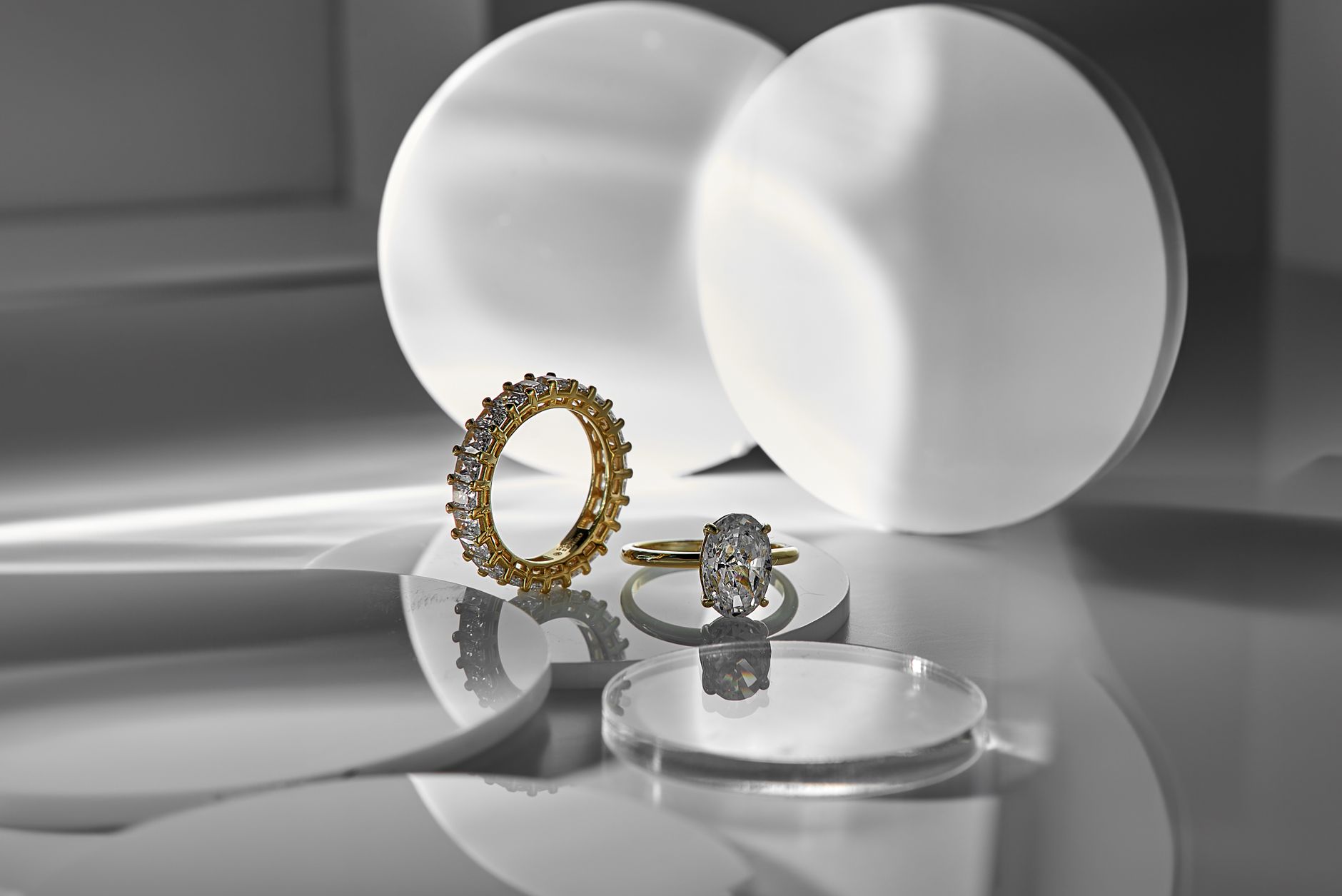
Lab grown diamond and gemstone rings use stones created in a laboratory that match the crystal makeup of mined stones. Buyers should check stone identity, grading documentation, metal quality, and maintenance needs before choosing. A lab grown diamond is a diamond formed in a laboratory with the same carbon crystal structure as a mined diamond. Lab gemstones such as sapphire, ruby, and emerald also match their mined counterparts in basic makeup, while the metal setting determines comfort, durability, and service needs.
Table of Contents
- How Do Lab Stones Compare to Mined Stones?
- What Should You Check Before You Buy?
- Which Metal and Setting Choices Affect Wear?
- How Do You Clean and Maintain the Ring?
How Do Lab Stones Compare to Mined Stones?
Laboratory diamonds form through controlled heat and pressure or through layered carbon deposits from gas. Both routes produce a hard, faceted stone that a jeweler cuts and polishes like a mined diamond. The unaided eye cannot reliably tell origin, so written identification matters. Laboratory sapphires, rubies, and emeralds also share color, hardness, and light behavior with common mined types.
Color may look more even because laboratory conditions control trace elements that create hue. A seller should state whether the stone is laboratory-grown, mined and treated, or an imitation material with a different makeup. Durability depends mainly on stone type and cut quality, not on laboratory origin alone. Diamond remains suitable for daily wear, while emerald and some softer gems chip or scratch more easily. Setting style and wearing habits therefore affect lifespan as much as stone source.
What Should You Check Before You Buy?
Ask for clear wording on the product tag and receipt. Terms such as lab grown, laboratory-created, and synthetic all mean a human-made stone, while words such as natural-style or simulated can mean imitation. A direct label protects later service, insurance, and resale steps.
Read the grading document itself, not only the sales summary. Confirm that the report matches the ring by weight, measurements, and any inscribed report number. Keep the report with the receipt for cleaning visits, repairs, and insurance records.
- Stone identity: laboratory-grown diamond, sapphire, ruby, emerald, or other named material
- Grading report: cut, color, clarity, weight, measurements, and stated origin
- Metal marks: gold fineness, such as 14k or 18k, or platinum content inside the band
- Construction details: prong count, setting security, and ring size range for later adjustment
- Care and warranty terms: cleaning guidance, inspection schedule, and covered damage
Which Metal and Setting Choices Affect Wear?
Gold and platinum both hold lab stones well, but they wear differently. Platinum resists metal loss and suits thin prongs and daily use. Gold in 14k form resists scratching and bending, while 18k gold offers richer color with slightly softer wear. Setting style controls exposure. Prongs lift the stone and admit light, which suits diamonds and sapphires.
A bezel or partial bezel surrounds the edge and helps protect emerald, opal, and other stones that chip more readily. Low profiles and smooth galleries also snag less during work and exercise. Check scale and support under magnification. Prongs should touch the girdle evenly, side stones should sit level, and the band should feel smooth inside. Ask whether the design allows a loose stone to be tightened, re-tipped, or replaced without rebuilding the head.
How Do You Clean and Maintain the Ring?
Clean most diamond, sapphire, and ruby rings with warm water, mild dish soap, and a soft brush. Rinse well, pat dry with a lint-free cloth, and clean behind the stone where lotion collects. Avoid harsh chemicals, ultrasonic machines, and steam for emerald, treated stones, and glued accents.
Schedule periodic checks for movement, worn prongs, and loose pavé. Remove the ring for heavy lifting, abrasive cleaning, gardening, and contact sports. Store it separately in a soft pouch so harder stones do not scratch neighboring jewelry. Bring the ring for professional inspection if a prong lifts, the center stone shifts, or light performance changes.