
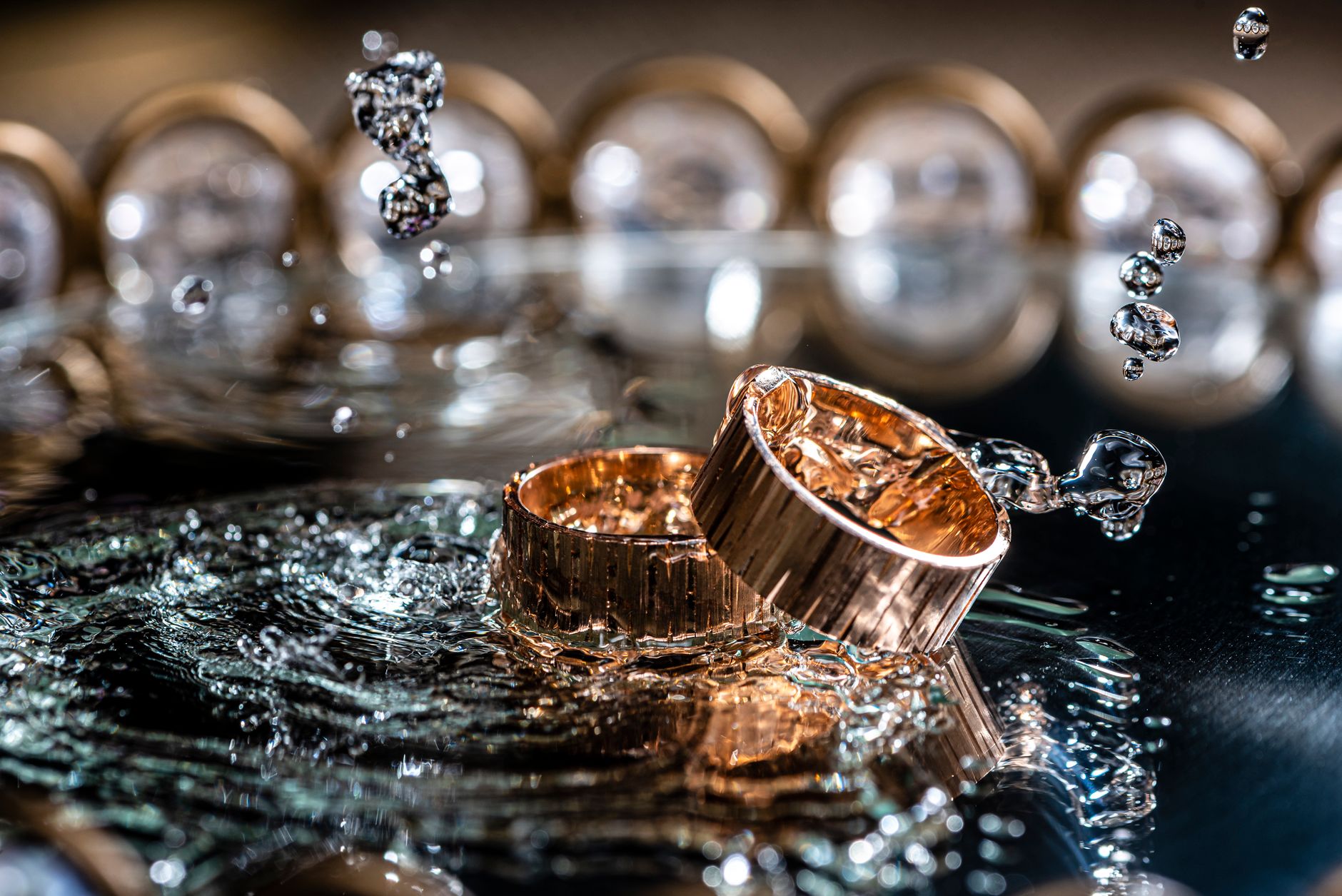
Clean a gold bracelet by soaking it in warm water with a few drops of mild dish soap, brushing gently with a soft-bristled toothbrush, rinsing in clean water, and drying it with a lint-free microfiber cloth. Scratching almost always comes from the tool, not the water — abrasive pastes, paper towels, and polishing cloths are what dull a finish, and none of them are necessary to remove skin oil, lotion, and dust.
Gold is soft. Pure gold is 24 karat and too soft for everyday wear, so bracelets are alloyed with metals like copper, silver, zinc, and nickel; 18k is 75% gold, 14k is 58.3%. Even alloyed, gold scores well below steel on hardness, which is why a bracelet picks up hairline marks from ordinary handling and why a cleaning method that works on a stainless watch case can permanently haze a gold link.
Table of Contents
- The basic soap-and-water method, step by step
- What actually scratches gold
- Chemicals that attack the metal itself, not just the shine
- Matching the method to the finish
- Ultrasonic and steam cleaners — when to avoid them
- When to hand it to a jeweler
- Frequently Asked Questions
The basic soap-and-water method, step by step
This works for solid gold bracelets with no soft stones, no glued parts, and no plating. It removes the film that actually makes gold look dull: body oil, soap scum, hand cream, and hairspray.
The brush is the one place to be fussy. Firm nylon bristles, and anything stiff enough to feel scratchy on your wrist, will leave a fine pattern of marks on a mirror-polished surface that you only see when the light hits it.
- Line a bowl with a soft cloth, or plug the sink drain first — a lost clasp pin is harder to fix than a dirty bracelet.
- Fill with warm, not hot, water and add two or three drops of plain dish soap. Skip anything labeled as containing bleach, degreaser, or scrubbing particles.
- Soak the bracelet 10 to 20 minutes so the grime loosens before anything touches the surface.
- Brush only where dirt collects: between links, around the clasp, behind settings. Use a baby toothbrush or a makeup brush, and keep strokes light and in one direction.
- Rinse in a second bowl of clean warm water rather than under a running tap.
What actually scratches gold
Three categories of product cause most avoidable damage. The first is household abrasives: toothpaste, baking soda, scouring powder, and "jewelry polishing" pastes all clean by grinding away a thin layer of metal. On gold that means a frosted, slightly cloudy surface where there used to be a sharp reflection. The second is paper.
Paper towels, tissues, and napkins contain wood fibers that are harder than they feel, and wiping a bracelet dry with one is a reliable way to add swirl marks. A microfiber or flannel cloth is the whole fix. The third is impregnated polishing cloths — the treated yellow-and-red cloths sold for silver and gold. They work, but they work by removing metal, which is fine occasionally on a polished band and wrong on anything textured. They also wear down hallmarks, engraving, and the crisp edges of links over years of use.
Chemicals that attack the metal itself, not just the shine
Chlorine is the serious one. Chlorine and chlorine bleach attack the base metals in gold alloys, and repeated exposure can cause pitting and stress corrosion that weakens links and clasps. This is a structural problem, not a cosmetic one: bracelets worn daily in chlorinated pools and hot tubs have broken at the links. Take gold off before swimming, and never soak it in bleach solution.
Ammonia-based glass cleaners are sometimes recommended for solid gold, and they do cut grease. They are a poor choice for gold-plated and gold-filled pieces, for anything with glued-in stones, and for soft or porous gems, where repeated exposure can dull the surface. Plain soap handles ordinary wear, so there is little reason to reach for a stronger chemical first. Also skip saltwater soaks, denture tablets, and rust removers. Salt accelerates corrosion of the alloy metals, and products formulated for other materials have no predictable effect on a jewelry alloy you cannot analyze.
Matching the method to the finish
A finish is a deliberate surface texture, and cleaning that ignores it will erase it. Mirror-polished gold shows every hairline scratch but can be restored by a jeweler. Satin, brushed, matte, and sandblasted finishes are the opposite: they hide fine marks but are destroyed by polishing, because polishing is precisely the process of removing texture. Rub a brushed bracelet with a polishing cloth and you get shiny patches that cannot be blended out without refinishing the whole piece. Plated pieces need the most restraint.
Gold plating is a microns-thin layer over brass or silver, and gold vermeil is a thicker layer over sterling. Either can be rubbed through to the base metal, after which there is nothing to polish. For these, use soapy water, a soft brush at the clasp only, and a gentle pat dry — no polishing cloth, no abrasives, no ultrasonic. Antiqued or oxidized gold, and the darkened recesses of engraved and filigree work, are also finishes. Scrubbing those recesses "clean" removes the contrast the design depends on.
Ultrasonic and steam cleaners — when to avoid them
Ultrasonic cleaners use high-frequency vibration in a liquid bath to drive dirt out of crevices, and they are genuinely effective on plain solid-gold chain. They are also indiscriminate. Vibration can shake a stone loose from a worn or weak setting, and it can worsen an existing fracture in a gemstone.
Several stones should not go in at all. Pearls, opals, emeralds, turquoise, coral, and amber are porous, heavily included, or surface-treated, and ultrasonic and steam cleaning are widely advised against for them. Anything held by glue — most commonly in costume and some plated bracelets — can simply come apart. If you do not know what the stones are, how they are set, or whether the piece has been repaired, soap and water costs you nothing and risks nothing.
When to hand it to a jeweler
Three situations are worth paying for. Existing scratches on a polished bracelet need professional polishing or laser work; no home product fills a scratch, and the ones that claim to are abrasives that trade one scratch for many smaller ones. A worn or re-plated finish needs replating, which is a plating-shop job. And a bracelet that has lost a stone, has a stone that moves under light fingernail pressure, or has a stretched clasp needs repair before cleaning, not after.
Ask for the finish you have, by name. A jeweler who polishes a satin bracelet because nobody specified has not made a mistake you can undo at home. For heirloom and high-value pieces, ask what the work removes: every polish takes a little metal, and a piece polished repeatedly over decades loses sharpness in its edges and depth in its engraving. One practical habit prevents most of the cleaning you would otherwise do. Put the bracelet on last, after lotion, perfume, and sunscreen have dried, take it off before swimming, cleaning, and the gym, and store it in its own soft pouch or a lined compartment rather than loose with other jewelry — harder pieces, especially steel and anything set with diamonds, scratch gold in a shared box.
Frequently Asked Questions
Can I use rubbing alcohol on a gold bracelet?
Isopropyl alcohol is reasonably safe on solid gold metal and useful for cutting through oily residue, but it can affect glued settings and some treated or porous stones. Use it on a cloth rather than as a soak, and keep it off plated pieces and anything with soft gems.
Why does my gold bracelet look dull even after cleaning?
Dullness after a proper wash usually means fine surface wear rather than dirt — thousands of micro-scratches scattering light instead of reflecting it. That is a polishing job, not a cleaning job, and on a brushed or satin finish it may be the finish working as intended.
Does higher karat gold scratch more easily?
Yes. More gold means fewer hardening alloy metals, so 22k and 24k mark noticeably more readily than 14k. Higher-karat bracelets also resist tarnish better, which is why they often look cleaner while picking up more scratches.
Is it safe to shower with a gold bracelet on?
Occasional showering will not harm solid gold, but soap and shampoo leave a film in the links, and chlorinated municipal water does the alloy no favors over years of daily exposure. Plated bracelets fare worst, since constant wetting speeds wear through the thin gold layer at friction points.