
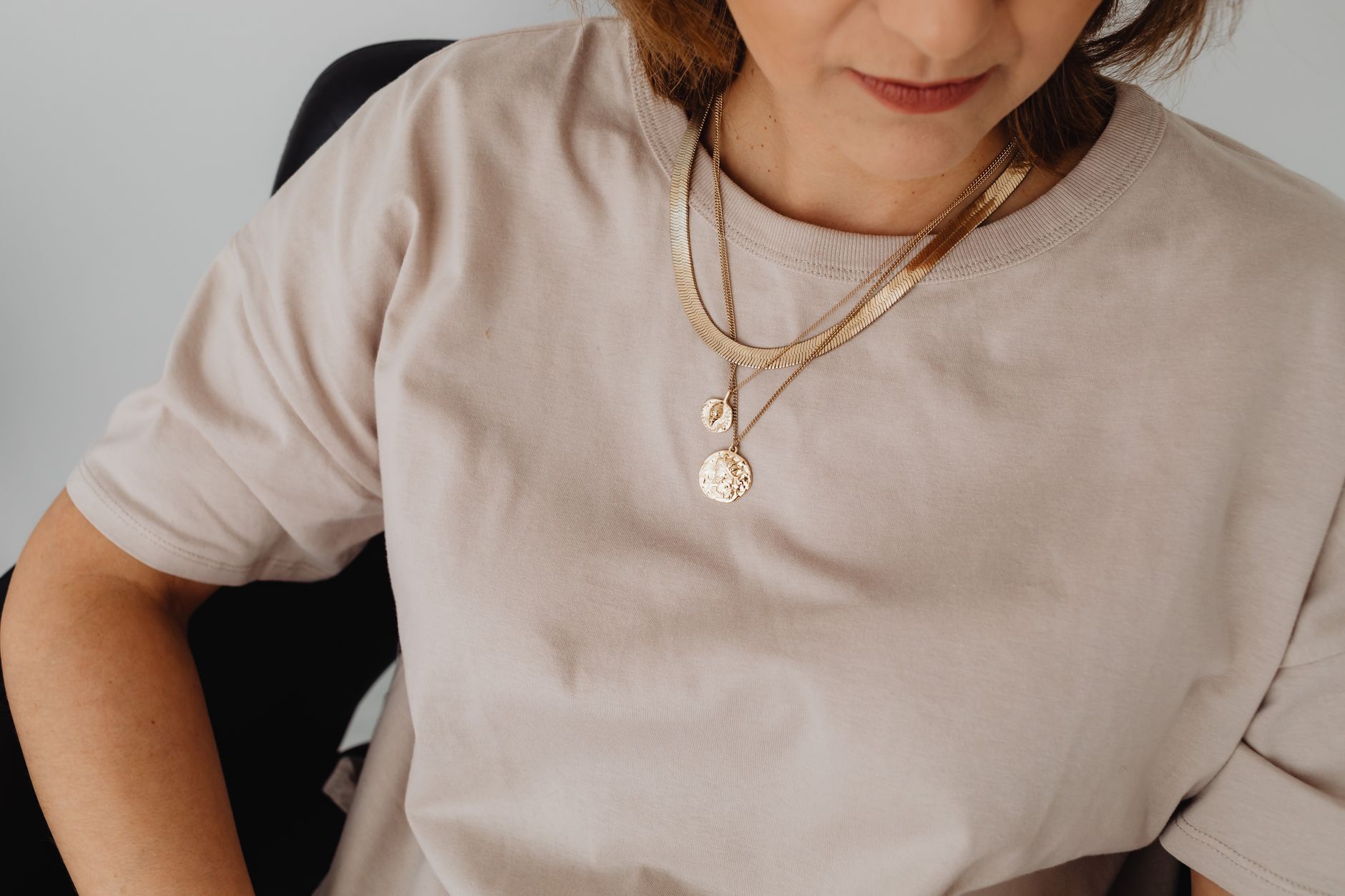
A herringbone chain is a flat necklace made from short, slanted metal segments laid edge to edge in a V pattern. It kinks because those segments form a stiff ribbon that curves smoothly in one direction but cannot twist, fold, or bunch without creasing. That structure gives herringbone its liquid shine and close fit against the skin. It also means sharp bends concentrate force on a few segments, leaving a visible fold that is hard to remove.
Table of Contents
- How the herringbone weave is built
- Why flat links crease instead of flexing
- What habits most often cause kinks?
- How to wear, store, and clean it safely
- Can a kink be repaired?
- Frequently Asked Questions
How the herringbone weave is built
Herringbone uses flat, angled plates or strips joined in alternating rows. Each piece overlaps or abuts its neighbor, creating a continuous herringbone or chevron surface with little open space.
Unlike cable, curb, or rope chains, it has no round, independently moving links. The result behaves more like articulated metal tape than a flexible cord.
Why flat links crease instead of flexing
The weave bends comfortably around the neck in its intended curve. Twist it sideways, double it over, or press it into a tight loop and the flat segments cannot rotate out of the way.
Pressure then bends the metal itself rather than shifting a joint. Once one or two plates fold, the smooth surface shows a ridge, dent, or X-shaped kink that catches light.
What habits most often cause kinks?
Damage usually comes from handling, not normal wear. Common causes include folding the necklace into a pocket or purse, twisting it while fastening the clasp, sleeping in it, or letting a pendant pull it sideways.
- Lay it flat before fastening, then lower it into place without twisting
- Keep it away from other chains that can knot against it
- Remove it before exercise, sleep, or tight clothing changes
- Lift rather than drag it across a counter or sink edge
How to wear, store, and clean it safely
Choose a close-fitting length that rests flat without doubling back. A herringbone that flips, catches on fabric, or supports a heavy pendant faces more sideways stress than the weave tolerates well.
Store the chain flat and fully extended, ideally in a separate pouch or flat case. For cleaning, wipe gently along the length with a soft dry cloth and avoid scrubbing across the grain or bending the ribbon into a circle for soaking.
Can a kink be repaired?
A light distortion may be less noticeable when a jeweler gently works the segments back into alignment. A sharp crease is different because the metal itself has folded, so straightening may leave a mark or weak spot.
A jeweler can assess whether smoothing, segment replacement, or remaking a section is practical. Avoid pulling the ends, pressing with pliers, or ironing the chain, since force often sharpens the fold.
Frequently Asked Questions
Is a herringbone chain fragile?
It is durable in its intended curve but vulnerable to twisting, folding, and impact. Gentle handling matters more than the thickness of the metal.
Can I add a pendant to a herringbone necklace?
A small, light pendant worn occasionally is less risky than a heavy charm. Ask a jeweler whether the bail moves freely and does not force the flat weave sideways.
Should herringbone be coiled for travel?
Coiling invites kinks. Pack it flat and extended, separated from other jewelry, so the ribbon cannot fold or tangle.