
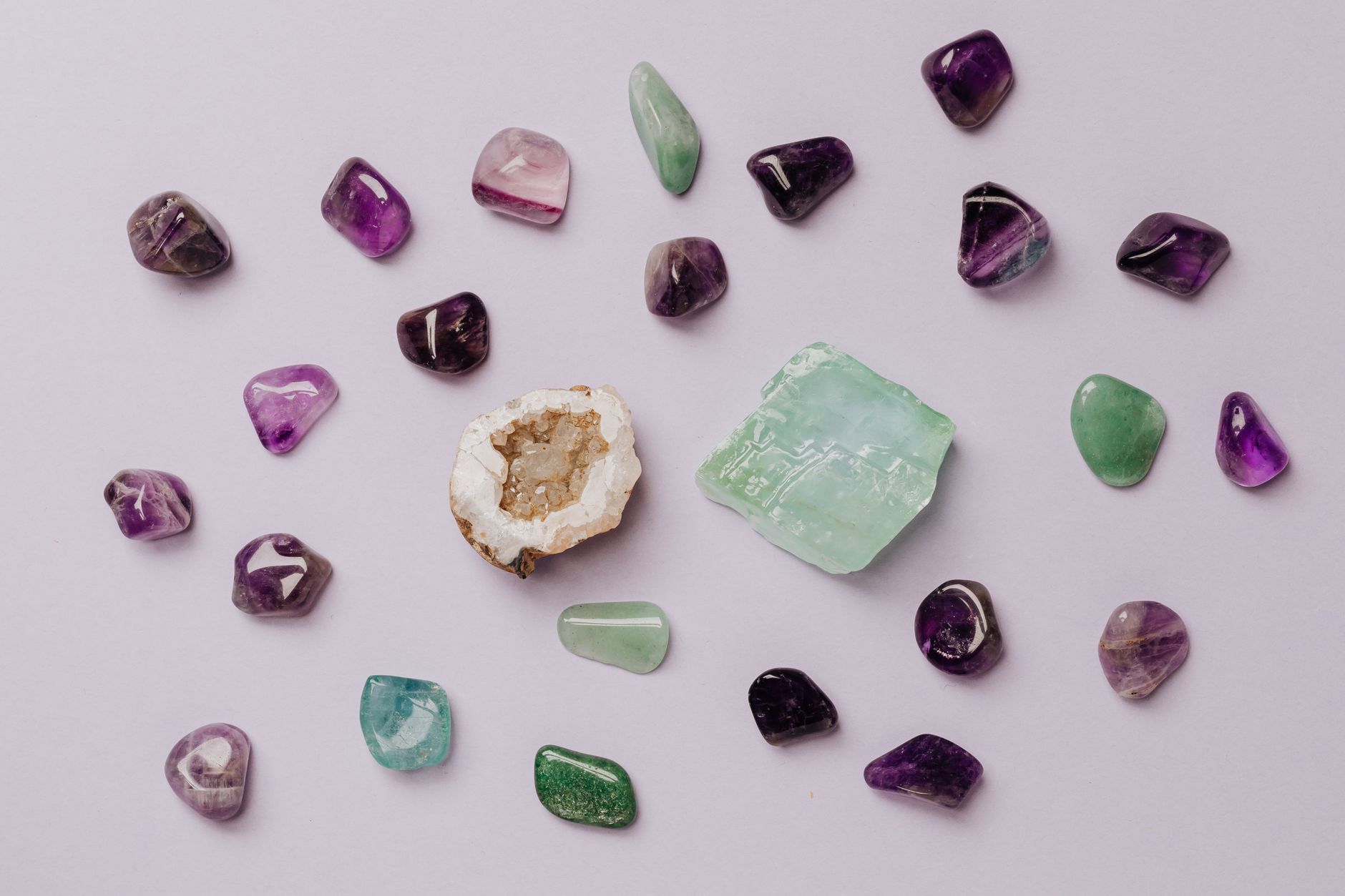
Green amethyst — correctly called prasiolite — suits winter rings because it is quartz: Mohs 7 with no cleavage, which trade references treat as durable enough for daily wear through gloves, coat sleeves and cold-weather knocks. Its cool, pale-to-forest green reads well against white metals and the low, grey light of winter, and it costs a fraction of tourmaline or emerald at the same size. There is one real catch, and it is the thing a winter buyer should ask about before paying. Almost all of this material is green because someone heated it, and that colour is less permanent than the stone itself.
Table of Contents
- What "green amethyst" actually is
- Why it holds up as an everyday winter ring
- The heat problem, and the two services that cause it
- What a seller is legally required to tell you
- What a certificate can and cannot prove
- Frequently Asked Questions
What "green amethyst" actually is
Amethyst is, by definition, the purple variety of quartz, so "green amethyst" is a misnomer; Geology.com's prasiolite reference, written by a GIA Graduate Gemologist, gives prasiolite as the correct varietal name for the green stone. The green is manufactured. Nearly all prasiolite on the market comes from heating natural iron-bearing amethyst to roughly 500 °C in a lab oven, with some material instead irradiated to a lighter, more delicate green.
Most of it starts as amethyst and yellow quartz from the Montezuma deposit in Minas Gerais, Brazil; an Arizona amethyst deposit also yields rough that turns green with heat. Gemologically it is unremarkable in the best way. A GIA lab note on a 6.43 ct green quartz recorded a refractive index of 1.545–1.553, birefringence of 0.008, uniaxial positive optic character and a hydrostatic specific gravity of 2.65 — ordinary quartz numbers, identified as prasiolite.
Why it holds up as an everyday winter ring
Hardness 7 is the figure that matters. Quartz resists the scratching that a ring collects from desks, car doors and zips, and — unlike many coloured stones — it has no cleavage, so there is no internal plane along which a sharp knock can split it. The limit is honest rather than alarming: harder stones scratch it.
Topaz, sapphire and diamond will all mark prasiolite, which in practice means not stacking a prasiolite band hard against a diamond eternity ring, and not tipping it loose into a travel pouch with other jewellery. For winter specifically, that durability is the whole argument. A stone worn under gloves and against wool takes more abrasion than one worn in July, and a softer gem — or one with cleavage — pays for it faster.
The heat problem, and the two services that cause it
Heat-induced green quartz colour can fade. Wikipedia's prasiolite entry describes the colour centre as unstable under prolonged strong sunlight, UV or heat, which is a different question from whether the stone will chip.
Two routine bench operations put real heat into a ring, and both are worth a conversation before you hand the piece over: None of this makes prasiolite a bad ring stone. It makes it a stone that needs a jeweller who knows what it is, which is a good reason to avoid the misnomer on the receipt.
- Resizing and soldering — a torch near the setting, or a repair done with the stone in place rather than removed
- Ultrasonic and steam cleaning — ask for warm soapy water and a soft brush instead
- Long summer display in a sunny window, or a dashboard, which is the same exposure by a slower route
- Any "re-tipping" or prong work, which is soldering under another name
What a seller is legally required to tell you
In the United States, the FTC Jewelry Guides are explicit on both points. 16 CFR Part 23 makes it unfair or deceptive at § 23.26 to mark or describe a product with an incorrect varietal name — the provision that puts "green amethyst" at legal risk for US sellers. Section 23.24 of the same guides requires disclosure of a gemstone treatment when it is not permanent, creates special care requirements, or significantly affects value.
Prasiolite's colour is heat- or irradiation-induced and can fade, so it meets that test on at least two counts. The varietal-name guidance arrived with the FTC's final rule published 16 August 2018. That is why older stock, estate pieces and long-standing trade habit still say "green amethyst": the usage predates the current standard rather than defying it.
What a certificate can and cannot prove
Do not pay a premium for "natural green quartz". The same GIA entry states plainly that there is no gemological test separating naturally heated prasiolite from laboratory heat-treated prasiolite, so colour origin cannot be proven on a report.
A report will confirm the identification — that the stone is quartz, and prasiolite rather than a glass or a green-dyed substitute. It will not confirm who or what did the heating, and any seller charging extra for a "natural" origin claim is charging for something no lab will underwrite. The practical buying checks are short:.
- Ask for it as prasiolite, and ask that the receipt say so
- Ask for the treatment in writing — heated, irradiated, or not stated
- Tell the setter and any future repairer that the stone is heat-sensitive
- Protect it from sustained sun and skip the ultrasonic cleaner
Frequently Asked Questions
Is green amethyst a real gemstone?
Yes. It is genuine quartz, correctly named prasiolite; only the name "green amethyst" is wrong, because amethyst means the purple variety.
Where does most of it come from?
Geology.com identifies the Montezuma deposit in Minas Gerais, Brazil as the main source of the amethyst and yellow quartz that is heated to green, with some Arizona material as well.
Can I wear a prasiolite ring every day?
Its hardness of 7 and lack of cleavage make it suitable for daily wear. Keep it away from harder stones that scratch it, and away from heat and strong sun that fade the colour.