
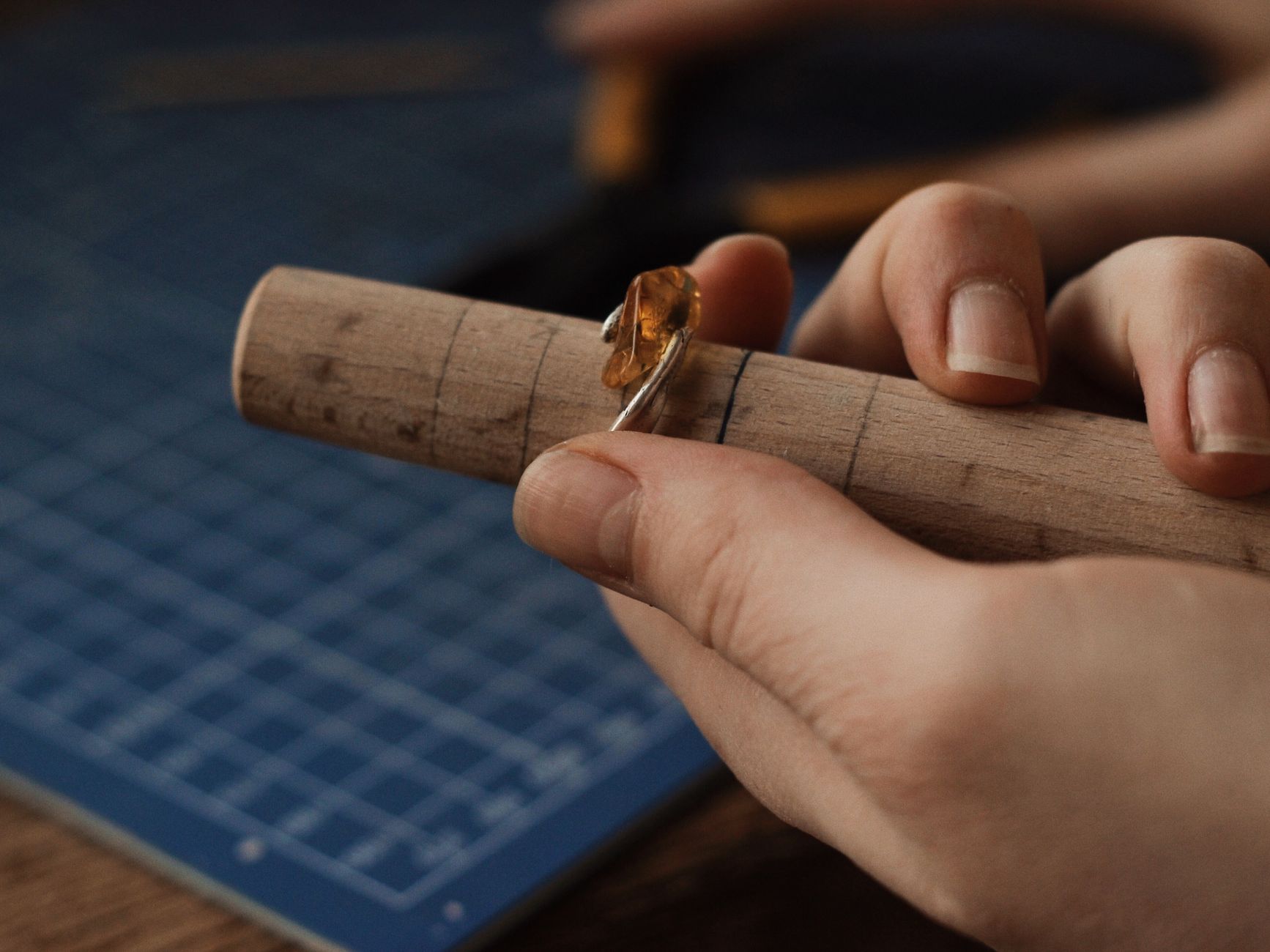
To verify handmade gemstone jewelry before buying, inspect the stone, the craftsmanship, and the metal marks closely. Ask the maker what the stone is, whether it was treated, and what metal was used, and get those details in writing.
Handmade jewelry means a person cut, shaped, set, and finished the piece by hand or with hand tools, rather than in a factory run. Gemstone treatment means any heating, oiling, coating, or dyeing that improves color or clarity. Both affect value and care.
Table of Contents
- What does handmade actually include?
- How can you judge the gemstone?
- What should you check in the metal and setting?
- What should you get before you pay?
What does handmade actually include?
A handmade label can cover many methods. One maker may forge a ring from wire and sheet, while another assembles cast parts and sets stones by hand. Ask which parts were formed by hand and which were cast.
Hand finishing also matters. Look for smooth edges, even joins, and secure prongs or bezels around the stone. Rough seams, glue residue, or wobbly settings point to rushed work.
How can you judge the gemstone?
Look at color, clarity, and cut under good light. The color should look even, with no pale patches or dark dead spots. The cut should be symmetrical, with a level table and a centered stone.
Check for chips, scratches, surface coatings, and overly perfect color that may signal dye or synthetic material. Natural stones often show small inclusions, which are tiny internal marks formed during growth. Ask whether the stone is natural, lab-grown, or assembled, and whether it was heated, oiled, dyed, or coated.
What should you check in the metal and setting?
Precious-metal jewelry should carry a purity mark, such as 14K, 18K, 925, or Pt950. The mark stamps the gold, silver, or platinum content of the piece.
Learn where the mark sits on rings, clasps, and earring posts so you can find it. Test the setting with care: Well-fitted handmade work holds the stone snugly without excess glue or bent wire. Ask what alloy was used, since nickel, copper, or other alloy metals affect strength, color, and skin reaction.
- Sight down the edges for gaps between stone and metal
- Touch prongs for sharp points or movement
- Open and close clasps, hinges, and earring backs
- Check that mixed metals and solder joints match in color
What should you get before you pay?
Ask for a written description with stone identity, weight, treatment, metal, and maker name. For higher-value pieces, ask for an independent appraisal or laboratory report for the stone. Keep receipts, care instructions, and any warranty for repairs or loose stones.
Also ask how to clean and wear the piece. Soft stones like opal, turquoise, pearl, and emerald scratch, fade, or crack more easily than sapphire or ruby. Store each piece separately and remove it for hard work, sport, and harsh cleaners.