
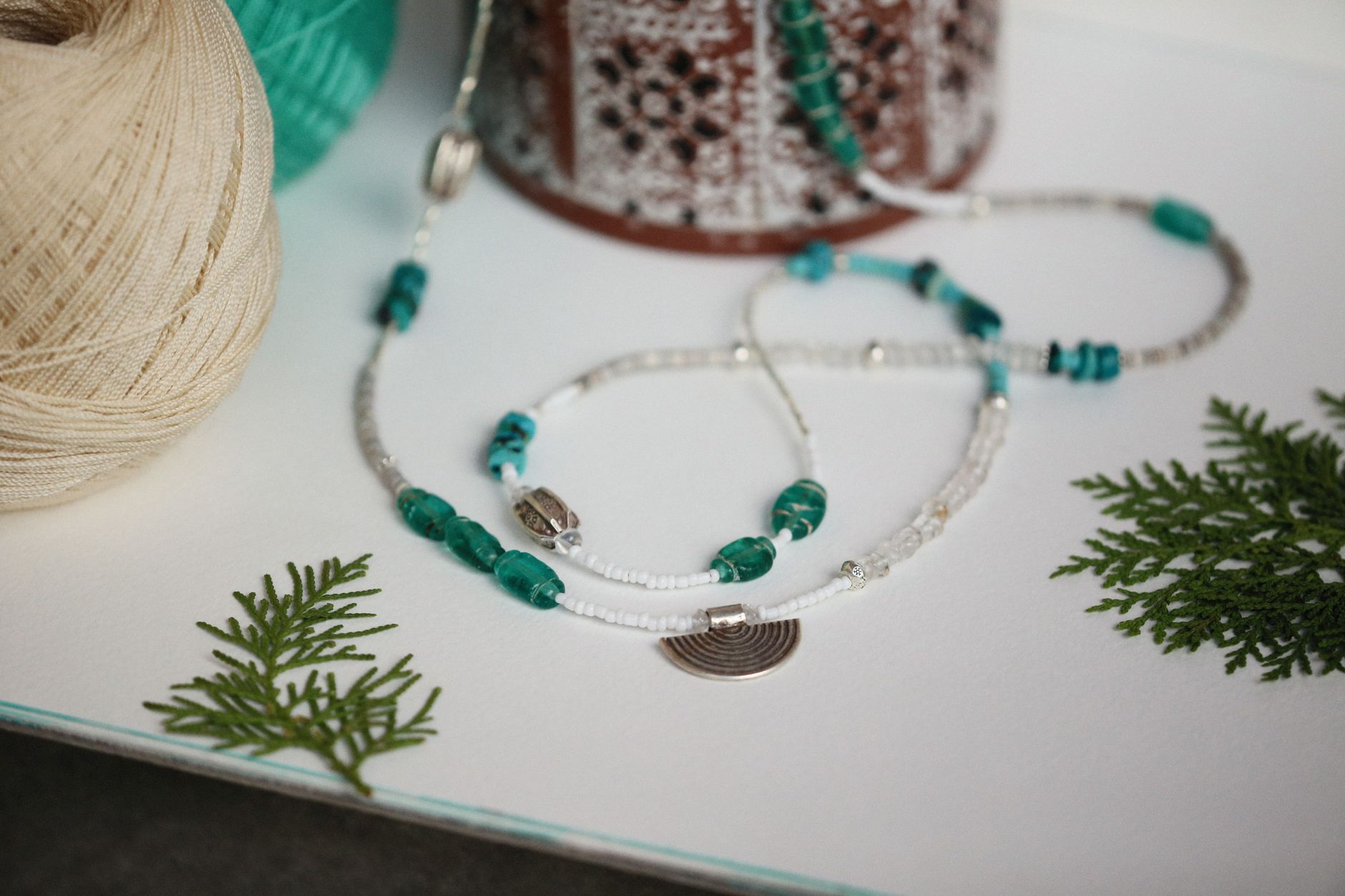
An authentic turquoise necklace uses natural turquoise, truthfully described treatments, and precious metal as marked. A buyer can check color and matrix, touch and weight, construction details, and seller paperwork before deciding. Turquoise is an opaque blue-to-green mineral often cut into beads or inlays. Natural pieces vary slightly in tone and veining, while dyes, plastic, and imitation stone look flat or too perfect.
Table of Contents
- What should real turquoise look like?
- What can touch and weight tell you?
- How does metalwork reveal quality?
- Which paperwork and seller checks matter?
- Frequently Asked Questions
What should real turquoise look like?
Natural turquoise ranges from sky blue to blue-green to yellow-green. Brown or black veining, called matrix, is common and varies from bead to bead. Even matched strands show small shifts in color, pattern, and polish. Look closely at drill holes, edges, and backs.
Dye often pools darker near holes and crevices, and pale spots may show where coating has worn. Glassy shine, identical speckles, tiny bubbles, or pure uniform color point to imitation or reconstructed material. Stabilization is normal for much commercial turquoise. It fills porous stone with clear resin to improve durability. Sellers should name it plainly as stabilized turquoise, and lack of disclosure is a warning sign.
What can touch and weight tell you?
Turquoise feels cool at first touch, then warms against skin. It has moderate heft for its size, neither unusually light nor metallic-heavy. Plastic imitations often feel warm immediately, very light, and slightly soft or squeaky when rubbed gently. Tap beads lightly together when the design allows. Stone produces a muted click, while plastic sounds dull or hollow.
Do not scratch, heat, or apply solvents or acetone. Those tests can damage stone, finishes, and stringing. Compare the piece with known stone jewelry when possible. Consistent temperature, smooth polish, and steady weight across similar beads support a natural-stone reading. Large gaps in weight or texture deserve questions to the seller.
How does metalwork reveal quality?
Inspect clasps, jump rings, bails, and pendant backs. In precious-metal jewelry, these parts close cleanly, edges feel finished, and solder joints look neat. Rough seams, visible glue blobs, flaking plating, or greenish bleed around metal suggest lower-grade construction.
Read every stamp with a loupe: Check that stones sit level and secure. Beads should have clean drill channels without crumbling. Inlay should meet metal borders tightly, with even polish and no sharp raised edges.
- 925, Sterling, 585, 750, 14K, 18K, and PT mark metal quality
- maker marks and country marks help trace origin
- missing marks on a piece sold as solid gold or platinum need an explanation
Which paperwork and seller checks matter?
Ask for a written description of stone identity, treatment, metal content, and total design. Useful wording names natural or stabilized turquoise, lists metal fineness, and identifies imitation or lab-made parts. Vague terms like genuine-style, turquoise-color, or mountain stone are not proof of turquoise. Keep the receipt, appraisal, laboratory report, and any care card together.
Independent appraisers and gem laboratories can confirm metal fineness and separate natural stone from imitation. For higher-value necklaces, buy with a written return policy that allows independent review. Photograph marks, clasps, and flaws before that review. A careful seller welcomes questions about mine source, treatment, restringing, and repairs. Pressure to skip inspection, shifting answers, or refusal to put claims in writing favors walking away.
Frequently Asked Questions
Does matrix prove turquoise is natural?
No. Matrix occurs in natural stone, but makers also paint or print veins on imitation beads. Judge matrix with color variation, feel, construction, and written disclosure.
Is stabilized turquoise fake?
No. Stabilized turquoise starts as natural stone and gains resin for strength. It should cost less than untreated material of similar look, and sellers should disclose the treatment.
Can a jeweler test a necklace without harming it?
Yes. Jewelers commonly use magnification, metal testing, and non-destructive gem checks. Ask what methods they will use and avoid heat, scratch, or chemical tests on finished jewelry.