
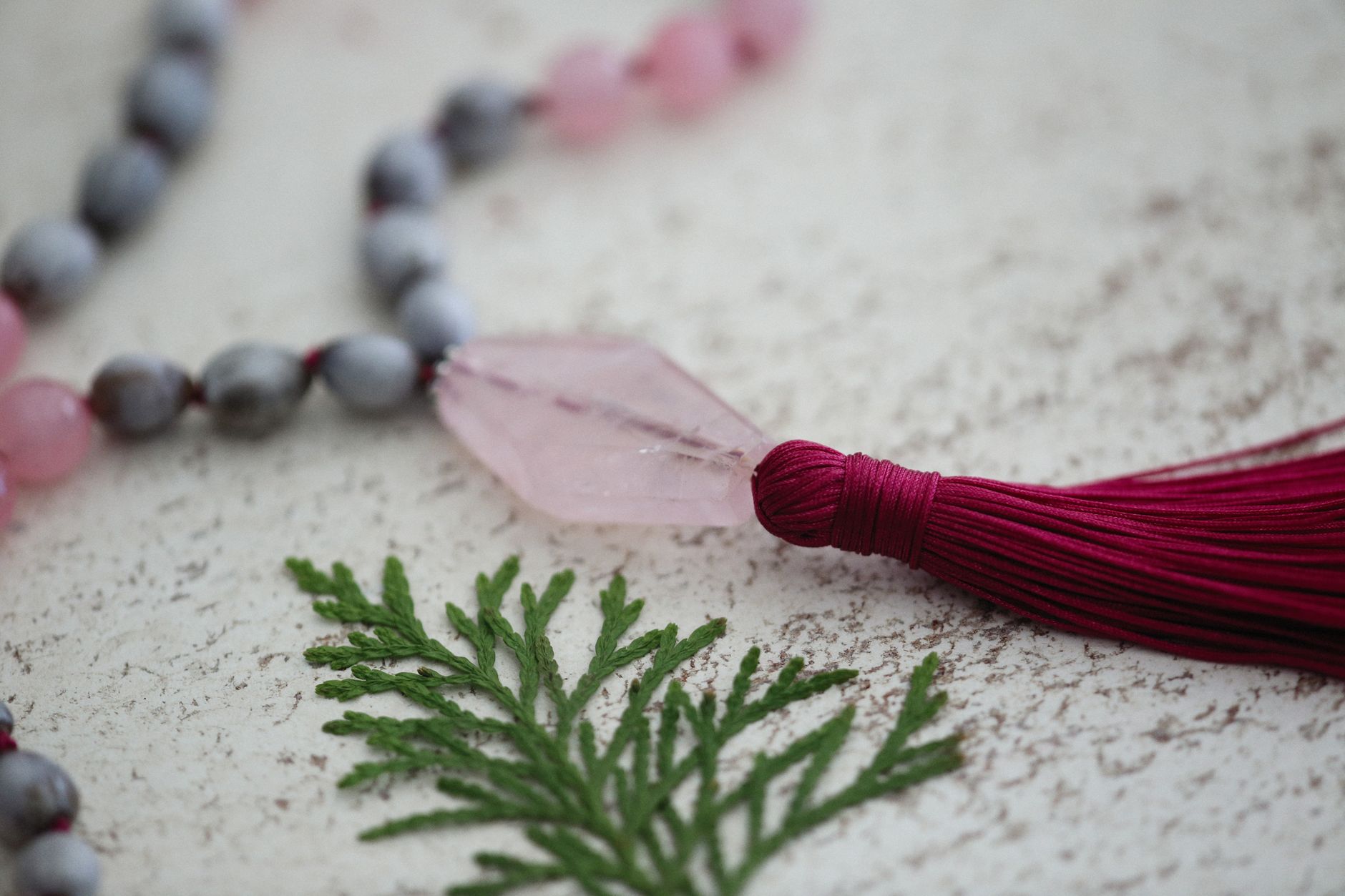
An authentic rose quartz necklace uses beads or a pendant cut from natural pink quartz, the pink variety of the mineral quartz. You can check authenticity with visual clues, touch, setting quality, and seller documentation. Natural rose quartz varies slightly from bead to bead. Exact uniformity, harsh color, or flawless clarity often signals glass or synthetic material.
Table of Contents
- What Real Rose Quartz Looks Like
- Which Checks Can You Do at Home?
- How Do Fakes and Treatments Differ?
- What Should You Confirm Before Paying More?
What Real Rose Quartz Looks Like
Real rose quartz shows soft pink to milky pink color. The tone looks cloudy rather than bright. Saturation stays light even in larger beads. Transparency ranges from translucent to semi-transparent.
You will often see wispy internal lines, cloudy zones, or tiny mineral flecks. These inclusions form during natural crystal growth. Color varies across a strand. One bead may look slightly paler or milkier than the next. That small variation points to natural stone.
Which Checks Can You Do at Home?
Start in daylight. Look for uneven color, soft luster, and small internal flaws. Glass often looks too clear, too bright, or full of round bubbles.
Compare beads across the whole strand, not one bead alone. Natural quartz resists scratching better than glass or resin. Poor drilling, flaking coating, or weak clasps reduce trust in the piece.
- Feel the weight and temperature: quartz feels cool, then warms slowly.
- Inspect drill holes for dark dye rings, white marks, or coating flakes.
- Roll beads under light and look for bubbles, swirls, or mold seams.
How Do Fakes and Treatments Differ?
Pink glass often holds round air bubbles. Mold seams or unnaturally perfect shape also point to glass. Dyed pale stone collects stronger color in cracks, chips, and drill holes. Resin or plastic feels light and warms quickly in the hand.
It may show swirl marks or pick up surface scratches easily. Treatments can improve appearance but should be disclosed in writing. Laboratory-grown quartz can match natural quartz in basic checks. Separation often needs magnification or laboratory testing.
What Should You Confirm Before Paying More?
Study metal marks, clasp strength, and finish around stone seats and knots. Solid findings, smooth holes, and even stringing signal careful making. Ask for the stone identity in writing on the receipt.
Ask whether the pink color is natural or treated, and whether the material is natural quartz, dyed stone, glass, resin, or synthetic quartz. For a high-value purchase, seek an independent jeweler or gemological laboratory review. The lab can confirm quartz identity and detect dye or glass.