
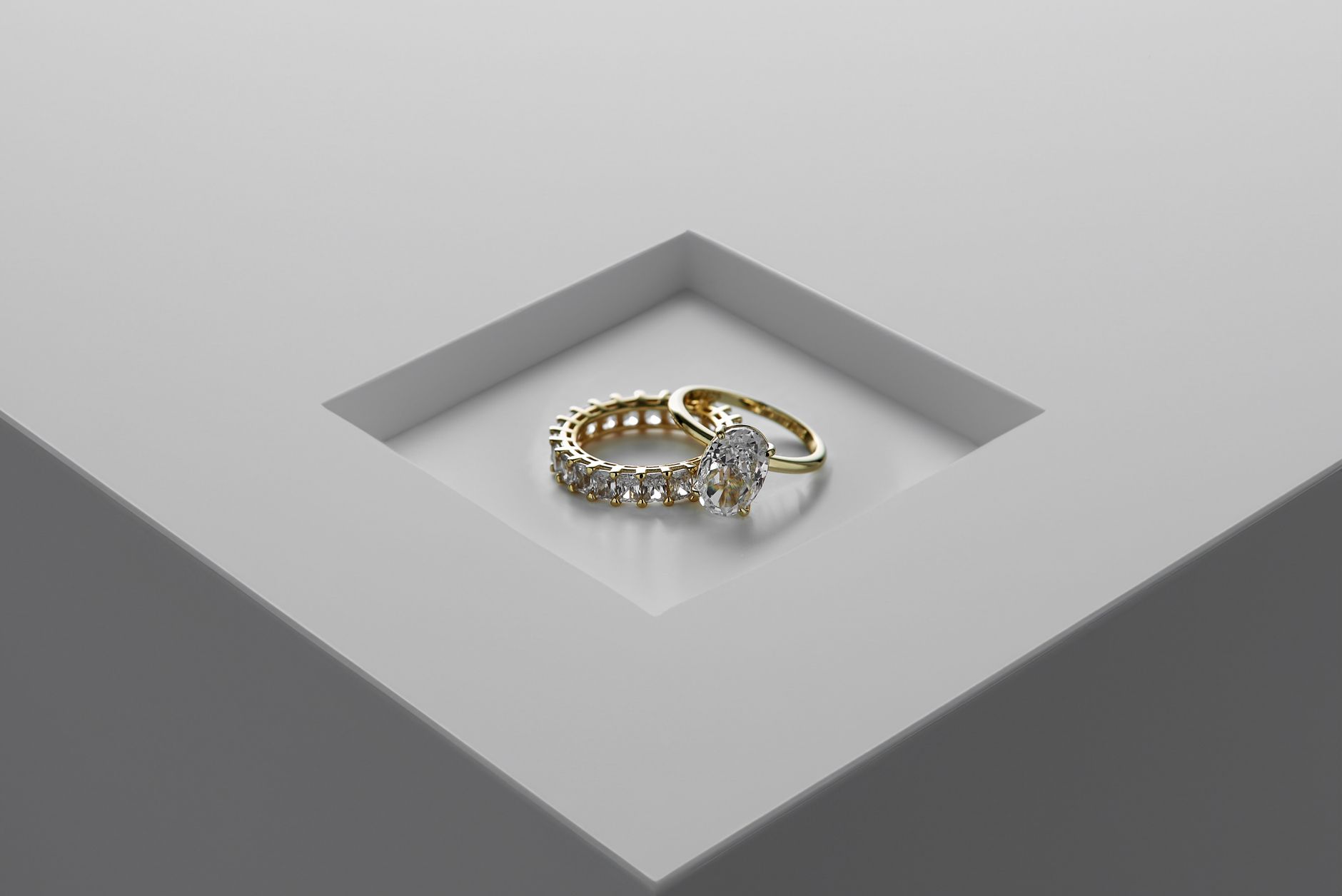
A prong-set gemstone ring is a secure choice when its metal prongs fit the stone closely, protect vulnerable points, and receive regular inspection. Before buying, check the prong count, stone shape, smoothness, cleaning needs, and whether worn components can be repaired. Prongs are small metal projections that hold a gemstone by pressing against its crown, the upper portion above the setting. Their condition affects loss resistance, comfort, maintenance, and the risk of stone damage.
Table of Contents
- How many prongs provide enough security?
- Which stone shapes need extra protection?
- Will the ring feel comfortable and resist snagging?
- How should a prong-set gemstone ring be cleaned?
- When does a loose prong need professional repair?
How many prongs provide enough security?
Four prongs can hold a diamond securely, but six provide more backup if one breaks. The Gemological Institute of America advises buyers who prioritize loss resistance to consider six prongs. Prong count is only one part of security.
Each tip must contact the stone correctly, and the setting must remain sound through wear. A poorly fitted six-prong head should not be treated as safer merely because it has more prongs. Use this buying checklist:.
- Confirm that every prong contacts the stone.
- Look for gaps between the gemstone and setting.
- Compare four- and six-prong options if loss resistance is the priority.
- Ask how often the jeweler recommends inspection based on expected wear.
- Have any visible movement investigated before wearing the ring.
Which stone shapes need extra protection?
Princess, marquise, pear, and heart diamonds have sharp corners or points that are more vulnerable to chipping. The GIA recommends V-prongs or another protective setting over these areas. A V-prong wraps around a point instead of pressing against it from only one direction.
When comparing rings, examine whether every exposed corner or tip has dedicated protection. An attractive outline should not come at the expense of a vulnerable point. Ask the seller to identify which prongs protect the stone's weakest areas. If the answer focuses only on appearance or total prong count, request a closer explanation of how the individual corners and points are supported.
Will the ring feel comfortable and resist snagging?
Properly finished prong tips should sit flush against the gemstone's crown without gaps. According to GIA Education, raised or poorly fitted tips can snag clothing, scratch skin, and break. Inspect the ring from several angles before purchase.
Prongs should look smooth and evenly finished, without one tip appearing higher, sharper, or farther from the stone than the others. Gently passing the ring near delicate fabric may reveal an obvious catch, but it does not replace professional inspection. Treat frequent snagging as a warning rather than an unavoidable feature of prong-set jewelry. A projecting tip can affect comfort while also signaling a gap or vulnerable prong that deserves examination.
How should a prong-set gemstone ring be cleaned?
For most colored gemstone rings, use warm water, mild dish soap, and a soft brush. The GIA advises rinsing jewelry in a glass instead of over a sink, where a loose stone could be lost. A cautious routine is simple: Do not assume an ultrasonic cleaner is safe for every gem.
Filled, coated, organic, heat-sensitive, and some heat-treated stones can be unsuitable because vibration may loosen gems or cause chipping. Treatment and durability determine whether ultrasonic cleaning is appropriate. Emeralds need particular caution because many fashioned natural emeralds are fracture-filled. The GIA identifies warm soapy water and gentle scrubbing as the safest approach and generally advises against steam and ultrasonic cleaning for emerald rings.
- Place warm water and a small amount of mild dish soap in a container.
- Clean gently with a soft brush.
- Avoid forcing bristles beneath the stone or against a questionable prong.
- Rinse in a separate glass.
- Stop if the gemstone moves or a gap becomes visible.
When does a loose prong need professional repair?
Normal activity, impacts, clothing snags, and exercise can shift or loosen prongs. GIA recommends having them checked about every six months, even when the ring appears intact. Possible warning signs include: Do not try to bend or tighten a prong at home.
A bench jeweler should assess prong thickness, the depth of the stone seat—the shaped area supporting the gem—and the condition of the entire setting. Tightening alone may not solve the underlying problem when a seat is worn or the metal is fatigued. As Stuller explains, an individual worn prong may be retipped, while a broadly fatigued head may require replacement.
- The stone moves under a gentle push.
- A gap appears between the stone and setting.
- A prong catches clothing or scratches skin.
- One tip looks raised, thin, uneven, or displaced.
- The ring has suffered an impact.