
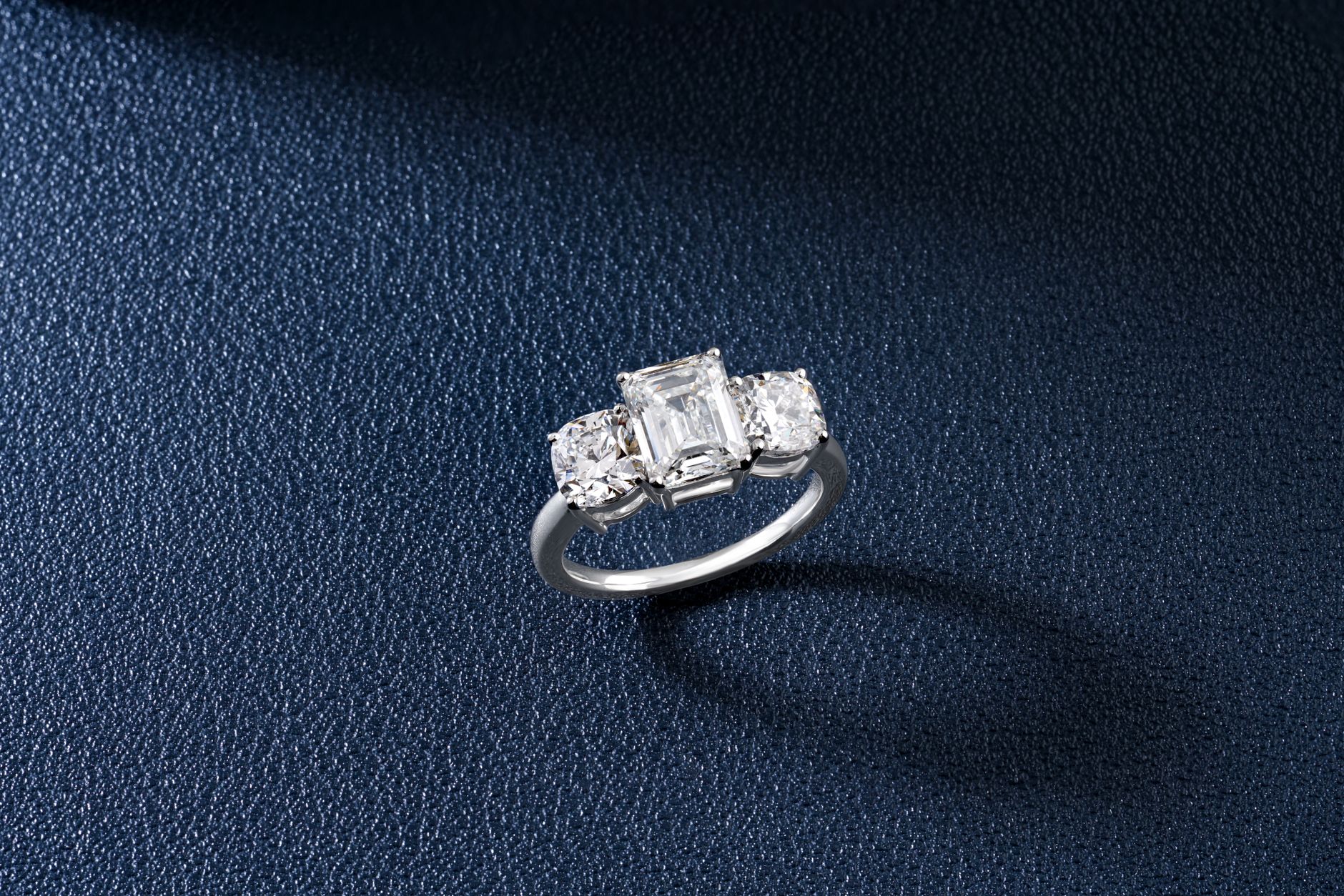
A three-stone ring places a larger center gem between two smaller side stones on one band. It most often symbolizes shared past, present love, and future hopes, with the center marking the present commitment. This layout suits couples who want balanced finger coverage and personal meaning in one piece. The side stones frame the center and leave room to mark milestones, family ties, or faith.
Table of Contents
- How does the three-stone layout work?
- What do past, present, and future mean here?
- Can it mean something besides past, present, and future?
- How do you choose stones and proportions?
- Is it better for engagement or anniversary?
How does the three-stone layout work?
The center gem carries the visual weight and the present-tense meaning. The two flanking stones support it physically and complete the timeline from left to right.
According to Gage Diamonds, the center usually marks the present commitment in this arrangement three-stone engagement ring guide. That emphasis keeps the design legible even when shapes and sizes change.
What do past, present, and future mean here?
The dominant modern reading assigns the left stone to shared past, the center to present love, and the right to future hopes and plans, as described by Charles & Colvard symbolic meaning of three-stone engagement rings. It fits proposals, weddings, and anniversaries because each stone points to a stage of the relationship.
Buyers can make that timeline concrete. The past stone may reference how they met, the center may mark vows or daily commitment, and the future stone may point to a move, family plan, or retirement goal.
Can it mean something besides past, present, and future?
Yes. GIA documents alternate readings of the same design as "yesterday, today and tomorrow," "friendship, love and fidelity," "mother, father and child," and the Holy Trinity GIA guide to buying a three-stone engagement ring. These options help families, interfaith couples, and long-term partners choose language that fits.
That flexibility has old roots. The form appeared by the 17th century and continued through Georgian, Victorian, Edwardian, and Art Deco variations. De Beers then marketed three-stone diamonds at scale in the early 2000s as "past, present, and future," first as anniversary gifts.
How do you choose stones and proportions?
Common designs use traditional graduation where the center equals roughly both sides combined. Other pairings include tapered baguettes, trapezoids, halos, or contrasting birthstones and sapphires or rubies. Use proportion and contrast to control the look:.
- Choose near-equal sides for a calm, symmetrical frame.
- Choose tapered baguettes or trapezoids for a cleaner taper toward the band.
- Add a birthstone, sapphire, or ruby on one or both sides for family or color meaning.
- Keep metal and prong style consistent so mixed shapes still read as one ring.
Is it better for engagement or anniversary?
It works for both because the practical effect is a larger, balanced look that can commemorate milestones while allowing personalization. A proposal can lean on the past-present-future story, while an anniversary can reset the side stones to children, years together, or renewed vows.
The "past, present, future" label is a recent marketing popularization rather than the ring's original fixed meaning. Buyers are not bound to it and can assign family, faith, or personal meanings that will still feel right later.