
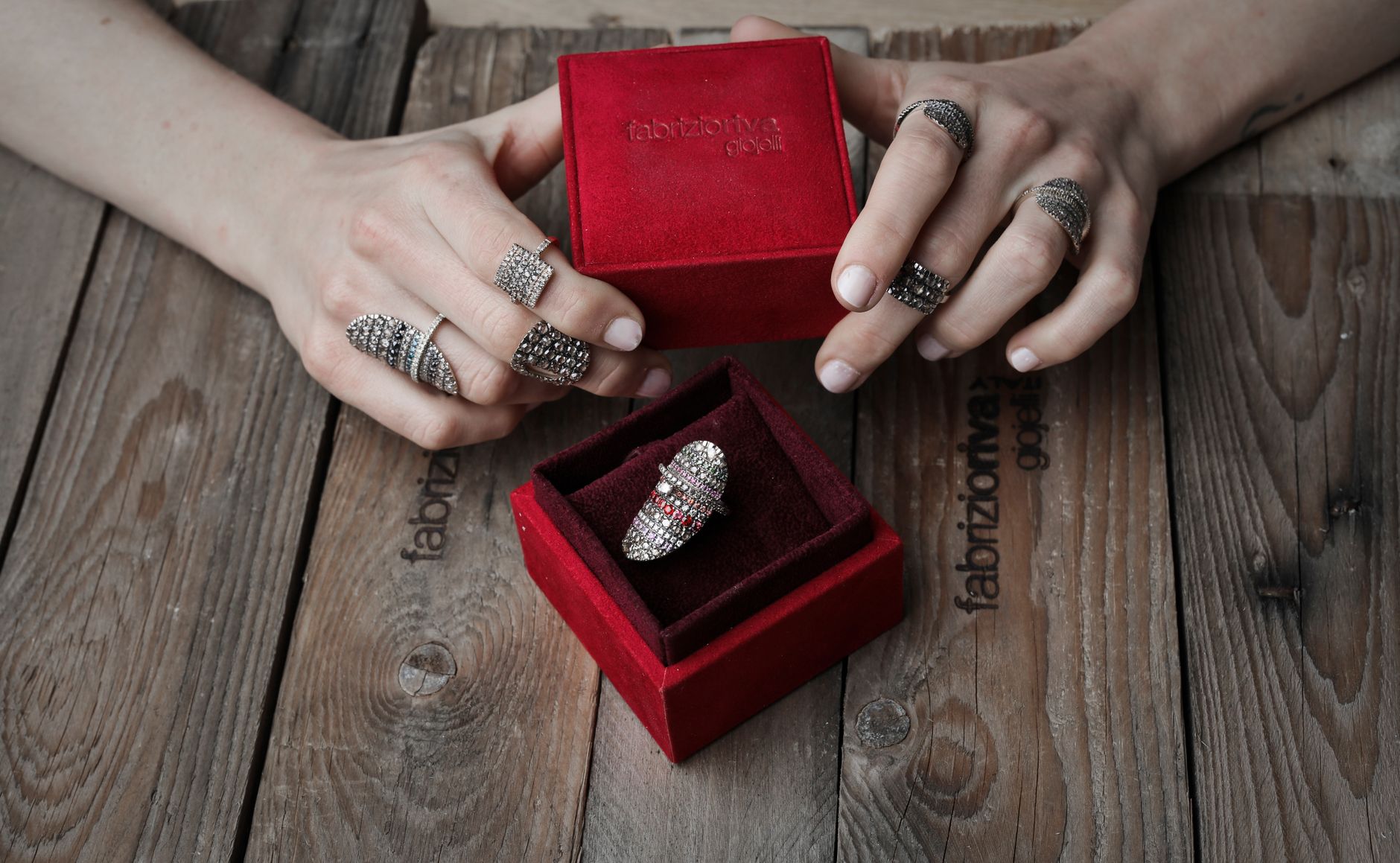
Choose a ring metal for winter by planning for a smaller finger, a brief cold touch, and easy resizing. Select a resizable gold or platinum design for shifting fit, with platinum offering a milder first chill than gold or silver. Fingers drive fit more than metal does. Glove removal, daily knocks, sensitive skin, and tarnish narrow the choice further.
Table of Contents
- Why does fit change in winter?
- Which metals feel coldest at first?
- Which metals handle size shifts and knocks?
- What about skin and tarnish?
Why does fit change in winter?
Cold narrows finger blood vessels and typically shrinks fingers by about half a ring size. Nobbier explains in its winter jewelry guide that summer-snug rings can then spin or slip off, especially during glove removal.
The metal itself is not the cause. The ReflectionsCraft fit guide explains that normal winter cold contracts metal by only hundredths of a millimeter, while finger circumference can change 1-3 mm. Check for spinning, sliding toward the knuckle, and extra movement after coming indoors from cold air.
Which metals feel coldest at first?
Metals feel colder than wood or plastic at the same temperature because they carry heat away from skin quickly. The University of Illinois Physics Van explains that skin senses its own heat loss, not the object temperature.
Pure-metal heat flow falls steeply from silver at about 429 W/m·K and gold at about 315 to platinum at about 71 and titanium at about 22. BYU Integrated Microfabrication Lab publishes those values in its thermal-properties table, so silver and gold give a sharper initial flash than titanium. The sensation is brief contact chill, not lasting cold, so comfort matters most for rings worn snug all day.
Which metals handle size shifts and knocks?
Tungsten carbide resists scratches well but is brittle and can crack or shatter under sharp impact. Jewelers Mutual reports that it also cannot be resized by normal bench tools, which matters when winter fit changes.
Many tungsten, titanium, and eternity bands are generally treated as non-resizable. Blue Nile notes in its guide to non-resizable rings that winter size shifts then require exchange or guards rather than sizing.
- Resizable choice for shifting fingers: plain gold or platinum band
- Higher winter risk: tungsten carbide, titanium, full eternity style
- Practical backup: temporary guard, spacer, or exchange plan
What about skin and tarnish?
Nickel contact can cause delayed redness, swelling, itching, dryness, or blisters hours to days later. The American Academy of Dermatology identifies nickel allergy as one of the most common causes of allergic contact dermatitis in the U.S., so choose a nickel-safe alloy if winter dryness already irritates skin.
Sterling silver is 92.5 percent silver plus 7.5 percent copper and dulls through reaction with sulfur compounds, moisture, sweat, cosmetics, and chlorine. Garfield Refining describes that tarnish process in its sterling silver guide and points to dry storage and cleaning for winter-worn rings. Store sterling silver dry, keep it away from chlorine and heavy lotion, and clean it after frequent winter wear.