
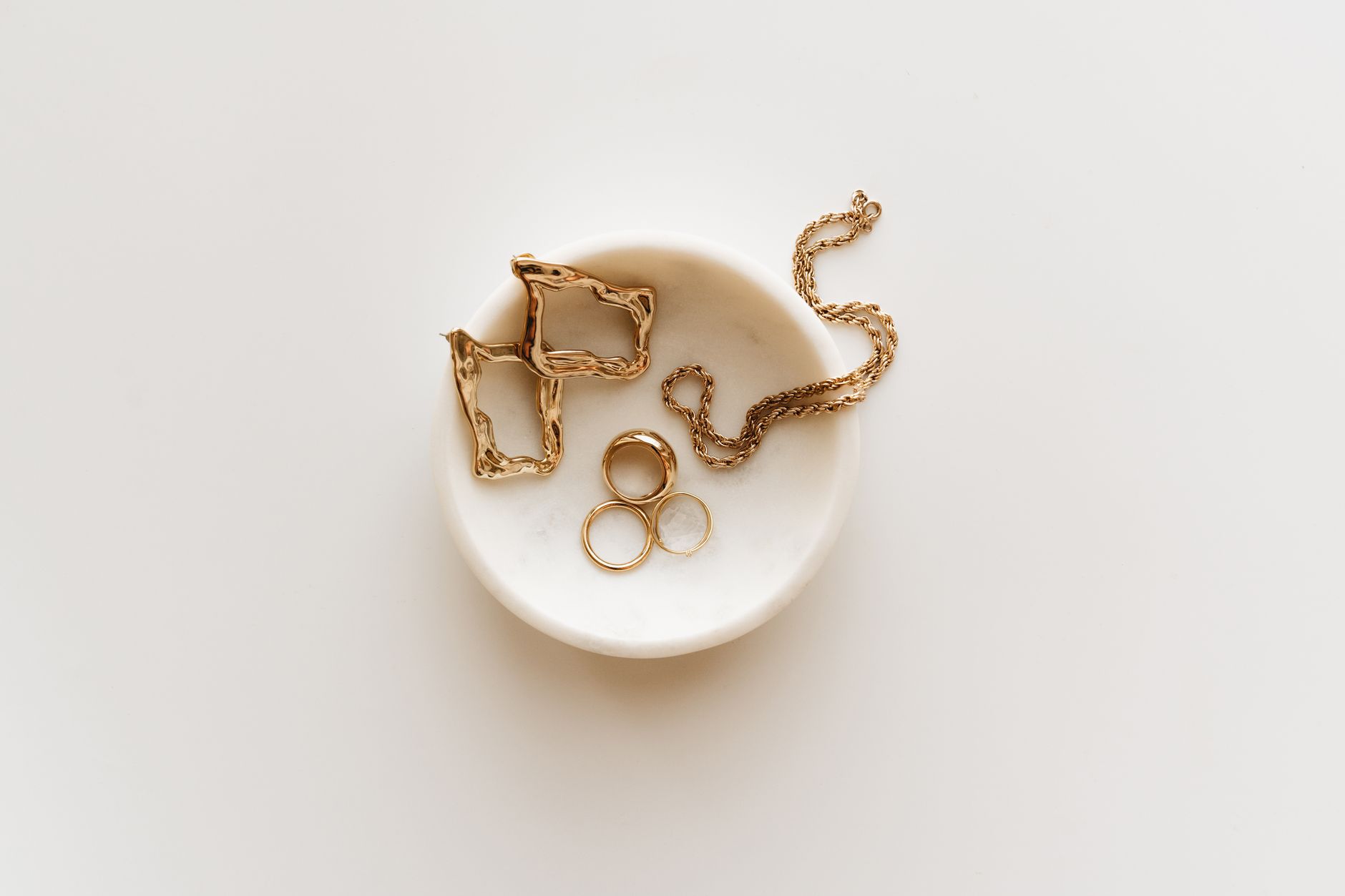
Platinum, titanium, and solid gold (14k or higher) hold up best to water because they resist the oxidation that causes tarnish in the first place. Tarnish is a surface reaction between a metal and elements in its environment — oxygen, sulfur compounds, chlorine, and salts carried in water — and some metals simply don't have the chemistry to form that reaction.
Sterling silver, by contrast, tarnishes with or without water exposure, since it reacts with airborne sulfur. Water speeds up tarnish mainly when it's chlorinated, salted, or left sitting on the metal long enough to trap moisture against the surface. Knowing which metals are chemically inert versus which are merely plated or alloyed to resist corrosion changes how a buyer should treat a ring in the shower, a necklace in the ocean, or a bracelet worn daily.
Table of Contents
- Why Water Causes Tarnish in the First Place
- Which Metals Are Genuinely Water-Resistant
- Which Metals Struggle With Water Exposure
- Practical Steps for Wearing Jewelry Around Water
- Does Hardness Affect Water Resistance?
- Frequently Asked Questions
Why Water Causes Tarnish in the First Place
Pure water alone is a weak corrosive agent for most metals. The damage comes from what's dissolved in it: chlorine from pools and tap water, salt from sweat and seawater, and sulfur compounds from skin oils and some soaps. These compounds react with metal atoms at the surface, forming a thin oxidized layer that looks dull, dark, or discolored. Silver is the clearest example.
It reacts with hydrogen sulfide in the air to form silver sulfide, the black film jewelers call tarnish. Water doesn't cause that reaction by itself, but a wet, humid environment accelerates it, and chlorinated water adds a second corrosive pathway on top of the sulfur exposure. Base metals like copper and nickel, often used in costume jewelry and some gold alloys, oxidize even faster. Copper reacts with oxygen and moisture to form a greenish patina, which is why cheaper gold-filled or gold-plated pieces with high copper content can develop a greenish tint on skin after repeated water contact.
Which Metals Are Genuinely Water-Resistant
Platinum is the most chemically stable precious metal used in jewelry. It doesn't oxidize, tarnish, or react with chlorine, salt water, or everyday moisture, which is why it's the standard recommendation for pieces worn in the shower, pool, or ocean. It does develop a matte "patina" from micro-scratches over years of wear, but that's a surface texture change, not corrosion, and a jeweler can polish it back to a mirror finish. Titanium is similarly inert. It forms a thin, stable oxide layer on contact with air that actually protects the metal underneath, so it resists tarnish, rust, and reaction with chlorinated or salt water indefinitely.
It's also hypoallergenic, which makes it a common choice for everyday rings meant to survive swimming and handwashing without upkeep. Solid gold — meaning the actual gold content in the alloy is high, typically 14k (58.3% gold) or higher — resists tarnish well because gold itself doesn't oxidize. The alloy metals mixed in for strength (usually copper, silver, or zinc) are the weak point: an 10k gold piece has more alloy and less gold than 18k, so it's more exposed to tarnish-causing reactions over time. 18k and 22k gold hold up to water almost as well as pure platinum. Stainless steel and tungsten carbide, both common in men's bands and budget jewelry, also resist water-driven tarnish well. Their chemical structure doesn't readily bond with oxygen or sulfur compounds, so they stay bright through regular washing, swimming, and sweating.
Which Metals Struggle With Water Exposure
Sterling silver (92.5% silver, 7.5% other metals, usually copper) is the most water-sensitive precious metal in common use. Chlorinated pool water and salt water both accelerate its natural tarnish reaction, and the copper content adds its own oxidation risk. Sterling silver worn daily in water needs regular cleaning and polishing to stay bright. Gold-plated and gold-filled jewelry carries the same risk as sterling silver once the water or sweat reaches the base metal underneath. Gold plating is a thin layer — often just microns thick — over a base metal, usually brass, copper, or nickel.
Water exposure speeds up the wear of that plating, and once it thins or chips, the base metal underneath tarnishes and can discolor skin. Costume and fashion jewelry made from brass, copper, or low-grade alloys tarnishes the fastest of all, since these metals oxidize readily even without sustained water contact. Pieces like this are generally not meant for the shower, pool, or regular hand-washing. Rhodium-plated white gold deserves a specific note: the rhodium layer itself resists tarnish, but it's a coating over a yellow or rose gold base, and it wears thin with repeated water exposure and friction. Once it wears through, the underlying gold alloy shows through and can tarnish at that exposed spot.
Practical Steps for Wearing Jewelry Around Water
A few habits reduce tarnish risk regardless of which metal a piece is made from:.
- Remove sterling silver and gold-plated pieces before swimming in chlorinated pools or salt water; the chemical exposure is harsher than a shower.
- Dry jewelry fully after any water contact, rather than letting it air-dry while still worn, since trapped moisture against the metal speeds up tarnish reactions.
- Store silver pieces in an airtight bag or box with an anti-tarnish strip when not worn, since sulfur exposure happens through air, not just water.
- Clean plated jewelry with a soft, dry cloth rather than soap and water, to slow the wear of the plating layer.
- For daily-wear pieces meant to handle water without upkeep — a wedding band worn in the shower, for example — choose platinum, titanium, or high-karat solid gold over sterling silver or plated metal.
Does Hardness Affect Water Resistance?
Hardness and tarnish resistance are separate properties, and it's a common mix-up. A metal's hardness describes how well it resists scratching and deformation; tarnish resistance describes its chemical stability against oxidation.
Tungsten carbide, for instance, is extremely hard and scratch-resistant, and it happens to also resist tarnish, but the two traits aren't linked — a soft metal like pure gold (24k) is also highly tarnish-resistant precisely because it's too chemically inert to react with much of anything, water included. Pure gold is rarely used alone in jewelry because its softness makes it prone to bending and scratching, which is why it's alloyed with harder metals that can reintroduce tarnish risk.
Frequently Asked Questions
Does white gold tarnish in water the same way as sterling silver?
White gold's alloy core can tarnish, but most white gold jewelry is coated in rhodium plating that resists it — the risk appears once that plating wears thin from repeated water exposure.
Is 10k gold more water-sensitive than 18k gold?
Yes. 10k gold contains less pure gold and more alloy metal (often copper or nickel), giving water-driven oxidation more surface area to react with than it has in 18k or 22k gold.
Can tarnished jewelry be restored after water damage?
Sterling silver and solid gold can usually be professionally polished to remove tarnish; plated jewelry worn through to the base metal generally needs replating rather than polishing.