
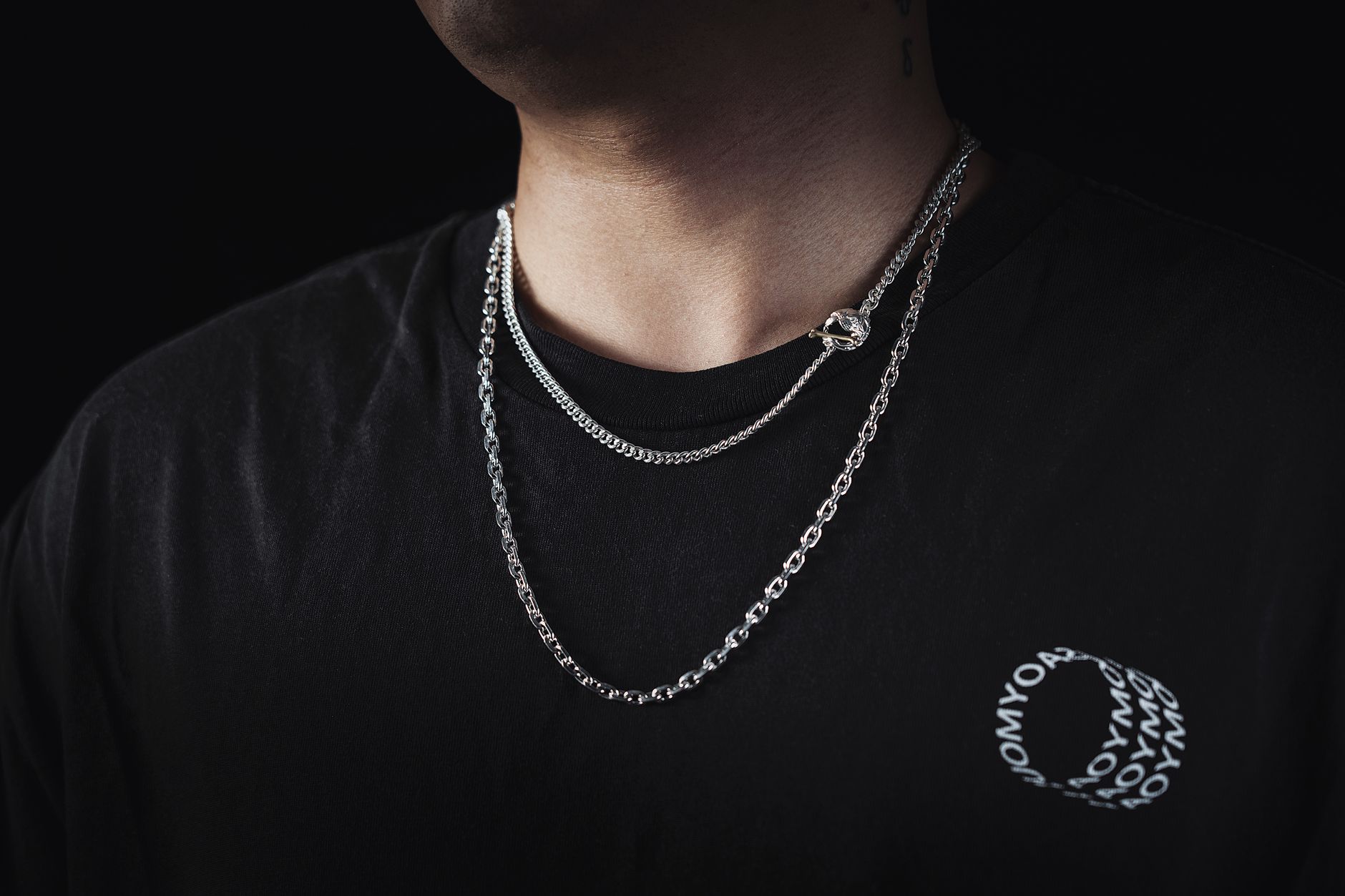
For everyday wear, a solid rope chain between 3mm and 4mm in diameter is the most reliable choice in 14k gold or sterling silver. Below about 2.5mm a rope becomes thin enough that a single snagged link can unravel a section, and hollow construction at any diameter is the bigger risk than the number on the tag. "Gauge" on a rope chain usually means the overall diameter of the finished rope in millimetres, not the wire thickness inside it. A rope chain is built from small links twisted in a spiral so the whole chain reads as a braided cord, and that spiral geometry is exactly why diameter and solidity matter more here than on a simple cable or box chain.
Table of Contents
- Why rope construction fails differently
- Solid versus hollow at the same diameter
- What metal and karat change
- The clasp is often the weak point
- Matching gauge to how you actually wear it
- Maintenance that extends the life of any gauge
- Frequently Asked Questions
Why rope construction fails differently
A rope chain carries load across a spiral of many small links rather than a few large ones. When one link in that spiral deforms or opens, the twist loses its support on both sides, and the chain can kink, flatten, or separate at that point. Jewellers often describe this as a rope "unwinding" rather than simply snapping. That failure mode is the practical argument for diameter.
A thicker rope uses heavier individual links, so each one resists bending from a seat belt, a sweater, or a car door before it reaches the point of deforming. It also makes a break repairable: there is enough metal for a jeweller to rebuild the spiral and solder it closed. Very thin ropes, roughly 1.5mm to 2.5mm, are often sold as layering or pendant chains, and they work well for that. The compromise is that they are not forgiving of a single hard pull, and a repair on a 1.5mm rope frequently looks visibly different from the rest of the chain.
Solid versus hollow at the same diameter
Hollow rope chains are made from tubed or partly empty links, which lets a maker offer a wide-looking chain at a fraction of the gold weight. A 5mm hollow rope can look substantial and still crush under thumb pressure or a dropped weight. Once a hollow link is dented or creased, the metal has nowhere to move and the link tends to crack.
Solid rope at 3mm will usually outlast hollow rope at 5mm in daily wear, which is the single most useful comparison for a buyer. Weight is the honest signal: for a given length and karat, a solid chain is dramatically heavier, and a listing that quotes a wide diameter and a light gram weight is describing a hollow chain whether or not it uses the word. Hollow chains are also harder to repair. Soldering near an open tube risks collapsing or burning through the wall, and some jewellers decline hollow rope repairs outright or warn that the fix may not hold.
What metal and karat change
Karat is a hardness trade-off, not just a purity one. 14k gold is alloyed with enough base metal to resist bending and abrasion well, while 18k and 22k are softer and will show rounding and stretch faster at the same diameter. For a rope chain worn every day, 14k is the common durability recommendation; 10k is harder still but duller in colour and somewhat more brittle.
Sterling silver is softer than 14k gold and tarnishes, so a silver rope usually wants a slightly heavier gauge for the same confidence. Stainless steel and solid platinum are both tougher than gold at equal thickness, though platinum's density makes a wide rope heavy and expensive. Gold-filled and gold-plated ropes raise a separate issue: the spiral has many high points that rub against each other and against clothing, so wear tends to show on the crests first. Plating on a rope chain generally lasts less well than the same plating on a flat or smooth chain.
The clasp is often the weak point
A well-chosen gauge can still fail at the catch. A spring ring clasp has a thin wire gate and a small spring, and it is the part most likely to open under a sudden tug or to stop closing reliably after a few years. A lobster clasp has a thicker gate and a stronger spring, and on heavier ropes a box clasp with a safety catch is sturdier again.
Match the clasp and the jump rings to the chain. A 4mm solid rope fitted with a small spring ring concentrates every load on the lightest component in the assembly, and the ring will deform before the chain does. Check these points when you buy or inspect a rope chain:.
- Grams per length stated, not just diameter — the test for hollow versus solid
- Clasp type, with lobster or box preferred over spring ring for daily wear
- Jump ring thickness roughly in proportion to the chain
- Whether the listing says "solid" explicitly, and whether the seller will confirm it in writing
- A stamp for the metal (14k, 585, 925) on the chain or the clasp tag
Matching gauge to how you actually wear it
If the chain holds a pendant, the pendant's weight and the bail size set a floor. A heavy pendant on a thin rope wears a groove at the contact point and concentrates stress there, so a 3mm or wider rope is the safer carrier for anything substantial. The bail should also move freely over the chain rather than pinching it.
If the rope is worn alone as the statement piece, diameter is mostly an aesthetic decision above the 3mm durability threshold. 4mm to 6mm solid rope reads clearly at conversational distance; past about 8mm the weight becomes noticeable on the neck through a full day. Length interacts with risk. A longer chain swings more and catches more, so a 24-inch rope sees more snag opportunities than an 18-inch one at the same gauge, and may justify stepping up a size.
Maintenance that extends the life of any gauge
Take a rope chain off for sleeping, sport, and swimming. Sleep pulls on it unpredictably for hours, and chlorinated and salt water attack the alloy metals in gold and silver, with chlorine especially damaging to the copper and nickel in lower-karat gold. Gym work adds repeated small tugs that rope construction tolerates poorly.
Clean the spiral rather than just wiping the outside, since dirt and skin oils collect in the twist and act as an abrasive. Warm water, a drop of mild dish soap, a soft brush, and a thorough rinse and dry are enough for solid gold and silver; avoid ultrasonic cleaners on hollow chains, where water trapped inside is hard to remove. Have the clasp and the end links looked at once a year if you wear the chain daily. A jeweller can close a spreading jump ring or tighten a tired spring in minutes, and that is cheaper than repairing a rope that has already come apart in the middle.
Frequently Asked Questions
Can a broken rope chain be repaired invisibly?
A solid rope break can usually be rebuilt and soldered so the join is hard to spot, especially at 3mm and above. Very thin ropes and hollow ropes often show the repair, and some jewellers will not attempt hollow ones.
Is a diamond-cut rope less durable than a plain one?
Diamond-cut refers to faceted surfaces that add sparkle, cut into the links. The facets remove a small amount of metal from the high points, so a diamond-cut rope is marginally less robust than a plain rope of identical diameter and construction, but construction and karat matter far more.
How do I tell hollow from solid without a scale?
Press the chain gently between finger and thumb and roll it. Hollow links feel slightly compressible and may crackle faintly, while solid rope feels dense and silent. Weight in the hand relative to size is the clearest tell.