
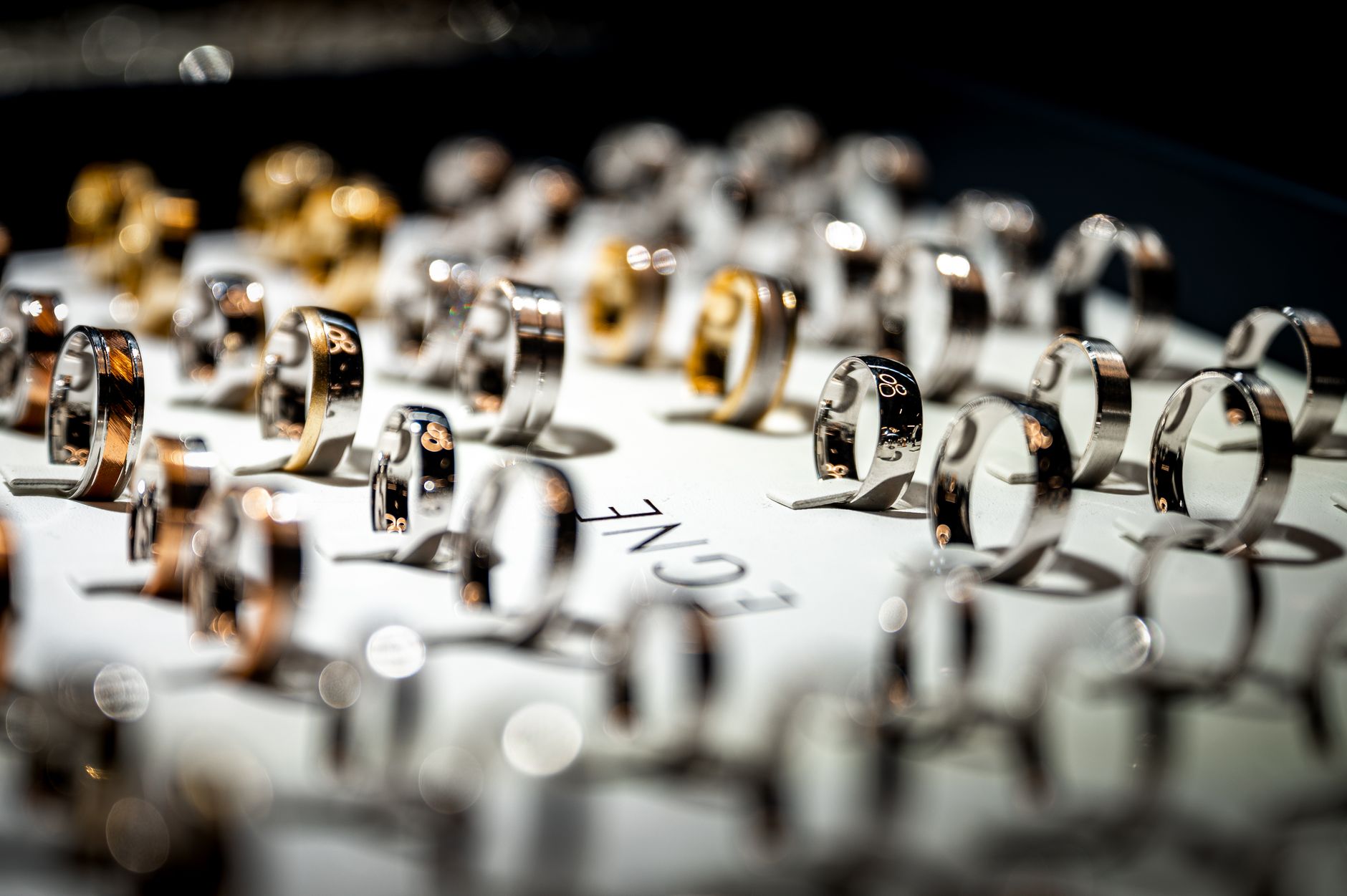
As of August 2026, karat marks identify a jewelry piece's gold content, while finish labels describe the metal applied over its surface. Buyers should check both because terms such as "solid gold," "gold-filled," and "vermeil" answer different questions. The best choice depends on expected wear, maintenance, metal sensitivity, and the disclosed composition. These source-checked answers explain the labels and the practical limits behind them.
Table of Contents
- What do 24K, 18K, 14K, and solid gold mean?
- How do plated, gold-filled, and vermeil finishes differ?
- Is sterling silver the same as white gold?
- What should people with nickel allergies look for?
- What does a platinum mark tell you?
What do 24K, 18K, 14K, and solid gold mean?
A karat mark states how much gold an alloy contains. According to the Federal Trade Commission's jewelry buying guide, 24K gold is pure but soft, while 18K is 75% gold and 14K is 58.3% gold. Manufacturers add other metals to make 18K and 14K jewelry harder and more durable.
This creates a practical tradeoff: a higher karat provides more gold, while a lower karat provides more alloy metal. "Solid gold" does not mean pure gold. It means the piece is not hollow, so buyers must still find the 14K, 18K, or other quality mark to determine gold content.
How do plated, gold-filled, and vermeil finishes differ?
gold plating is a surface finish, not a claim that the entire piece is gold. It eventually wears away; the rate depends on how the jewelry is used and how thickly the gold was applied. "Gold flashed" and "gold washed" identify especially thin electroplating that wears faster. Gold-filled, gold-overlay, and rolled-gold-plate pieces use mechanically applied gold of at least 10K over base metal. Gold electroplate uses an electrolytic process and requires 10K-or-higher gold at least 0.175 microns thick under FTC guidance.
Vermeil has a more specific U.S. meaning. Under 16 CFR §23.4, it requires a sterling-silver base and 10K-or-higher gold on significant surfaces, with at least 2.5 microns of fine-gold-equivalent thickness and reasonable durability. A hidden nickel layer requires disclosure. Before buying a finished piece, check:.
- The base metal beneath the finish
- Whether the label says plated, filled, overlay, rolled plate, or vermeil
- The gold karat and stated thickness
- Whether any nickel layer is disclosed
Is sterling silver the same as white gold?
No. sterling silver, also marked "925," contains 92.5% pure silver. It can tarnish when exposed to air and moisture, so careful storage and polishing are normal parts of ownership.
White gold is a gold alloy commonly made with nickel or palladium. It is often coated with rhodium for a brighter white appearance and better scratch resistance, according to the Gemological Institute of America's comparison. That rhodium finish wears with use and needs occasional replating. A white-gold piece can therefore change appearance without losing its underlying identity as gold alloy.
What should people with nickel allergies look for?
Nickel exposure can cause an itchy contact rash, particularly from earrings and other jewelry. The Mayo Clinic's nickel-allergy guidance advises people with a known allergy to avoid nickel contact. Suitable options may include documented nickel-free pieces, titanium, appropriate stainless steel, higher-karat yellow gold, nickel-free white gold, or sterling silver.
Do not assume that "white gold" means nickel-free because its alloy may contain nickel or palladium. For plated jewelry, ask about every layer rather than only the visible surface. This matters because a finish can wear and expose an underlying nickel-containing layer.
What does a platinum mark tell you?
Under FTC guidance, jewelry described simply as "platinum" should contain at least 95% pure platinum. Platinum alloys containing 50% to 85% platinum and base metal need a full composition disclosure.
That composition matters because durability, repairability, density, and hypoallergenic performance can differ. If a platinum percentage falls below 95%, read the complete alloy disclosure instead of relying on the word "platinum" alone.