
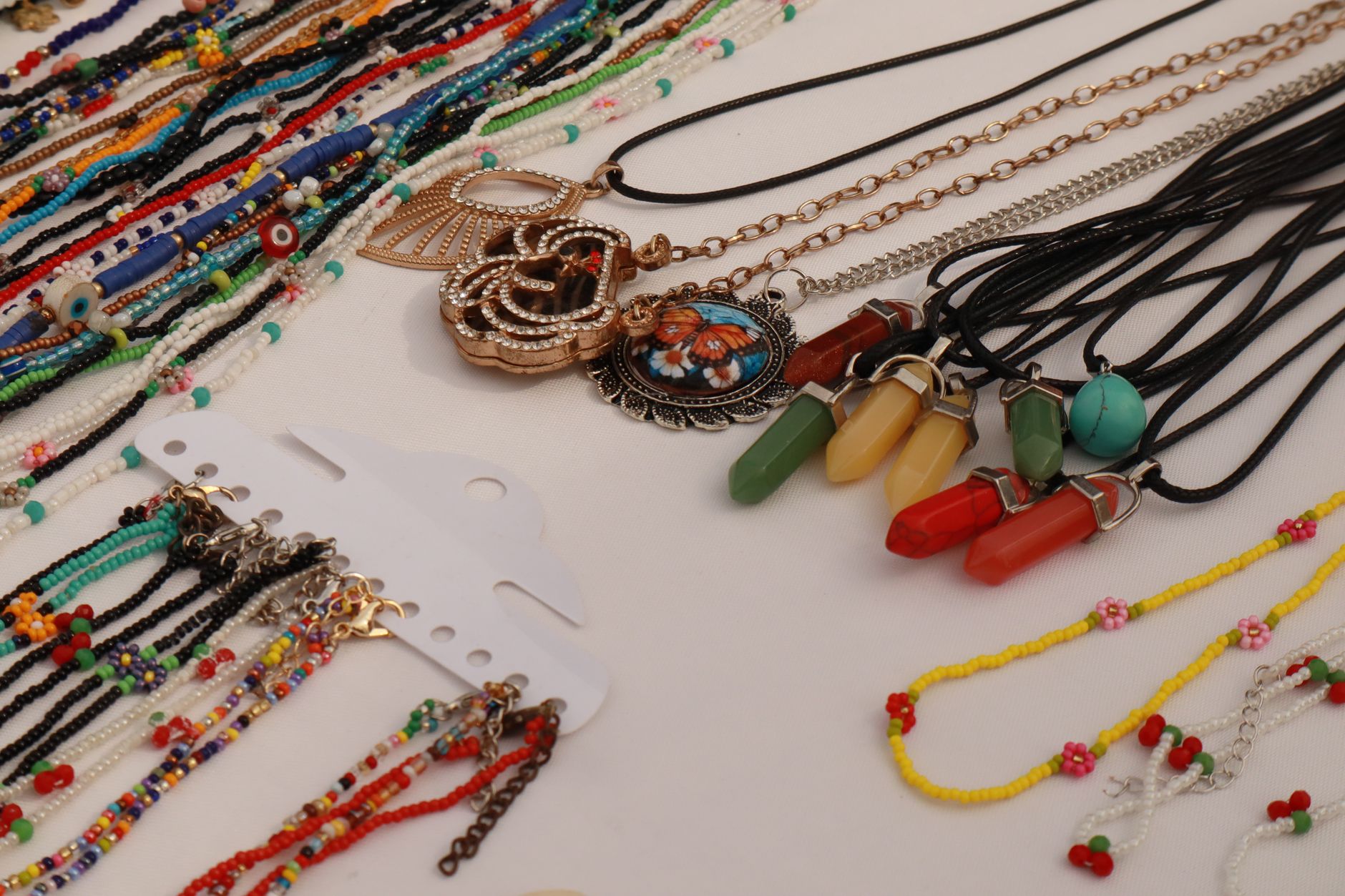
To verify a necklace or chain in 2026, match its metal marks to an accountable maker, confirm the construction, and validate important stones through an appropriate gem laboratory. Treat receipts, report numbers, and tester readings as supporting evidence—not proof on their own. A hallmark is an official mark that identifies metal fineness and, in some systems, who submitted the piece for testing. Strong evidence forms a consistent chain from the jewelry itself to the seller, maker, assay office, and laboratory record.
Table of Contents
- Start with the maker and metal marks
- Know what the metal wording establishes
- What does a hallmark prove?
- Verify diamonds, colored stones, and pearls
- Test the evidence as a whole
Start with the maker and metal marks
Inspect the clasp, end tags, pendant back, and other concealed areas under good light. Record every letter, logo, number, and symbol exactly as stamped, then photograph each mark before contacting the seller or maker. The Federal Trade Commission says a U.S. gold karat mark should be accompanied by the name or U.S.-registered trademark of the company standing behind the item.
A karat mark without that adjacent identifier is a purchase red flag under the FTC's jewelry-buying guidance. Ask the seller to put the claimed metal, maker, model or stock number, weight, stone details, and construction on the invoice. Compare those records with the physical piece. A receipt that says only "gold chain" or "diamond necklace" leaves the central claims unresolved.
Know what the metal wording establishes
"Solid gold" describes a piece that is not hollow. It does not mean pure gold, and it is not interchangeable with plated, filled, overlay, rolled gold plate, or vermeil. Those construction terms describe layers or combinations of metals. Gold plating can wear away, so a plating description cannot support a solid-gold claim.
Be cautious when a listing emphasizes "real gold" but omits both fineness and construction. For platinum, wording matters just as much. Unqualified "platinum" means at least 95% pure under U.S. guidance. Pieces containing 50% to 85% platinum should disclose both the pure-platinum content and other-metal content; pieces below 50% should not be called platinum.
What does a hallmark prove?
In the UK, a full hallmark independently verifies precious-metal fineness. It contains a unique sponsor or maker mark, a fineness mark, and an Assay Office mark, according to the British Hallmarking Council's guidance. Covered articles above the relevant statutory weight threshold must be hallmarked.
Do not confuse a lone "925," "750," or similar fineness stamp with a complete independent hallmark. A number may state a claim, while the full UK hallmark connects that claim to a sponsor and Assay Office. A hallmark also has limits. It addresses precious-metal fineness, not gemstone identity, treatment, chain durability, craftsmanship, market value, or whether a pendant was later paired with a different chain.
Verify diamonds, colored stones, and pearls
Read the exact stone description before evaluating any report. The FTC says laboratory-created stones must be clearly identified as laboratory-grown or laboratory-created immediately before the stone name, and certain nonpermanent or special-care treatments must be disclosed at sale, including in remote advertising. "Faux" alone is inadequate, as explained in the FTC's gemstone advertising guidance.
For a valuable center stone, ask for the original laboratory report number and match its details to the necklace. Check stone type, shape, measurements, weight where stated, treatments, photographs, and any identifying inscriptions. GIA identification services can address natural versus synthetic origin, detectable treatments, measurements, and photographs for colored stones. Its pearl reports can address natural or cultured origin, nucleation, environment, and detectable treatments for loose or strung pearls, as described in GIA's report guidance.
Test the evidence as a whole
A GIA number is useful only when the archived data matches both the supplied document and the actual stone. GIA's Report Check can compare a number with its archive, but GIA states that a report is not a guarantee, valuation, or appraisal; a PDF or printout may also omit current grading information. Use both GIA Report Check and the report limitations before relying on the paperwork.
A basic thermal tester cannot settle whether a necklace stone is diamond because moissanite may register as diamond. It also cannot establish whether a diamond is mined or laboratory-grown; that distinction requires specialized testing and analysis. Pause the purchase when you find any of these red flags: Before payment, save the listing, obtain a detailed invoice, photograph the marks, verify any laboratory record, and make unresolved discrepancies a condition of the return agreement.
- A gold karat mark without an adjacent responsible company name or trademark.
- "Solid gold" used alongside plating, filled, overlay, RGP, or vermeil language.
- An unqualified platinum claim without marks or records supporting the required purity.
- A laboratory-grown stone described without a clear laboratory-created disclosure.
- A treatment disclosure hidden after the sale or omitted from an online listing.
You Might Also Like
- How to Verify Metals and Finishes Jewelry Claims in 2026: maker records and gem lab guidance, Evidence, and Red Flags
- How to Verify Gemstones Jewelry Claims in 2026: maker records and gem lab guidance, Evidence, and Red Flags
- What Is New With Necklaces and Chains Jewelry in August 2026? Latest maker records and gem lab guidance and Key Takeaways