
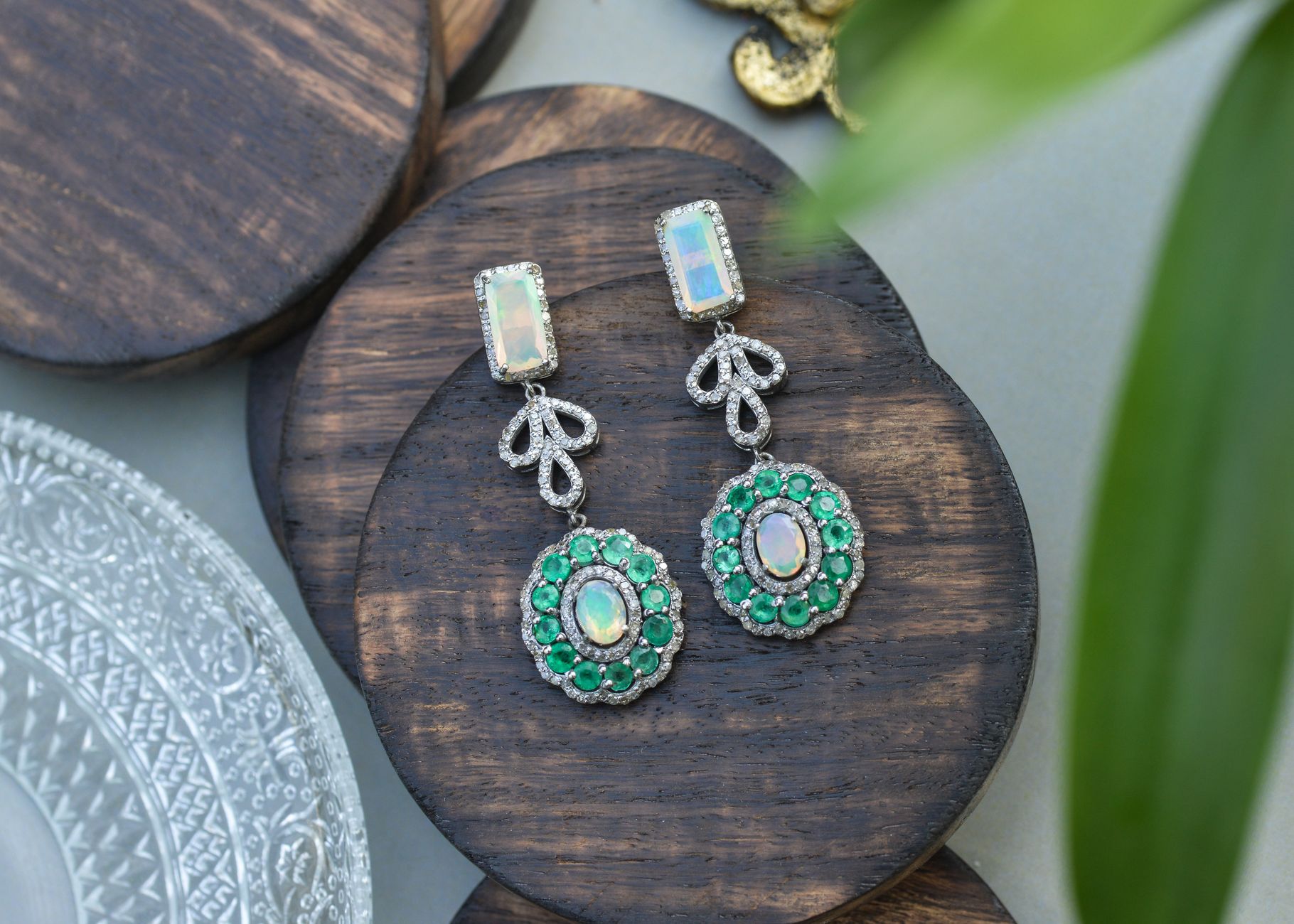
An authentic Ethiopian opal necklace contains natural opal, usually porous hydrophane opal from Wollo, with any dye, smoke treatment, filling, or assembly clearly disclosed. A buyer can check liquid sensitivity, color-treatment clues, edge seams, and written disclosure with lab identification.
Hydrophane means sponge-like. It readily absorbs water and other liquids. That trait shapes care, color checks, and safe testing.
Table of Contents
- Does the stone need protection from liquids?
- Is the color natural or added?
- Is it solid opal, synthetic, or assembled?
- What disclosure should you demand?
Does the stone need protection from liquids?
Most opal from Wollo is hydrophane and porous enough to absorb water like a sponge. GIA explains that a buyer should ask whether the necklace stone is hydrophane and needs protection from liquids, as described in GIA's hydrophane opal testing note. GIA gemologists confirm hydrophane character with one water drop on the surface under a microscope. They use transmitted brightfield light and watch for an optical change where water absorbs.
They do not use full immersion. GIA warns that wetting hydrophane opal may crack it. Water strain can enlarge tiny inclusions and existing cracks. Buyers should never soak a necklace to test it.
Is the color natural or added?
Hydrophane opal absorbs liquids, so treaters dye it many colors, notably purple. Smoke treatment creates dark bodycolor that imitates black opal. GIA notes this treatment risk in GIA's opal treatment overview.
Dark or vivid colors need extra proof. Look closely in strong transmitted or diffused light for these warning signs: In one 17.15-carat Ethiopian opal, GIA found dye as uneven brown surface patches and dye in pits. The repolished back was nearly white. Testing found no manganese.
- uneven surface-hugging brown or colored patches
- dye gathered in pits and surface recesses
- very dark bodycolor with bright play-of-color
- vivid purple or other saturated color in porous-looking opal
Is it solid opal, synthetic, or assembled?
An assembled necklace stone may be a doublet or triplet. A doublet has a thin opal layer cemented to backing such as obsidian, black glass, dyed chalcedony, common opal, or plastic. A triplet adds a clear quartz or glass dome. GIA advises inspecting the stone edge for seam layers, as described in GIA's opal quality factors. Traditional synthetic opal often shows a snakeskin or chicken-wire pattern face-up.
It may show straight columnar structure from the side. GIA found one Kyocera plastic imitation lacked those patterns, but had SG 1.35 and RI 1.49, outside the natural opal range. Check the edge with a loupe in good light. A straight seam, glassy dome, or backing layer points to assembly. A perfect snakeskin pattern points to synthesis.
What disclosure should you demand?
Sellers must disclose treatments that are not permanent, need special care, or strongly affect value. That duty covers dyed, smoked, sugar-treated, resin- or oil-filled, or assembled Ethiopian opal. The FTC states this rule in the FTC Jewelry Guides in the Federal Register.
Ask for written treatment disclosure before payment. Ask whether the stone is natural, treated, synthetic, imitation, doublet, or triplet. For dark, vivid, or high-value stones, require an independent lab identification report and keep it with the receipt.