
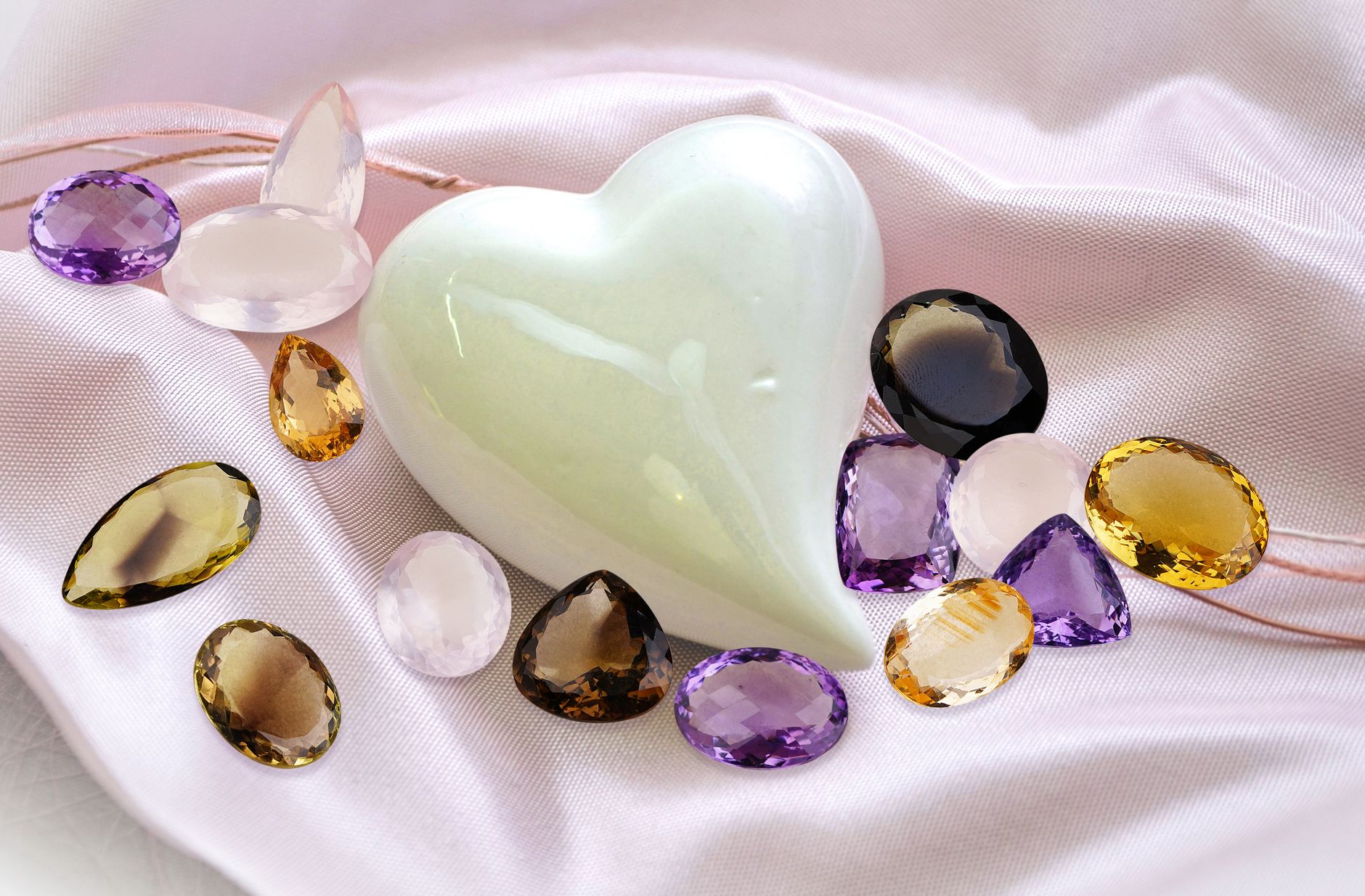
A birthstone ring sets the gem assigned to a birth month in silver, gold or platinum. Blue Nile states basic birthstone rings start around $100–$300 in sterling silver and can exceed $2,000 with diamond, ruby, emerald or sapphire in platinum in Blue Nile's Mother's Rings page. April diamond, July ruby, May emerald and September sapphire sit at the top of per-carat cost. Metal, carat size, color and treatment explain most price gaps within the same month.
Table of Contents
- Which stone belongs to each month?
- Why do April, May, July and September cost most?
- How does metal change the price?
- What should you compare besides the month?
Which stone belongs to each month?
The Gemological Institute of America lists January garnet, February amethyst, and March aquamarine and bloodstone in the GIA birthstone list. April is diamond and May is emerald. June offers pearl, moonstone and alexandrite. The same GIA list gives July ruby and August peridot and spinel.
September is sapphire, while October is opal and tourmaline. November is topaz and citrine, and December is turquoise, tanzanite and zircon. Months with several options give more ways to control cost. A buyer can stay with the month and change the stone, metal or size.
Why do April, May, July and September cost most?
My Birthstone Guide places April diamond, July ruby, May emerald and September sapphire at the top in the 2026 per-carat ranking. It lists fine emerald at $2,000–$6,000+ per carat and good-to-very-good ruby at $1,200–$42,000 per carat.
The same ranking puts garnet, amethyst, citrine and topaz near the bottom. Carat size, color, clarity, cut, treatment, origin and natural versus lab-grown source explain most gaps within a month.
How does metal change the price?
In that Blue Nile breakdown, sterling silver styles with synthetic or semi-precious stones start around $100–$300. Gold styles with natural stones run $300–$1,500.
Prices can exceed $2,000 with diamonds, rubies, emeralds or sapphires set in platinum. That jump reflects metal plus larger, better-cut and less-treated stones.
- sterling silver with synthetic or semi-precious stones: around $100–$300
- gold with natural stones: $300–$1,500
- platinum with diamond, ruby, emerald or sapphire: over $2,000
What should you compare besides the month?
The Gemological Institute of America states U.S. sellers must disclose gem treatments in GIA's introduction to gem treatments. It warns nondisclosure can make a buyer think a stone is naturally higher-quality and more valuable.
GIA laboratories also test material, treatment and geographic origin for colored stones. Origin strongly affects value for ruby, sapphire, emerald, spinel and Paraíba tourmaline. For the same month, compare certified specifications and written treatment disclosures rather than month alone. Ask for the lab report and disclosure in writing before you pay.
- metal, carat size and color, clarity and cut
- natural versus lab-grown source and treatment disclosure
- origin report for high-value ruby, sapphire or emerald