

Most people make at least three critical mistakes when investing in belts—they prioritize appearance over construction quality, ignore the importance of proper leather conditioning, and fail to understand how belt width and material composition affect both longevity and wearability. A $300 Italian leather belt will outlast a $30 fashion belt by decades, but only if you’ve avoided the common pitfalls that trap even experienced luxury consumers. The difference between a belt that ages beautifully and one that cracks, discolors, or loses its shape often comes down to fundamental errors made at the point of purchase and in the months that follow. These mistakes aren’t about aesthetics—they’re about value destruction.
When you buy a luxury belt, you’re making a 10 to 20-year investment, assuming you handle it correctly. Most people don’t. They choose the wrong buckle type for their lifestyle, store belts improperly by wrapping them tightly around hangers, condition leather too aggressively or not at all, and worst of all, they ignore the role that humidity and temperature play in leather degradation. The result is that a premium belt looks tired and unusable within three to five years instead of becoming a permanent wardrobe anchor.
Table of Contents
- What Belt Construction Details Are You Overlooking?
- The Buckle Type Trap—Why Your Choice Matters More Than You Think
- Storage and Conditioning Mistakes That Accelerate Deterioration
- Matching Belt Width and Style to Actual Usage Patterns
- Moisture Exposure and Environmental Damage You’re Not Considering
- The Cost-Per-Year Calculation That Changes Buying Decisions
- Future-Proofing Your Belt Investment
- Conclusion
What Belt Construction Details Are You Overlooking?
The first mistake happens before you even try on a belt: skipping the material investigation. Full-grain leather and top-grain leather are fundamentally different products, and many people buy top-grain thinking they’re getting the real thing. Full-grain leather retains the hide’s natural surface, develops a patina over time, and actually becomes stronger as it ages. Top-grain leather has the toughest outer layer sanded away, making it softer and more uniform in appearance—but significantly less durable. A full-grain belt from a quality maker will last 15 to 20 years with basic care; a top-grain belt typically gives you 5 to 7 years before the surface begins to separate and peel.
The second construction detail most people miss is the stitching pattern. Look at the underside of your belt. If you see just one line of stitching holding the leather layers together, you have a weak link. Quality belts use at least two parallel lines of stitching, often more, and the thread should be thick and placed close together—typically 8 to 10 stitches per inch. This matters because the stitches, not the buckle, determine when a belt fails. A belt with loose, thin stitching will develop separation and eventually tear along that seam, no matter how durable the leather itself is.
The Buckle Type Trap—Why Your Choice Matters More Than You Think
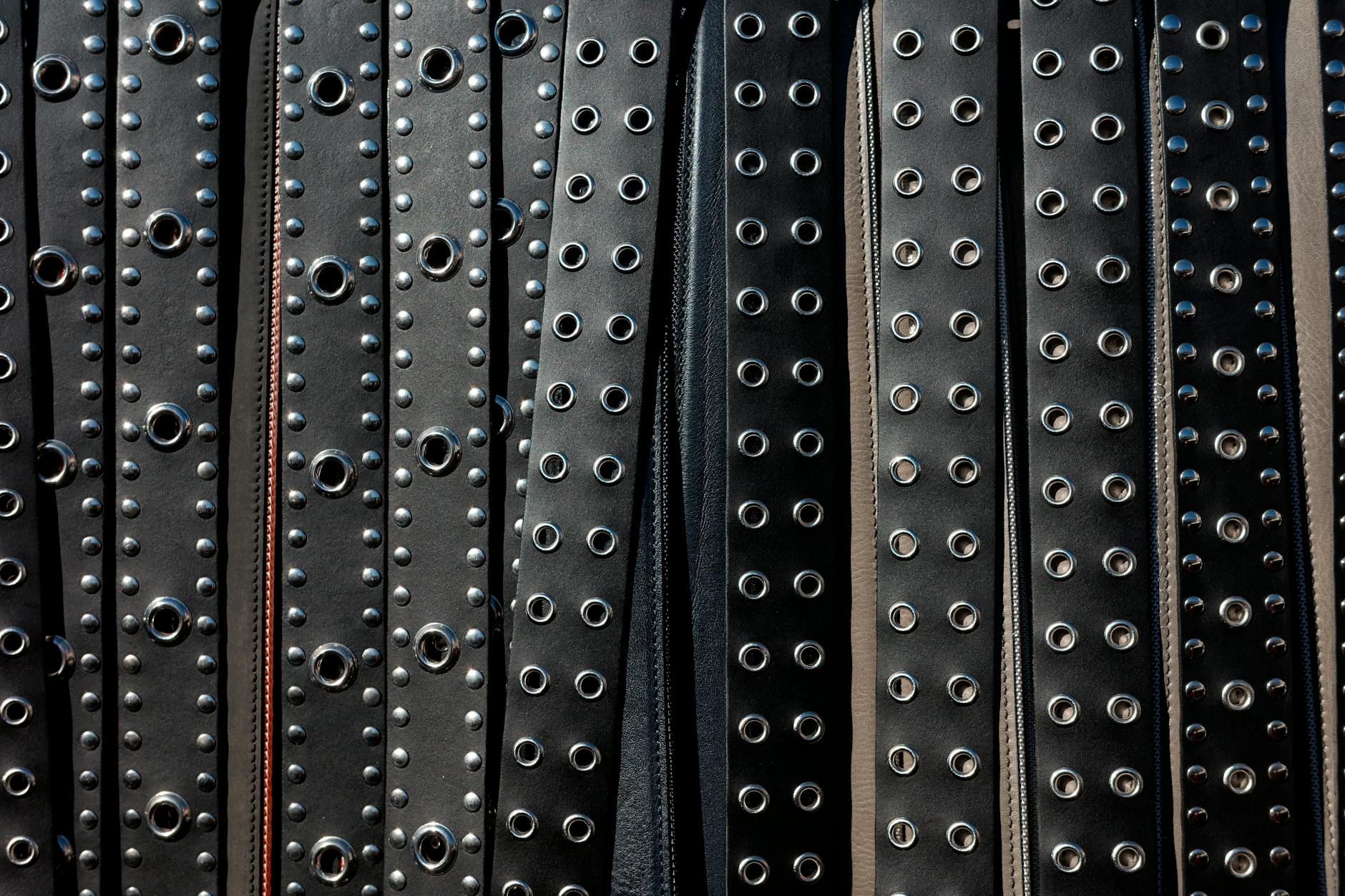
Most people choose buckles based on aesthetics when they should be weighing functionality against lifestyle. A ornate brass buckle looks impressive on a dress belt, but if you’re bending and unbending that belt multiple times per day at an office, you’re putting stress on the leather around the buckle post and hinges. The best buckles for daily wear are those with minimal moving parts—solid brass or stainless steel with a simple frame design. Ornamental buckles, decorative leather tabs, and multi-piece assemblies concentrate stress, especially if the leather isn’t properly reinforced at the attachment point.
The material of the buckle also affects longevity in ways people don’t anticipate. Cheap pot metal buckles corrode and discolor, then stain the leather beneath them when exposed to humidity or sweat. Plated brass looks identical when new but the plating wears through in 18 to 24 months, exposing the base metal underneath. Solid brass or stainless steel are more expensive upfront but won’t corrode and actually age beautifully—brass darkens with a patina that complements aged leather. If your belt buckle costs less than 20% of the total belt price, you have a mismatch that will show within two years.
Storage and Conditioning Mistakes That Accelerate Deterioration
The belt’s life after purchase is determined almost entirely by how you store it. The most common mistake is coiling or rolling the belt tightly and securing it with rubber bands or by wrapping it around a hanger hook. This compresses the leather, creates permanent creases, and causes the layers to separate at the stress points. The correct method is to hang belts loosely on a belt organizer or spread them flat in a drawer. If they must hang, use a system where they’re not bunched or kinked at any point. Conditioning is where people either invest wisely or destroy value through neglect and over-treatment.
Leather naturally loses moisture and becomes brittle—a good conditioner restores suppleness and prevents cracking. The mistake is conditioning too frequently or using the wrong products. Most people either never condition their belts or condition them every month, both extremes being harmful. Full-grain leather needs conditioning every 12 to 18 months under normal wear conditions. Using heavy creams or oils accelerates deterioration by breaking down the leather’s structure; quality leather conditioners contain specific ratios of natural oils and waxes designed to penetrate without softening the material excessively. A $15 tin of mink oil might feel luxurious but will leave your belt greasy and weak within six months.

Matching Belt Width and Style to Actual Usage Patterns
People frequently buy belts that look great on the shelf but create problems in real use. A 1.5-inch belt is versatile for both casual and formal wear, but many people choose 1.25 inches for a sleeker look or 2 inches for a bolder statement. These width choices matter: wider belts show wear and color variation more noticeably because more surface area is visible, and narrower belts concentrate the belt’s load into a thinner band, putting more stress on the leather. A 1.5-inch width spreads the load more evenly, hides minor imperfections better as the belt ages, and works with the broadest range of clothing.
The style-to-usage mismatch is equally damaging. A highly polished dress belt with a decorative buckle belongs in a rotation with other formal wear, worn perhaps 15 to 20 times per year. People buy these and wear them daily because they’re nice, accelerating wear to the point where they look shabby in two years instead of lasting fifteen. A belt for daily wear should be made from more forgiving leather, have a simpler buckle design, and be selected knowing it will develop a lived-in appearance quickly. Buy dressier belts specifically for dressier occasions, not as all-purpose pieces.
Moisture Exposure and Environmental Damage You’re Not Considering
Leather is hygroscopic—it absorbs and releases moisture based on the surrounding environment. Most people treat belts the same regardless of humidity conditions, which is a critical error. In dry climates, leather becomes brittle and prone to cracking; in humid climates, mold and mildew develop on the surface and between layers. A belt worn in a tropical climate or during humid summers requires different care than one worn in an arid region. The mistake isn’t failing to care for your belt in different conditions; it’s not recognizing that the conditions require different treatment.
Sweat and salt exposure from skin contact is another frequently underestimated danger. If you wear a belt directly against your skin or against thin clothing during warm weather, the salt in your sweat will accumulate on the leather and accelerate deterioration. Over time, this causes permanent discoloration and weakening. The simple solution is to ensure your belt makes contact only with the fabric of your pants or dress, not your skin. If you live somewhere hot or exercise in your belt, expect to condition more frequently—perhaps every 9 to 12 months instead of 15 to 18—to compensate for the accelerated moisture and salt exposure.
The Cost-Per-Year Calculation That Changes Buying Decisions
Most people evaluate belt purchases by the upfront price alone. A $50 belt and a $300 belt seem like an obvious choice if you’re judging by cost. But a $50 belt lasts roughly 3 to 4 years with decent care, while a $300 belt lasts 15 to 20 years. The cost per year of ownership drops from $12.50 to $15–20 for the expensive belt, and the expensive belt is also more likely to stay in your rotation throughout those years because it looks better and feels better.
This reframing changes the calculation significantly. If you wear a belt nearly every day, the cost per wear for a $300 belt that lasts 20 years is roughly 4 cents per wear, assuming 250 wearing days per year. The mistake is treating all belts as disposable items rather than wardrobe infrastructure. Even if you can afford to replace a cheap belt every three years, you’re creating waste and repeatedly settling for a product that never really satisfies you. A single high-quality belt chosen correctly will outperform five cheap belts purchased at different times because it will actually develop character and fit better as it molds to your body.
Future-Proofing Your Belt Investment
As leather quality standards continue to decline across the industry, the importance of buying from makers with transparent sourcing and traditional construction methods grows. Mass-market brands increasingly cut corners on stitching, use lower-grade leather, and treat leather with chemicals that weaken its structure. The resurgence of heritage leather makers and small-scale manufacturers is a response to this decline. These makers often cost more initially but they’re betting their reputation on durability, which translates to better materials and methods.
Looking forward, the skill of properly maintaining and conditioning leather is becoming increasingly valuable as disposable fashion loses appeal. Learning the basics of leather care—how to clean, condition, and repair your belts—becomes part of owning them. This isn’t a burden; it’s part of the relationship with pieces designed to last decades. The belts that will impress 10 years from now aren’t the ones you neglected to maintain, even if they started out premium. They’re the ones that received consistent, understated care and were chosen with realistic expectations about aging and use.
Conclusion
The belt mistakes you’re making fall into predictable categories: buying the wrong material and construction, choosing aesthetically over functionally, storing and conditioning incorrectly, and failing to understand how your climate and daily life affect leather durability. Each of these mistakes is correctable with basic knowledge and a shift in how you evaluate belt purchases. The investment of time to understand these factors pays dividends because a single quality belt, properly maintained, becomes a reliable part of your wardrobe for decades rather than a temporary accessory that ages poorly.
Start by evaluating the belts you currently own—examine the stitching, research the leather type, and observe how they’ve aged. Then make your next belt purchase with intentional knowledge: choose full-grain leather, verify quality stitching, match the belt style to your actual usage pattern, and commit to conditioning every 15 to 18 months. These fundamentals transform a belt from a consumable product into an investment that looks better and wears more reliably as time passes.