

Most people get sunglasses wrong in ways they don’t realize until too late. You might be choosing frames based on what looks good in a mirror, ignoring lens quality, buying discount pairs thinking they’ll work the same as premium options, or wearing sunglasses that don’t actually protect your eyes. These mistakes compound over time—both in what you pay and what you’re exposing yourself to.
Someone might spend three times as much on a designer watch and then grab a twenty-dollar pair of sunglasses that offers minimal UV protection, undoing much of the thoughtfulness invested elsewhere in their accessories. The mistakes fall into predictable categories: optical errors, protection oversights, fit problems, and authenticity issues. A lawyer in Chicago bought what she thought were high-end sunglasses from a discount retailer, only to later learn they had minimal UV filtering and gave her eye strain headaches by afternoon. She was spending more on aspirin than she would have on proper lenses.
Table of Contents
- Are You Choosing Sunglasses Based on Style Over Substance?
- Understanding the Deception of Dark Lenses Without Proper UV Protection
- The Fit Problem That Changes Everything About How Sunglasses Function
- Confusing Brand Name With Quality—The Counterfeit and Mass-Market Problem
- Ignoring Lens Coatings That Actually Matter
- Material Mistakes and Durability Issues
- The Lens Color and Purpose Mismatch
- Conclusion
- Frequently Asked Questions
Are You Choosing Sunglasses Based on Style Over Substance?
This is perhaps the most common mistake. Frame appearance dominates the decision-making process while the actual optical properties—the thing that determines whether these glasses serve their purpose—get overlooked. A frame might be flattering on your face and on trend, but if the lenses don’t filter UV light adequately or introduce optical distortion, you’re wearing an expensive prop rather than functional eyewear. Premium eyewear brands succeed partly because they obsess over lens quality in ways that trend-focused retailers simply don’t.
A pair of designer sunglasses from a reputable house typically uses optical-grade materials where the lens surfaces are precisely ground to minimize aberrations. budget alternatives often use lower-grade plastics that create subtle visual distortion—nothing dramatic enough to notice immediately, but enough to cause eye strain after a few hours of wear. The mistake is treating sunglasses like jewelry, where aesthetics dominate, rather than as optical instruments where substance matters most. Your eyes don’t care how the frames look; they care whether the lenses are actually good.

Understanding the Deception of Dark Lenses Without Proper UV Protection
A dangerously counterintuitive fact exists in sunglasses design: darker lenses without UV protection are worse for your eyes than clear lenses with UV protection. When a lens is dark but doesn’t block ultraviolet light, your pupil dilates to let in more light, which means more unfiltered UV rays enter your eye. You’ve essentially created a mechanism for UV damage while thinking you’re protecting yourself. This happens frequently with cheap sunglasses and knockoff designer pairs.
The manufacturer cuts costs on lens materials, making them dark to appear premium while skipping the expensive UV-blocking coatings. The consumer gets style points and false peace of mind while their retinas absorb unnecessary radiation. Legitimate UV damage isn’t immediate—you don’t feel it happening—which makes it particularly insidious. Cumulative UV exposure increases the risk of cataracts and macular degeneration, conditions that don’t manifest until later in life. A 30-year-old wearing inadequate sunglasses might not notice consequences until age 65, by which point the damage is irreversible.
The Fit Problem That Changes Everything About How Sunglasses Function
Sunglasses only protect your eyes if they actually cover them. A pair might be optically perfect but sit too high on your nose, too loose on your ears, or positioned at an angle that leaves the sides of your eyes exposed to direct sun. This is especially true when people choose frames primarily for appearance—they might select styles that look good but don’t fit their face geometry properly. Proper fit means the frames sit comfortably without gaps between the lens and your face.
The bridge should rest evenly on your nose without pinching or slipping, and the temples should rest against your temples without pressing. If you’re constantly pushing sunglasses up your nose or having them slip down, the fit is wrong. This matters beyond comfort: loose sunglasses expose more of your eye area, and poorly positioned frames mean you’re squinting around the edges rather than looking through the lens. Someone with a wider face might think oversized frames look better, but if those frames don’t actually position the lenses correctly for their specific head shape, they’re defeating the purpose.
Confusing Brand Name With Quality—The Counterfeit and Mass-Market Problem
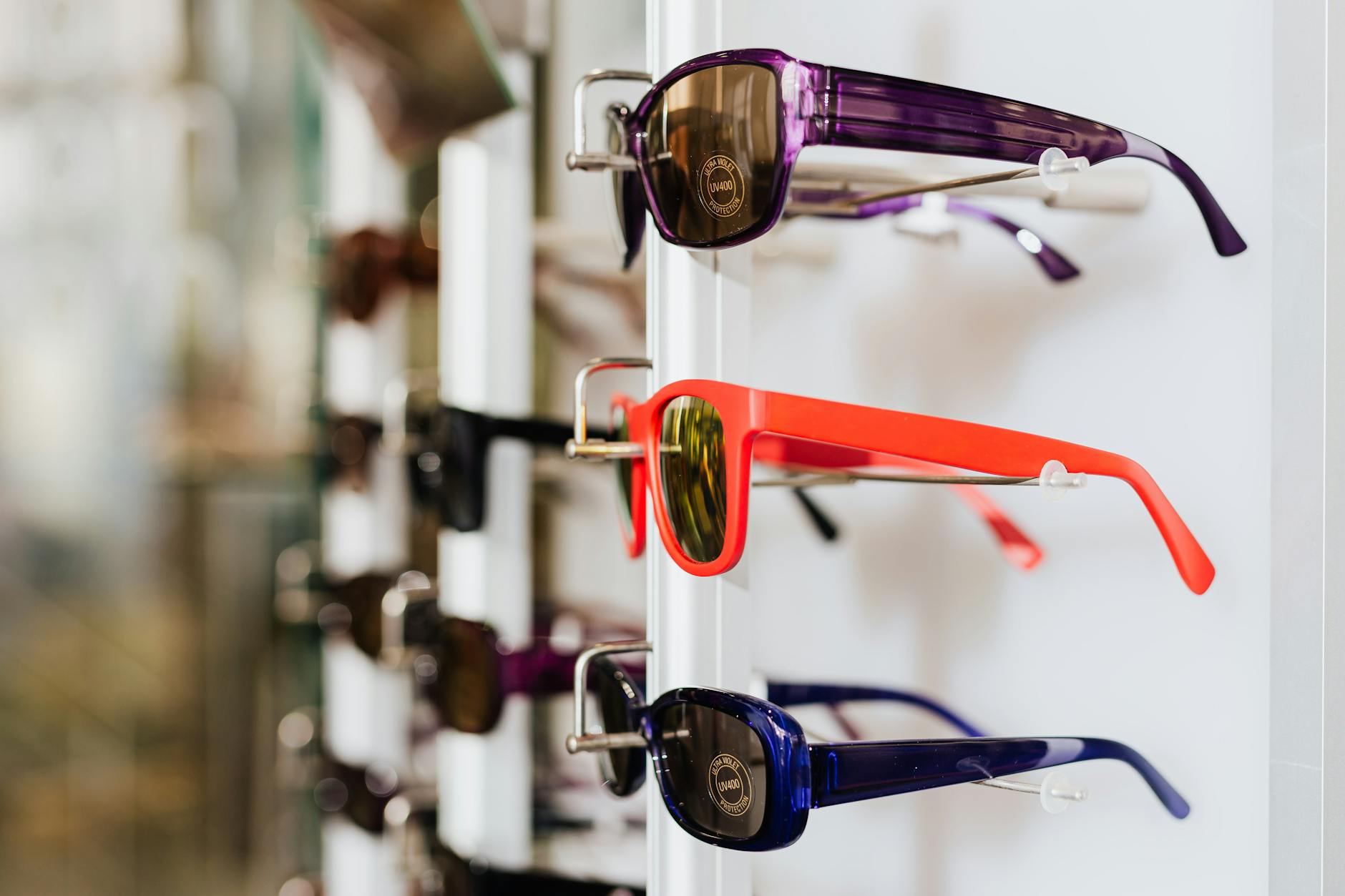
Designer sunglasses sit in an odd market position. Legitimate pairs from established luxury brands command premium prices justified by superior optics and materials. But the counterfeiting is rampant, and even authentic sunglasses from mass-market retailers often use the designer name as a price tag without backing it up with quality. A pair labeled with a luxury brand name but manufactured by a different company using cheaper materials might look legitimate but perform identically to fifty-dollar mall sunglasses.
The practical tradeoff: mid-range optically-engineered sunglasses from brands known specifically for lens technology often outperform premium designer pairs where you‘re partly paying for the name. A pair from an optical company that specializes in sunglasses might deliver better actual protection and visual clarity than a fashion brand’s sunglasses, yet cost less. You need to evaluate the actual product—the lens material, coating quality, and optical design—rather than trusting the price tag or the logo. Counterfeit pairs present an obvious concern, but the hidden problem is authentic sunglasses sold under a designer name by a mass producer using substandard materials.
Ignoring Lens Coatings That Actually Matter
Sunglasses lenses can include various coatings that determine their function: anti-reflective coatings reduce glare, polarizing coatings eliminate reflected light from water and pavement, hydrophobic coatings repel water and oils, and UV-blocking treatments protect your eyes. Many people buy sunglasses with whatever coating comes standard, never considering whether those options align with their actual needs. Polarized lenses offer a specific advantage but come with a tradeoff: they eliminate glare from reflective surfaces beautifully, making water and roads easier on the eyes.
The limitation is that they can interfere with LCD screens and digital dashboards, and they sometimes distort how you perceive other drivers’ sunglasses while driving. A pilot might find polarized lenses problematic because they interfere with instrument panels. Someone working outdoors near water, however, might find them essential. The mistake isn’t choosing polarized lenses—it’s choosing them without understanding the tradeoff, then being frustrated when they cause unexpected issues.

Material Mistakes and Durability Issues
Sunglasses frames are made from various materials—acetate, metal, titanium, plastic—each with different durability profiles and cost implications. An inexpensive plastic frame might seem like a smart choice for casual wear, but poor-quality plastic becomes brittle and yellows over time. Acetate frames, if well-made, age elegantly. Metal frames offer durability but can corrode if not maintained properly.
Someone spent a hundred dollars on metal sunglasses thinking they’d made a good investment, only to have the hinge corrode after a year because they wore them while swimming. Titanium, while more expensive, resists corrosion. The practical question is matching material durability to your actual usage patterns. If you treat sunglasses carefully and mainly wear them on clear days, a decent plastic frame works fine. If you’re wearing them daily in varied conditions—saltwater, chlorine, humidity—a more durable material becomes essential, not optional.
The Lens Color and Purpose Mismatch
Sunglasses come in various lens colors—gray, brown, amber, rose—each designed for different lighting conditions and purposes. Gray lenses are neutral and work broadly across conditions. Brown and amber lenses enhance contrast and work well in variable light. Rose tinted lenses reduce blue light but provide less overall protection.
Most people choose lens color based on appearance rather than optical performance for their specific environment. This matters more than people realize. Someone who spends significant time on water needs lenses designed for that reflection environment. A person in an urban setting with lots of LCD screens and digital displays might benefit from amber lenses that filter blue light. The mistake is treating lens color as purely aesthetic rather than functional, then wondering why your sunglasses don’t work as well as you expected in certain situations.
Conclusion
The mistakes in sunglasses selection stem from treating them as pure accessories rather than optical tools that must serve both form and function. Quality, fit, proper UV protection, appropriate coatings, and material durability matter far more than the brand name on the frame. Invest the time to understand what you’re actually purchasing—not just what it looks like.
The good news is that excellent sunglasses exist at various price points once you know what to evaluate. Start with a reputable optical brand, prioritize lens quality over frame fashion, ensure proper fit for your face, and match lens properties to your actual environment and needs. Your eyes will thank you immediately, and your long-term vision will benefit for decades.
Frequently Asked Questions
What does “UV protection” actually mean in sunglasses?
UV protection refers to how effectively a lens blocks ultraviolet A and ultraviolet B rays. Look for sunglasses labeled “UV400” or “100% UV protection,” which means they block wavelengths up to 400 nanometers—essentially all UV rays that reach Earth’s surface. This is the minimum standard for eye health.
Are expensive sunglasses always better than cheap ones?
Not necessarily. A hundred-dollar pair from an optical company focused on lens technology often outperforms a designer brand’s sunglasses where you’re partly paying for the logo. Evaluate the actual lens quality, coatings, and optical design rather than assuming price correlates with performance.
Can sunglasses cause eye strain, or is that something else?
Sunglasses with poor optical quality, incorrect fit, or inadequate UV protection can all cause eye strain. If your sunglasses give you headaches or make your eyes tired within an hour of wearing them, the optical quality is likely the problem. This is a signal to get a different pair.
What’s the actual difference between polarized and non-polarized sunglasses?
Polarized lenses eliminate glare from reflective surfaces like water and pavement, making them excellent for water sports and driving. The tradeoff is that they can distort digital screens and instrument panels. Non-polarized lenses provide standard UV protection without this interference.
How often should I replace my sunglasses?
If the lens develops scratches or the frame loses structural integrity, it’s time to replace them. Otherwise, quality sunglasses last years. The useful life depends more on how you treat them than on time elapsed.
Do sunglasses need to be adjusted or maintained?
Yes. Hinges can loosen, pads can wear, and lenses can accumulate damage. Regular optical shops can adjust fit and replace nose pads. Avoid leaving sunglasses in hot cars, as excessive heat can warp frames and damage lens coatings.