
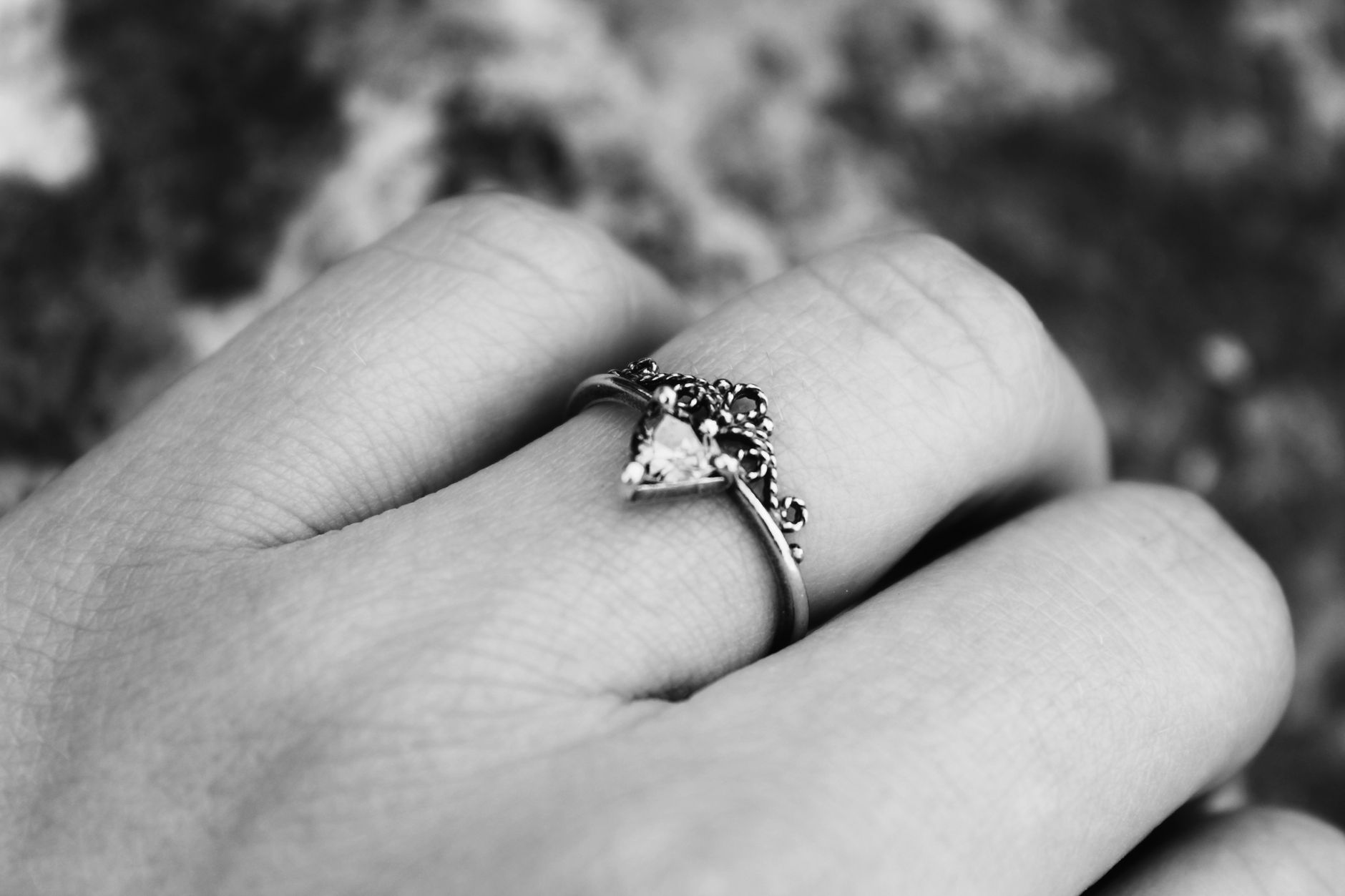
Black rhodium plating is a thin dark coating bonded to a ring or necklace through electroplating. Rhodium, a hard gray-white metal in the platinum family, is plated from a bath formulated to leave a black or charcoal-gray surface. The coating sits over a base metal such as yellow gold, white gold, silver, or platinum. It changes color and surface character without changing the shape or strength of the piece underneath.
Table of Contents
- How is the black finish made?
- Why do designers use it on rings and necklaces?
- How does it wear over time?
- How should you care for it and decide?
How is the black finish made?
A jeweler cleans the piece, then immerses it in a rhodium plating solution and passes an electric current through it. Metal ions leave the solution and form a thin, even skin over exposed surfaces. Black baths include additional metals or compounds that darken the deposit.
The layer is very thin and follows fine detail closely. Engraving, milgrain, prongs, and brushed texture remain visible under it. That quality makes it useful for accent areas as well as full coverage.
Why do designers use it on rings and necklaces?
Designers use black rhodium for contrast and definition. A dark band makes white diamonds look brighter, and a dark chain or setting gives colored stones a sharper edge. It also creates a modern, low-shine look that blackened silver or oxidized finishes cannot always match.
It is often used selectively. Common uses include black shanks paired with bright center stones, darkened halos or galleries, and necklace links meant to recede behind a pendant. Full black coverage is less common because wear shows more quickly across large smooth areas.
How does it wear over time?
Black rhodium is a surface finish, not a solid metal, so friction gradually thins it. Ring shanks, ring edges, clasps, and chain links that rub against skin or clothing lighten first. High-polish areas tend to show wear sooner than recessed or textured areas.
Wear usually appears as softening of the black tone, gray or brownish patches, or glimpses of the base metal. The change is cosmetic and does not mean the ring or necklace is damaged. Many owners have the finish refreshed through replating when the contrast matters to the design.
How should you care for it and decide?
Buy with placement in mind. Recessed settings, pendants worn against clothing less often, and occasional-wear rings keep the finish longer than daily-wear bands and chains.
Ask whether the whole piece is plated or only selected areas, and whether bright stones were protected during plating. Reduce rubbing and chemical contact during wear and storage:.
- Remove black-plated rings during hand work, exercise, and washing.
- Keep necklaces separate so links do not abrade each other.
- Clean gently with lukewarm water, mild soap, and a soft cloth.
- Avoid polishing compounds, ultrasonic cleaners, and dips unless the maker approves them.