
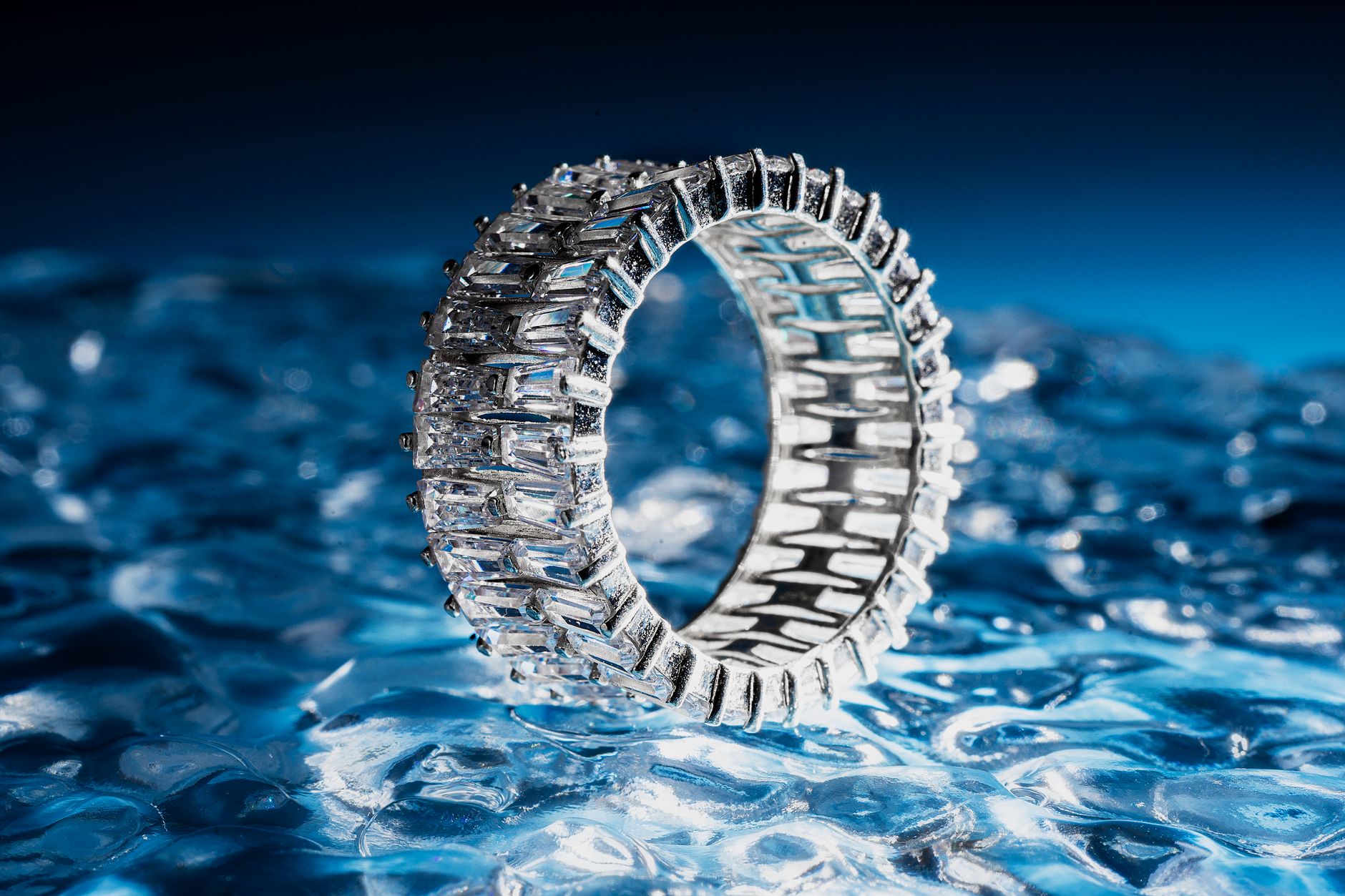
Clean platinum jewelry at home with warm water, mild dish soap, and a soft brush. Soak the piece briefly, brush recesses gently, rinse clean, and pat dry with a soft, lint-free cloth. Platinum is a dense, naturally white metal often used for wedding bands and gem settings.
Home cleaning removes everyday film from skin oil, lotion, soap, and dust. It restores brightness but does not remove scratches or change the metal finish. Use it for routine care between professional services.
Table of Contents
- What Supplies Work Best?
- How Do You Clean Plain Platinum?
- How Do You Care for Stones and Details?
- What Should You Avoid?
- When Should a Jeweler Do the Work?
What Supplies Work Best?
You need a small bowl, warm water, a drop of mild dish soap, a soft-bristled brush, and a lint-free cloth. A clean baby toothbrush or soft makeup brush reaches behind settings without scouring. Use a separate dry cloth for finishing so fibers and water spots stay off the metal.
Choose plain soap without moisturizers, fragrances, or stain-fighting beads. Those extras can leave film on metal and stones. Keep a dedicated bowl and brush for jewelry so kitchen grease does not transfer.
How Do You Clean Plain Platinum?
Start with clean hands and a plugged sink or a bowl set inside the sink. Mix warm — not hot — water with a small drop of soap. Place the platinum piece in the mixture for a few minutes to soften buildup. Turn the piece as you rinse so water reaches all sides.
Do not shake a heavy ring dry over a hard sink. Blot carefully, then let it finish drying on the cloth. Clean when the piece looks dull or feels slick. Frequent gentle washing beats one hard scrub. If brightness does not return, the finish may need professional polishing.
- Lift the piece and brush gently around edges, backs, and settings
- Add a little soapy water to the brush for stubborn crevices
- Rinse under clean warm water until the water runs clear
- Pat dry, then air-dry on the cloth before wearing or storing
How Do You Care for Stones and Details?
Brush lightly around diamonds and hard accent stones, where lotion collects at the base. Use almost no pressure on pavé settings, engraved lines, and small beaded borders. Rinse well because dried soap can dull facets. Take extra care with pearls, opals, emeralds, and glued inlays sometimes paired with platinum accents.
Do not soak porous or fragile materials, and do not brush them firmly. Clean only the nearby platinum with a barely damp brush, then wipe dry. If the maker gives care instructions, follow those first. Different settings hold stones in different ways. A gentle method protects both metal and mounting.
What Should You Avoid?
Avoid bleach, chlorine, abrasive cleaners, baking soda pastes, and toothpaste. They can irritate skin, dull polish, or harm accent stones and finishes. Keep platinum away from household chemicals during chores.
Skip stiff brushes, scouring pads, and knives or picks for buildup. They leave marks that home washing cannot remove. Also set aside home ultrasonic cleaners unless the maker says the finished piece suits one, because vibration can loosen stones.
When Should a Jeweler Do the Work?
Ask a jeweler for help when a stone wobbles, a prong snags fabric, or a clasp sticks. Also seek help for deep scratches, a bent shank, or persistent dullness after gentle cleaning. Professional polishing removes metal, so save it for when appearance or function truly needs it.
Request a check of stones, prongs, and clasps during a professional cleaning. Store platinum apart from other jewelry to reduce rubbing. Bring the piece in promptly if a stone moves or a prong catches on fabric.