
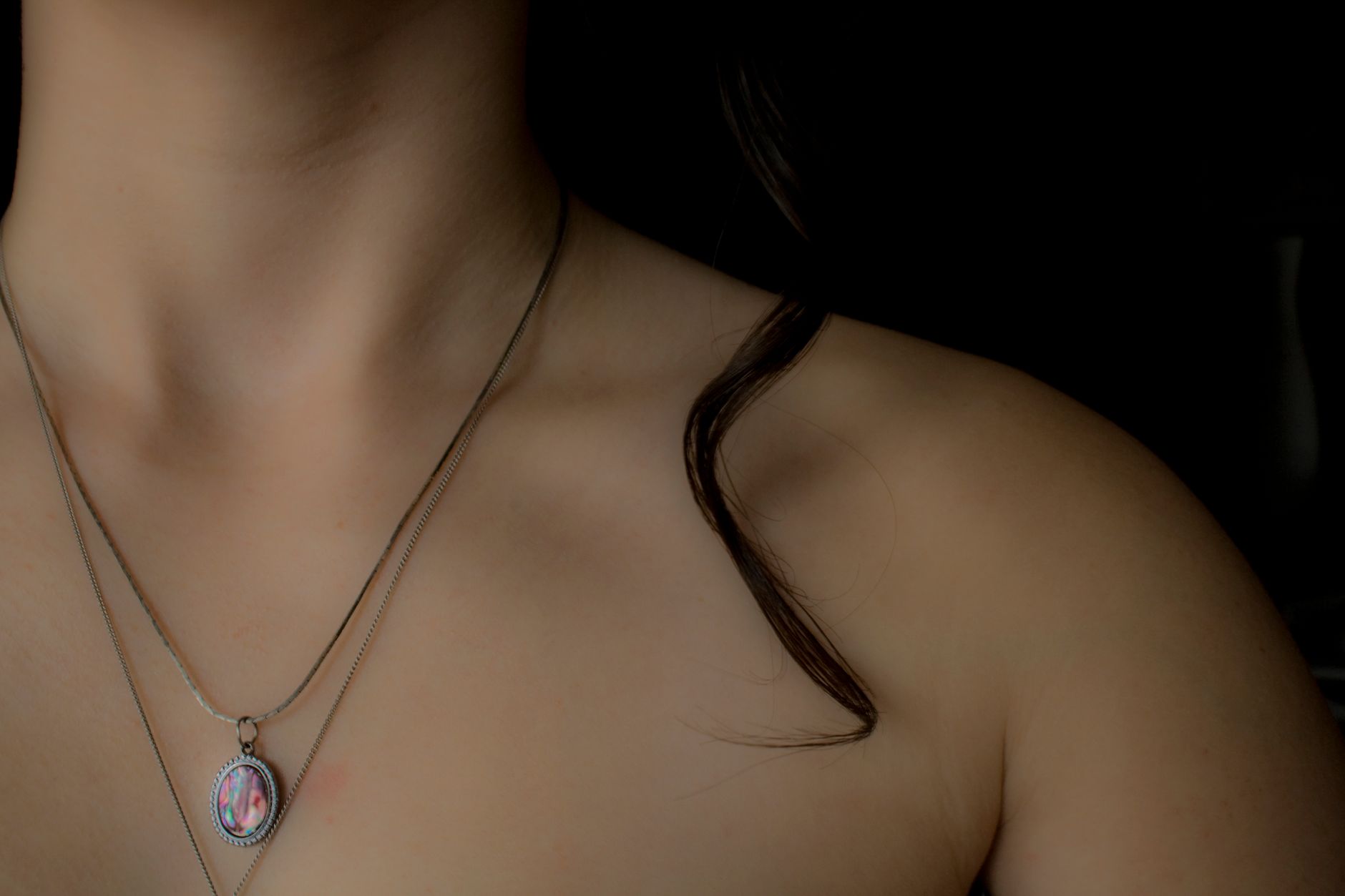
An authentic onyx necklace uses natural black chalcedony, a variety of quartz cut and polished for beads, cabochons, or inlay. A buyer can check color pattern, surface wear, chill and weight, mounting quality, metal marks, and seller paperwork before buying. Those checks separate solid evidence from sales language. They also show limits, since dyed agate and well-made imitations can look convincing without lab testing.
Table of Contents
- What genuine onyx looks like
- Checks you can do without tools
- Light, cold, and scratch limits
- Clasps, metal marks, and seller details
What genuine onyx looks like
Natural onyx is a deep black with a smooth, waxy-to-glassy polish. It may show faint parallel bands, slight brown or gray zones, or small natural inclusions. Perfect, ink-flat color on every bead deserves closer inspection.
Dyed black agate is common and often sold as onyx. Look through the side of a bead or near drill holes for gray banding, uneven saturation, or lighter edges. Glass or plastic copies often look too flawless, too glossy, or dotted with tiny bubbles.
Checks you can do without tools
Hold the necklace and notice temperature and heft. Stone feels cool at first touch and gains warmth slowly, while plastic feels warm quickly and unusually light.
Tap two beads gently together; stone gives a crisp click, while plastic sounds dull. Use daylight and a simple magnifier for surface clues.
- Check drill holes for chipped dye, white residue, or color that looks painted on.
- Look for scratches, worn polish, sharp mold seams, or swirl marks from molding.
- Inspect the stringing for stretching, fraying, knots inside beads, or mismatched bead sizes.
- Turn beads over; real stone often varies slightly from bead to bead.
Light, cold, and scratch limits
Hold a thinner bead near bright daylight and watch the edge. Many black stones block light, but some dyed agate shows dark brown or gray translucency at thin edges. Glass may pass light more evenly or show a different edge color.
Do not use scratch, burn, chemical, or hammer tests on a finished necklace. Onyx is harder than glass but can still chip, stain, or lose polish. A destructive home test can ruin the piece and void a return.
Clasps, metal marks, and seller details
Examine the clasp, jump rings, and bead tips for firm closure, smooth solder joints, and even plating. Read small metal stamps with a loupe, such as 925, 14K, or 18K, which describe the metal mounting rather than the stone. Missing, blurry, or misspelled marks call for more questions.
Read the listing or tag for exact wording. Terms such as genuine, natural, dyed, treated, composite, simulated, glass, or onyx-color carry different meanings. Ask the seller to state the stone identity, any dye or treatment, metal content, length, and return terms in writing, and keep that record with the receipt.