
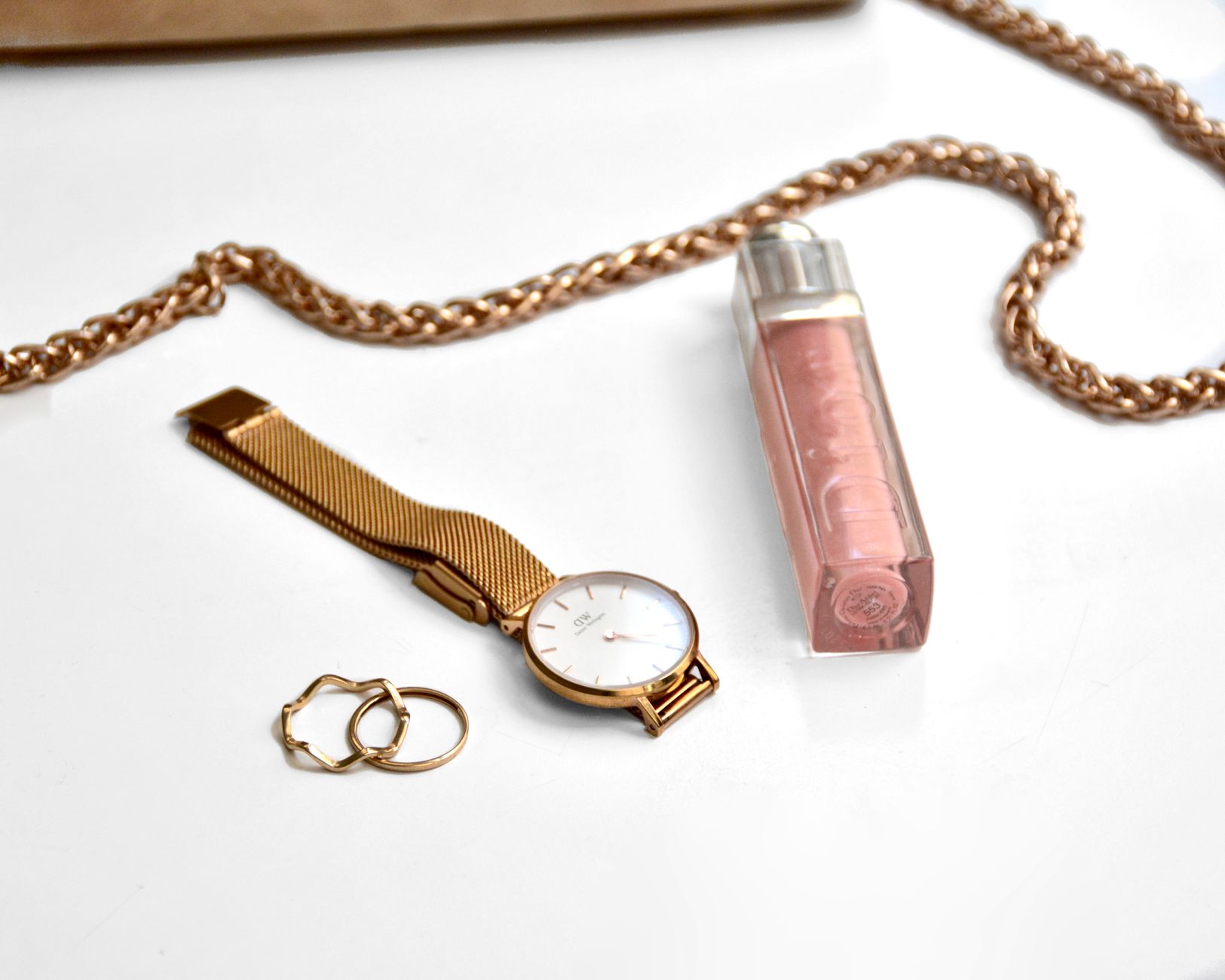
Electroplated gold jewelry is base metal — usually brass, copper, or sterling silver — covered by a gold layer so thin it is measured in millionths of an inch. The gold is real; there is just very little of it, typically under 0.5 microns on standard plate, which is why plated pieces wear through where they rub and why they carry hallmarks like GP, GEP, or HGE rather than a karat mark alone. Understanding a plated piece comes down to three questions: what metal is underneath, how thick the gold layer is, and what the stamp inside the band is actually claiming. Those three answers predict almost everything that matters — how long the finish lasts, whether the piece will irritate your skin, whether it can be repaired, and what it is worth if you ever try to sell it.
Table of Contents
- What "electroplated" actually means
- The base metal decides how the piece behaves
- Thickness tiers, and the words that signal them
- Reading the hallmark without guessing
- Care, repair, and resale limits
- Frequently Asked Questions
What "electroplated" actually means
Electroplating passes an electric current through a solution containing dissolved gold salts. The jewelry piece acts as the cathode, and gold ions deposit onto its surface in an even molecular layer. The process is fast, precise, and cheap, which is why nearly all affordable gold-toned jewelry is made this way. The gold deposited is genuine gold at whatever karat the bath is formulated for — 14k, 18k, and 24k plating baths are all common.
Karat describes the purity of the plating layer only. An "18k gold plated" ring is not 18k gold; it is base metal wearing an 18k-gold skin. Most quality plating includes a barrier layer between the base metal and the gold, usually nickel or palladium. This stops copper and zinc atoms from the base metal migrating up into the gold layer, which causes the finish to dull and discolor from underneath. Cheap plating skips this step, and those pieces tarnish noticeably faster.
The base metal decides how the piece behaves
Brass is the most common base under gold plating. It is inexpensive, machines well, and takes plating cleanly, but it oxidizes aggressively once exposed, leaving green marks on skin where the gold has worn through. Copper behaves similarly and is often used in vermeil-adjacent or costume pieces. Sterling silver as a base changes the calculation considerably.
Silver does not turn skin green, does not corrode the way brass does, and holds meaningful intrinsic value on its own. It is also the legal requirement for gold vermeil in the United States, which is why vermeil sits above ordinary plating in both price and durability. Stainless steel bases are increasingly common in watches and men's jewelry. Steel is hypoallergenic for most wearers and essentially will not corrode, so a worn-through spot on steel looks silver-grey rather than green or black. If you react to costume jewelry, the reaction is usually to nickel — either in a nickel base metal or in the nickel barrier layer beneath the gold, exposed once the gold wears away.
Thickness tiers, and the words that signal them
Thickness is measured in microns (one micron equals one thousandth of a millimeter). The differences between tiers are small in absolute terms and large in practice: Gold filled is the meaningful step up and is often mistaken for plating because it also appears on inexpensive pieces. A fraction like 1/20 or 1/10 before the karat mark is the tell; that fraction is a weight ratio, and no plated piece carries one.
Where a piece is worn matters as much as the number. A pendant that hangs free may keep a 0.5-micron finish for years. A ring, a bracelet clasp, or a watch case back in constant friction against skin and surfaces can show wear on the same thickness within months.
- **Gold flash / gold wash** — roughly 0.175 microns or less. Decorative only; wears off in weeks of regular contact.
- **Gold plated (GP, GEP)** — commonly around 0.5 microns. Months to a couple of years depending on wear location.
- **Gold vermeil** — in the US, a sterling silver base with at least 2.5 microns of gold at minimum 10k. Years of careful wear.
- **Heavy gold electroplate (HGE)** — around 2.5 microns, but on any base metal, not necessarily silver.
- **Gold filled (GF, 1/20 12k GF)** — not plating at all. A thick gold sheet mechanically bonded under heat and pressure, legally at least 1/20th of the item's weight in gold. Decades of wear.
Reading the hallmark without guessing
Look inside a ring shank, on a necklace tag near the clasp, or on the back of a pendant, ideally with a 10x loupe. A number alone — 585, 750, 14k, 18k — indicates solid gold of that purity. Those same numbers followed or preceded by letters change the meaning entirely. Hallmarking law varies by country.
The UK operates a compulsory assay office system with distinctive sponsor, fineness, and assay-office marks, while the US relies on the Federal Trade Commission's jewelry guides, which require quality marks to be accurate and to accompany the maker's registered trademark. Marks on unbranded imported jewelry are the least reliable category. A simple physical check supports the stamp: examine high-wear edges under magnification for a color break where a warmer or pinker metal shows through. That break is the base metal, and it confirms plating regardless of what the stamp says.
- **GP / GEP / EP** — gold plated, gold electroplated, electroplated.
- **HGE** — heavy gold electroplate.
- **GF or a fraction plus karat** — gold filled.
- **925 with a gold color** — sterling silver base, so most likely vermeil or plated silver.
- **No mark at all** — no assurance of anything; treat as plated until proven otherwise.
Care, repair, and resale limits
Plated finishes are removed by abrasion and by chemistry. Take pieces off before swimming, showering, exercising, and applying perfume, lotion, or hairspray. Clean with a dry or barely damp soft cloth — never a polishing cloth or silver dip, both of which are designed to remove surface material and will strip gold plate quickly. Repair is the sharpest limitation.
Sizing a plated ring or soldering a plated chain destroys the finish at the heat-affected zone, and jewelers often decline the work rather than return a piece with a visible scar. Replating is possible and usually costs a modest flat fee per item, but it is a recurring expense, and it cannot be done well over a base metal that has already corroded. For resale, plated jewelry has essentially no bullion value. The recoverable gold on a typical plated piece is a fraction of a gram and costs more to refine than it returns, so gold buyers decline it. Any value a plated piece holds is brand or design value, not metal value — which is the practical reason to buy plated for style and solid, vermeil, or gold filled for anything you expect to keep.
Frequently Asked Questions
Will gold plated jewelry turn my finger green?
Only once the gold wears through and exposes the base metal. Brass and copper bases oxidize and leave green marks; stainless steel and sterling silver bases do not.
Is 18k gold plated better than 14k gold plated?
Not necessarily. Higher karat plating looks warmer but is softer and wears faster. Thickness in microns and the quality of the barrier layer matter more than the karat of the plating bath.
Can I wear gold plated jewelry if I have a nickel allergy?
Cautiously. The gold layer initially shields you, but many plated pieces use a nickel barrier layer or nickel-containing base that becomes exposed as the finish wears. Look for pieces specified as nickel-free.
How long does gold vermeil last compared with standard plating?
Vermeil's minimum 2.5 microns is roughly five times a typical 0.5-micron plate, and its sterling base does not corrode, so it commonly lasts years rather than months under similar wear.