
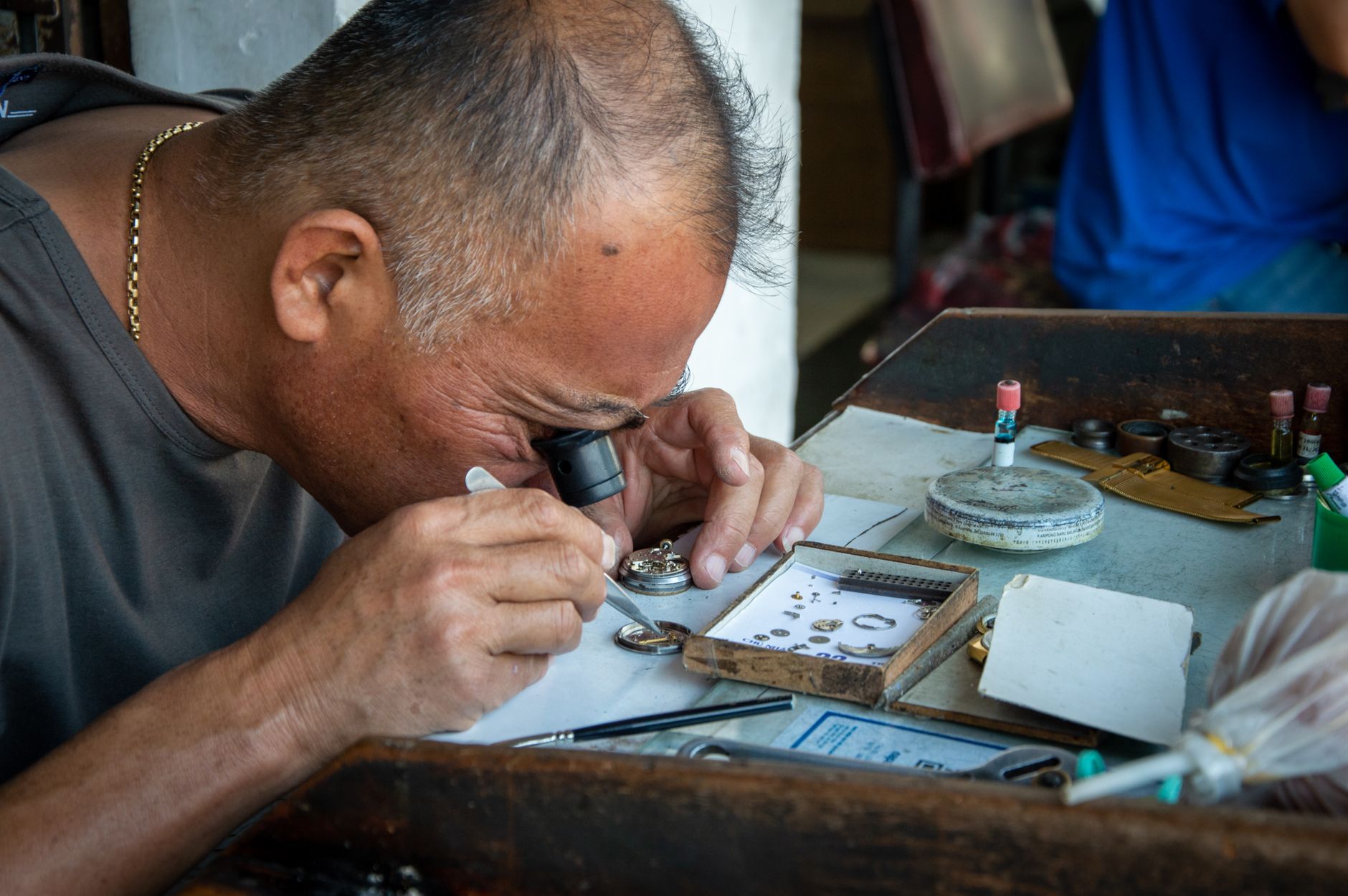
Choose a nearby jewelry repair shop by checking the craftsperson's credentials, equipment, handling process, and written fees. Before leaving jewelry, confirm who will perform the repair, where it will happen, and what requires your approval. The best choice depends on the job. Ring sizing, stone setting, chain repair, and watch service require different skills, tools, and safeguards.
Table of Contents
- Verify Who Will Perform the Repair
- Understand Where and How the Piece Will Be Handled
- Check the Equipment and Safeguards
- Compare Fees and Control Extra Work
- Inspect the Work and Preserve Your Records
Verify Who Will Perform the Repair
Ask for the name and credentials of the person who will handle your piece. Jewelers of America distinguishes beginners with about one year of repair experience, bench jewelers with at least two years who can perform most repairs, and master jewelers who demonstrate mastery through practical testing. Jewelers of America identifies JA, GIA, and AGS credentials as relevant to jewelry work.
For watch repairs, it also points customers toward credentials from the American Watchmakers Association. Match the professional's experience to the repair. A routine chain repair and a complex restoration do not make the same demands. Ask whether the jeweler regularly works with your item's alloy, setting style, and type of repair.
Understand Where and How the Piece Will Be Handled
Ask whether the repair will be completed on-site or sent elsewhere. Jewelers of America notes that custom-design stores are more likely to have trained craftspeople on-site, while timepiece repairs may be performed off-site. Off-site work is not automatically a reason to reject a shop, but it creates more questions.
Ask who receives the item, how it is transported, and whom you contact if the repair scope changes. For jewelry with diamonds or other stones, ask how the shop documents them. A shop may photograph a diamond or show you its identifying characteristics under a microscope before and after the work. Make sure the repair order also describes the item, its condition, and the authorized work.
Check the Equipment and Safeguards
Relevant capabilities may include torch or laser-welder sizing, stone-setting tools, polishing equipment, and tooling suited to the specific alloy. gia treats sizing, finishing, setting, and alloy-specific procedures as separate quality-control areas. Equipment alone does not establish workmanship.
In its laser-welding guidance, GIA instructs jewelers to protect gemstones during the procedure. Ask what protection your stones require and why the proposed method fits the piece. If a ring will be sized down, decide whether you want the removed metal returned. GIA notes that customers often request it, so put that instruction on the repair order before work begins.
Compare Fees and Control Extra Work
A shop should inspect the jewelry and quote both cost and timing before proceeding. Jewelers of America says no repair should be performed without the customer's permission.
Published prices can provide comparison points, but they are not universal local rates. As of August 26, 2026, Zales lists these fees: Ask what the estimate includes and whether polishing, replacement metal, stone work, or other services cost extra. Require the shop to contact you before exceeding the approved amount or changing the repair.
- Gold-ring sizing: $54.99
- Stone resetting: $50 to $150
- Chain repair: $45.99
- Damaged-setting repair: from $110
Inspect the Work and Preserve Your Records
Examine the jewelry before accepting it. A properly executed repair should match the piece's color, luster, and overall appearance, with no visible tool marks or solder seams. Stones should remain secure in their settings.
Compare documented stones and identifying features with the pre-repair photographs or microscope view. If something appears wrong, describe the problem promptly and ask the shop for a written response. Keep the estimate, repair order, receipt, warranty, photographs, and communications. If the dispute remains unresolved, the Federal Trade Commission advises retaining originals, providing copies to the business, and contacting a state consumer-protection office.