
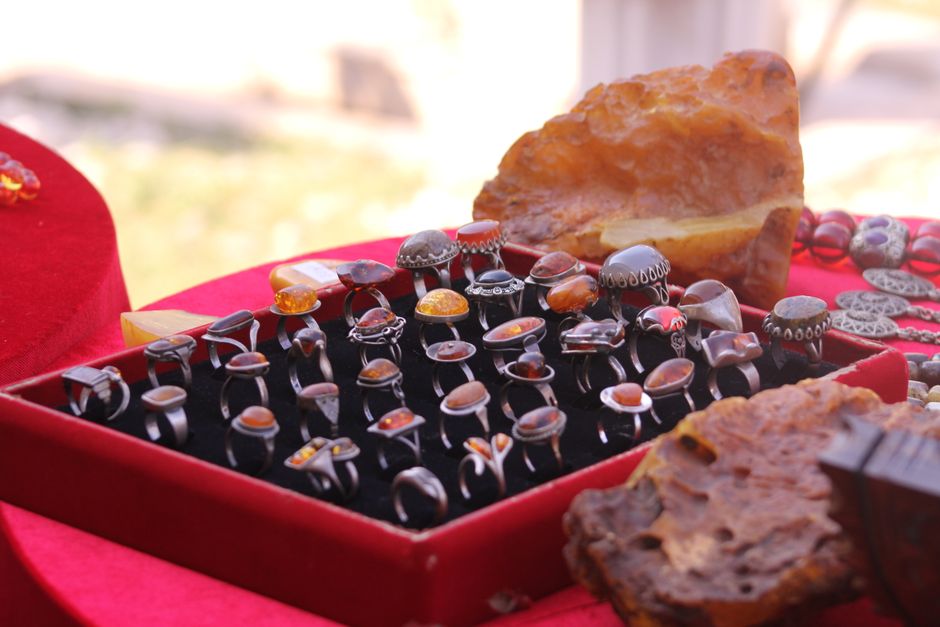
“Silver” on a listing can mean 99.9 percent silver, 92.5 percent silver, a thin plated layer, or no silver whatsoever. Nickel silver and German silver contain none at all. The number stamped on a piece, and what that number legally requires, is the only reliable way through it.
The silver alloys, by fineness
| Name | Silver content | Character |
|---|---|---|
| Fine silver (999) | 99.9% | Very white, tarnishes slowly, too soft for most rings |
| Britannia (958) | 95.8% | Softer than sterling, whiter, historically a British standard |
| Argentium and similar | 935 or 960 grades | Germanium added; markedly more tarnish-resistant, no firescale |
| Sterling (925) | 92.5% | The working standard; the balance is usually copper |
| Coin silver (900) | 90% | Older American pieces; harder, tarnishes faster |
| Silver-filled | A bonded layer | Thicker than plating, thinner than solid; not a fineness |
| Silver plated | A thin coating | Wears through at contact points; cannot be re-polished forever |
| Nickel silver / German silver | None | Copper, nickel and zinc — a silver-coloured base metal |
The FTC Jewelry Guides set the US terminology: “sterling silver” requires at least 925 parts per thousand of silver and “coin silver” at least 900. Names that merely sound like silver do not qualify, which is exactly why nickel silver is a trap for anyone shopping by name rather than by number.
Why silver tarnishes, and which alloys resist it
Tarnish is not corrosion of the silver by air alone — it is silver reacting with sulfur compounds to form silver sulfide, a dark surface film. Sources include air pollution, wool and felt, rubber bands, some foods, and skin. Copper in the alloy also oxidises, adding its own darkening.
That is why the alloys differ so much in practice. Fine silver has almost no copper and stays bright longer. Argentium-type alloys replace some copper with germanium, which forms a transparent protective oxide layer and dramatically slows tarnishing. Sterling sits in the middle, and coin silver — with more copper — darkens fastest.
Firescale is a related copper problem: during soldering, copper below the surface oxidises and leaves a stubborn grey shadow that shows through polish. Germanium-bearing alloys largely avoid it, which is one reason benches like them.
Care that works, and care that damages
- Store dry and low-air. A closed bag with an anti-tarnish strip is far more effective than any polishing routine.
- Wear it. Silver worn regularly tarnishes less, because handling removes the film as it forms.
- Polish with a proper silver cloth along the piece, not in circles.
- Be careful with dip solutions. They work quickly and they also strip intentional oxidised detail and can leave residue in crevices. Never use them on pieces with pearls, opals or porous stones.
- Avoid the foil-and-baking-soda trick on anything valuable. It reverses tarnish chemically but can leave a dull, etched surface and damage some finishes.
- Keep silver out of chlorinated water and away from household cleaners.
Plated, filled and solid: what wear reveals
On solid silver, wear removes silver — and the metal underneath is silver too, so a piece can be polished repeatedly. On plated silver, wear removes the layer and shows the base metal, usually as a warmer or greyer patch at the edges. Silver-filled sits between the two, with a thicker bonded layer that lasts longer than plating but is still finite.
The same logic applies to gold coatings, where the FTC guides set explicit minimums — for example vermeil requires a sterling silver base with gold of at least 10 karat fineness and at least 2.5 microns thick, while ordinary gold electroplate need only be 0.175 microns. Thickness is the whole story, as the vermeil finish guide sets out.
What to ask before buying
- What is the fineness, as a number — 925, 958, 999?
- Is the piece solid, filled or plated?
- If it is plated, what is the base metal, and does it contain nickel?
- Is any darkening in the recesses an applied patina that will wear off?
- Is there a stamp, and where is it?
An unstamped piece is not automatically misrepresented — small or delicate work is often unstamped — but the seller should be able to state the fineness plainly and stand behind it in the written description.
Frequently asked questions
Is nickel silver real silver?
No. It is a copper-nickel-zinc alloy with no silver content, and its nickel content makes it a poor choice for anyone with a nickel sensitivity.
Does sterling silver tarnish more than fine silver?
Yes. The copper that gives sterling its strength also accelerates darkening. Germanium-bearing alloys such as Argentium resist tarnish considerably better while staying workable.
Can tarnish damage silver permanently?
Tarnish itself is a surface film and removable. The damage comes from over-polishing and harsh dips, which remove metal and strip intended finishes.
Why is my silver ring turning my finger black?
Usually the tarnish film transferring to skin, sometimes accelerated by lotions or medication. It is harmless, and it clears with cleaning — a different reaction from the green mark that copper leaves.
Sources
- FTC Jewelry, Precious Metals, and Pewter Industries Guides, 16 CFR Part 23 — sterling at 925 and coin silver at 900 parts per thousand; vermeil and electroplate thickness minimums.
- ECHA — REACH Annex XVII, entry 27 (nickel) — why the base metal under a plated finish matters for sensitive skin.