
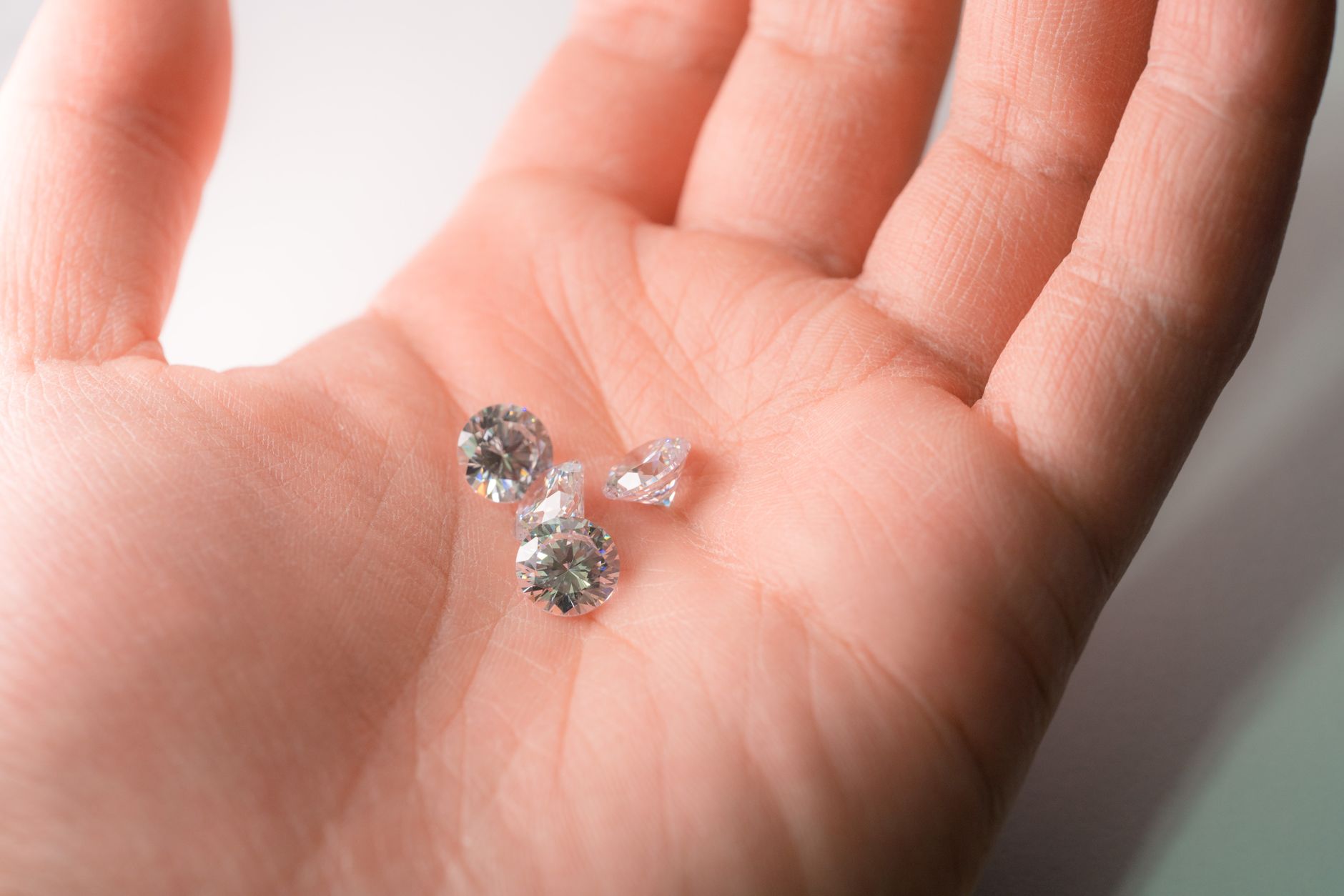
The average center stone for a U.S. engagement ring today is 1.9 carats.
That figure comes from couples married in 2025 who answered The Knot's 2026 Real Weddings Study of 10,474 couples. Carat is the standard unit for diamond weight, with one carat equal to 200 milligrams. The average describes the center diamond only, not small accent stones around it.
Table of Contents
- Why does diamond type change the average?
- Is the average still rising?
- Why do some jewelers report around one carat?
- What size should you shop for?
Why does diamond type change the average?
Lab-grown centers averaged 2.0 carats while natural-diamond centers averaged 1.6 carats, according to Rapaport reporting on The Knot data in this breakdown of average carat size. Diamond type pulls the headline number up or down. Buyers who choose lab-grown stones report larger centers.
Spending explains much of the gap. Average ring spend was about $4,600 overall, about $4,300 for lab-grown rings versus about $7,000 for natural-diamond rings. Buyers get more carat weight per dollar with lab-grown diamonds.
- 2.0 carats: typical lab-grown center in the survey
- 1.6 carats: typical natural-diamond center in the survey
- $2,700: approximate spending gap between natural and lab-grown rings
Is the average still rising?
Yes. The national average rose from 1.5 carats in 2021 to 1.7 carats in 2024 to 1.9 carats in 2025, as summarized by Blue Nile in its review of engagement ring statistics. Shoppers now expect a visibly larger center stone than they did five years ago.
Appraisal data points the same way. BriteCo's appraisal- and sales-based index found a 2.0-carat median center stone in 2025, double the 1.01-carat median in 2019. Two different methods now place the market near two carats.
Why do some jewelers report around one carat?
U.S. specialty-jeweler register data averaged 1.07 carats for natural diamonds in 2024, up 4.6% year over year. That number covers only natural diamonds sold through traditional specialty stores.
It excludes many online sales and most lab-grown purchases. The methods measure different buyers. Survey averages reflect what newly married couples remember buying, appraisal medians reflect higher-value rings submitted for coverage, and store registers reflect scanned transactions. No single carat figure fits every region, retailer, or budget.
What size should you shop for?
Most budget-conscious shoppers target 1.0 to 2.0 carats. That range keeps a ring near the $4,600 national average spend, especially with lab-grown diamonds at 61% of 2025 marriages. A well-cut 1.5-carat stone can look close to a 1.9-carat average on the finger.
Match size to finger size, setting style, and maintenance. A narrow solitaire shows more of the center stone, while a halo adds visual width but needs more cleaning. Ask for total carat weight in writing so you know whether the number means the center stone or every diamond combined.