
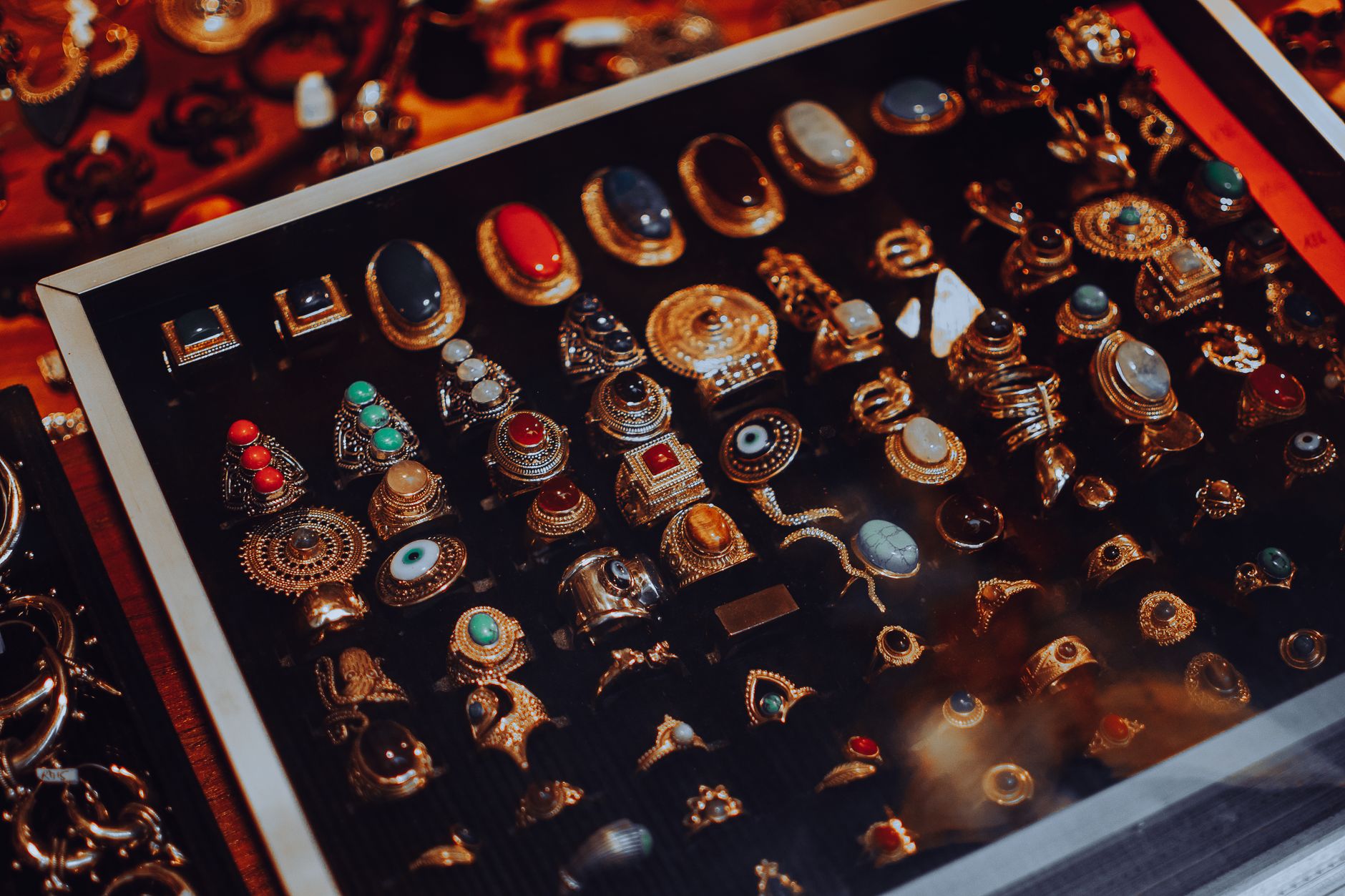
You can build a meaningful vintage precious metals and jewelry collection on a modest budget by focusing on pieces from the 1960s through 1980s, shopping estate sales and online marketplaces rather than specialized vintage dealers, and prioritizing metal weight over brand names. A vintage 14k gold ring weighing five grams might cost $150 to $250 depending on condition and design, whereas the same piece from a heritage jewelry house could run four times that price. The difference isn’t in the metal’s purity or workmanship—it’s in provenance and market positioning.
Vintage jewelry under $300 per piece is achievable if you understand what drives prices and where collectors and casual buyers overlap. Precious metals hold intrinsic value, so even damaged or unfashionable pieces retain worth based on their weight and karat rating. The challenge is distinguishing between true bargains and pieces priced low because they’re genuinely flawed or compromised.
Table of Contents
- Where Should You Buy Vintage Precious Metals on a Budget?
- Hallmarks, Purity, and Hidden Quality Markers
- What Price Factors Actually Drive Vintage Jewelry Costs?
- How to Verify Authenticity Without Professional Testing
- Common Red Flags That Signal Overpriced or Compromised Pieces
- Gemstones Versus Precious Metals: Where Budget Stretches Furthest
- Price Variations by Geography and Manufacturing Era
- Frequently Asked Questions
Where Should You Buy Vintage Precious Metals on a Budget?
Estate sales remain the most consistent source for undervalued vintage jewelry because sellers often price items to move quickly rather than maximize per-piece revenue. A typical estate sale might have three to five jewelry lots, and experienced browsers know that late-morning purchases—after dealers have cherry-picked but before peak crowds—offer the best negotiating window. Online platforms like Etsy and specialized vintage jewelry sites cast wider nets but introduce shipping costs and return friction that sometimes justify their higher price tags.
Local pawn shops occupy an awkward middle ground: inventory is inconsistent, condition descriptions are rarely detailed, and the negotiating room exists only if you’re a regular customer and willing to visit multiple times. An advantage is handling pieces in person before committing, which eliminates shipping surprises. Auction sites like eBay and Heritage Auctions offer transparent pricing history—you can see what similar pieces sold for in the past 30 days—but bidding wars on popular items quickly erase any budget advantage.
Hallmarks, Purity, and Hidden Quality Markers
every legitimate precious metal piece carries a hallmark indicating karat weight (10k, 14k, 18k) or fineness (925 for sterling silver), and this stamp is your primary assurance against fraud. The problem is that vintage hallmarks vary by era and origin: pre-1940 pieces sometimes lack hallmarks entirely depending on country of manufacture, and some European pieces use fineness numbers (585 for 14k gold) that American buyers mistake for low purity. Always verify hallmarks with a jeweler’s loupe before purchase if you’re spending more than $200.
Condition compromises are where budget shopping reveals its limits. A vintage 14k gold necklace might be structurally sound at $120, but if the clasp is broken or the links are worn thin, repair costs add $80 to $150. A piece showing signs of replating—where you see base metal exposed at wear points—suggests the original plating is failing and may require professional refinishing. The warning here is that “as-is” descriptions are standard in estate and online sales, so assume you’re buying the piece with all its flaws unless explicitly guaranteed otherwise.
What Price Factors Actually Drive Vintage Jewelry Costs?
Metal weight is the floor price: a one-ounce silver pendant has a floor value around $25 to $30 based on current spot silver prices, regardless of design or age. But market price reflects designer attribution, condition, rarity, and fashion cycle. A Modernist-era Georg Jensen brooch in 830 silver might weigh the same as an unmarked 1970s brooch but command 10 times the price because collectors recognize the maker and the era represents a distinct design movement.
Gemstones complicate the picture. A vintage ring with a one-carat diamond and 14k gold will price higher than the metal and stone independently suggest because diamonds carry market demand separate from their material properties. A vintage sapphire ring of similar weight might cost less because sapphire markets are thinner and less standardized. This creates opportunity: if you prefer sapphires, aquamarine, or emerald to diamonds, you’ll often find larger or better-quality stones at budget prices simply because fewer collectors are bidding.
How to Verify Authenticity Without Professional Testing
Request detailed photographs under multiple lighting angles and ask sellers to provide close-ups of hallmarks before committing to purchase, especially on items over $200. Many reputable online sellers provide these willingly; refusal is a warning sign. For precious metals, weight information matters: legitimate 14k gold items in a given size will fall within predictable weight ranges, so a 14k ring claiming to weigh 1.5 grams when similar rings weigh 3 to 5 grams suggests either misrepresentation or incomplete information.
The practical step is comparing your piece against similar verified examples on auction databases or museum collections. Most major museums have photography of their jewelry holdings online, and you can cross-reference era, maker, and style to build confidence. A secondary step—once you own the piece—is the magnet test for silver (real silver isn’t magnetic) and the float test for gold jewelry with stones (most legitimate vintage pieces sink), though these are informal checks and not substitutes for professional testing if you’re concerned about a high-value purchase.
Common Red Flags That Signal Overpriced or Compromised Pieces
Descriptions using vague terms like “vintage-inspired” or “retro style” rather than specific era attribution often indicate modern reproduction. A piece described as “14k gold-plated” is worth primarily its weight in base metal, not as precious metals investment, because the plating will eventually wear away. Some sellers combine these flags—claiming a modern reproduction is vintage gold-plated—and budget shoppers sometimes miss the distinction because the item looks period-appropriate.
Weight inconsistencies are another warning. If a seller lists a “solid gold” bracelet at 6 inches long and provides a weight of 2 grams, that’s implausibly light for any solid gold, suggesting either false information or a predominantly hollow or mesh design. For sterling silver, anything under 1.2 grams per square inch of surface area is likely plating over base metal. The limitation with online shopping is that you can’t verify weight yourself before purchasing, so request a gram-by-gram weight from multiple sections of the piece if possible.
Gemstones Versus Precious Metals: Where Budget Stretches Furthest
A vintage ring with a genuine ruby or sapphire (not diamond) in 14k gold from the 1970s might cost $80 to $150, whereas a diamond ring of similar weight and era could run $300 to $600. This pricing gap reflects market perception: collectors actively seek vintage diamond rings, but colored-stone pieces are often overlooked.
If your aesthetic interest aligns with colored stones, your budget stretches significantly further, and you also gain a piece with more distinctive visual character than a traditional solitaire. The tradeoff is that colored stone markets are less standardized, so resale is less predictable. You’re buying primarily for personal use rather than as a fungible commodity, which is actually liberating if you’re building a collection purely for wear and enjoyment rather than investment.
Price Variations by Geography and Manufacturing Era
A 1940s 14k gold ring made in the United States typically costs 20 to 30 percent more than an equivalent piece made in Europe during the same era, partly due to higher U.S. labor costs at the time and stronger collector interest in American makers. Pieces from the 1950s and 1960s—the mid-century modern period—command consistent prices across markets because that era has sustained collector demand.
By contrast, 1980s jewelry is often deeply discounted simply because the era hasn’t yet developed the nostalgia premium that earlier decades enjoy, so if you hunt specifically for early-1980s pieces, you’ll often find heavier gold items at prices approaching scrap value. Post-1965 pieces tend to be more affordable because manufacturing scaled up and design became more uniform, whereas pre-1940 handcrafted pieces carry premium pricing even when unmarked. A 1920s brooch with no maker’s mark and moderate condition might sell for $200 to $400 because the era and construction style are recognizable enough for experienced buyers to authenticate and date it. The same level of condition and weight in 1975 jewelry might move at $80 to $120 simply because manufacturing techniques made it more common and less distinctive.
Frequently Asked Questions
How do I know if vintage gold is real without professional testing?
Legitimate gold carries a hallmark (10k, 14k, 18k, or fineness numbers like 585). Examine it under magnification. The hallmark should be crisp, not worn or inconsistent. Magnet testing works for identifying ferrous metals mixed in, but doesn’t prove purity—a jeweler’s acid test or XRF scanner is the definitive method for pieces you intend to keep long-term.
Is vintage silver always sterling (925)?
No. Pre-1920 pieces often use 800 or 830 silver (European standard), which is slightly lower purity but still legitimate precious metal. The hallmark indicates which standard was used. Modern pieces marked “silver-plated” contain only a thin coating over base metal and hold little resale value.
What’s a realistic price for a vintage gold ring in decent condition?
A 14k gold ring weighing 4 to 6 grams from the 1960s or 1970s in wearable condition ranges from $150 to $400 depending on design, maker attribution, and gemstones. Scrap value alone would be $80 to $150 based on current gold spot prices, so anything below that suggests missing information about condition or material.
Should I buy vintage jewelry with broken clasps or loose stones?
Only if you budget repair costs. A broken clasp costs $40 to $80 to replace. Re-tipping prongs on loose stones runs $30 to $60 per stone. Factor these into your purchase decision—a piece at $100 becomes $160 to $180 after repairs, which may exceed what you’d pay for a piece already in wearable condition.
Are newer vintage pieces (1980s-1990s) better buys than older pieces?
They’re usually cheaper per gram, but older pieces (1950s-1960s) often have better construction and more distinctive design. The choice depends on whether you prioritize cost or aesthetic value. A 1980s 14k bracelet might cost $120, while a 1960s equivalent at similar weight costs $250, but the 1960s piece often has superior craftsmanship.