
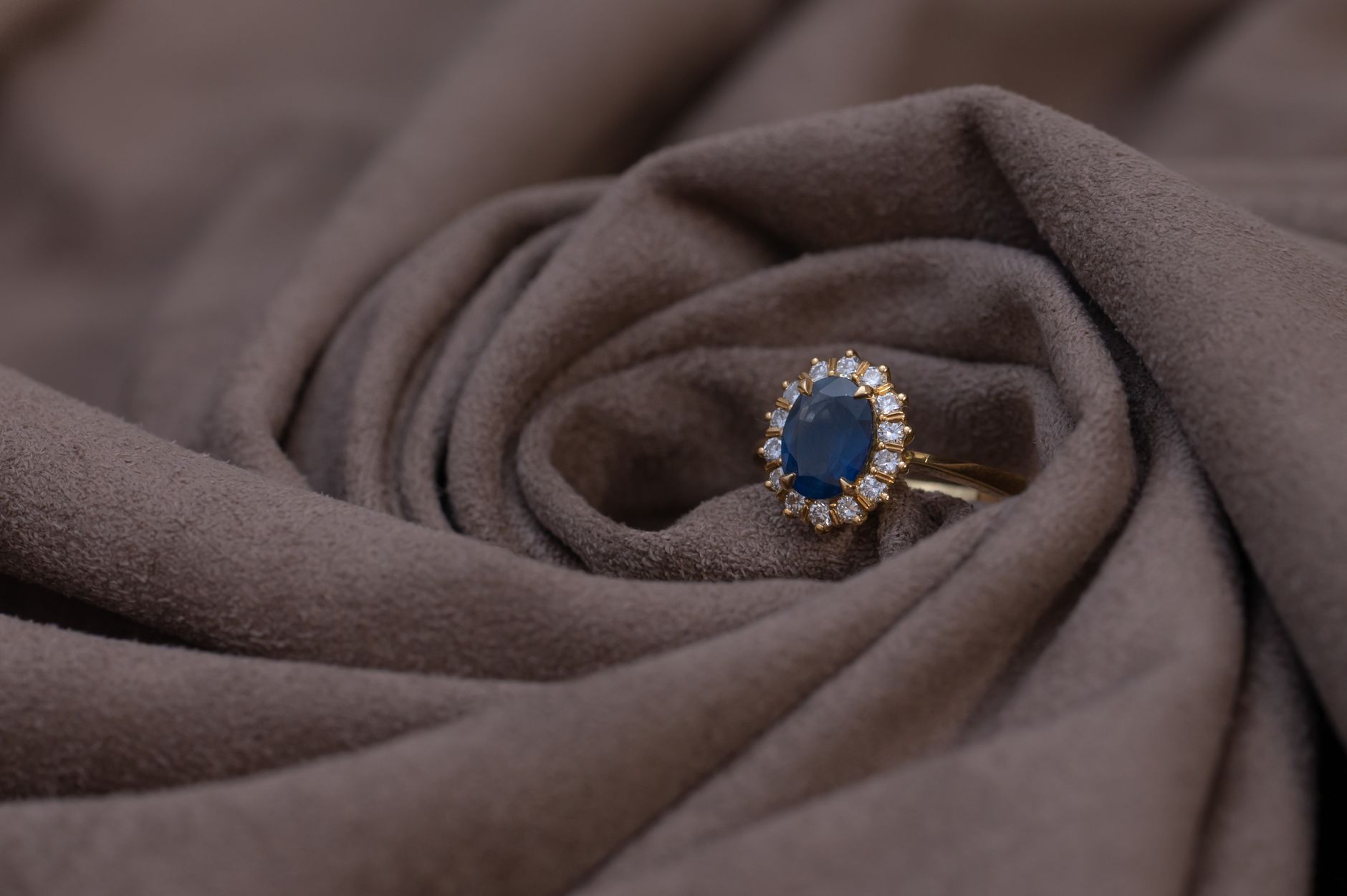
A 1-carat blue sapphire alone typically costs $500–$1,500, according to HowMuchDoesCost's 1-carat price breakdown. Brilliyond reports finished sapphire engagement rings, which use a sapphire as the center stone, span $200 to $10,000 or more in its finished-ring cost guide.
Carat measures gem weight. Basic fine-jewelry spending averages $2,500–$3,500, Brilliyond notes. Per-carat cost climbs nonlinearly because size alone does not set value.
Table of Contents
- What do finished rings cost at common sizes?
- Why does the same carat cost more or less?
- How much can lab-grown save?
- How do treatment and origin affect price?
- How should you compare sapphire prices?
What do finished rings cost at common sizes?
A 1/4-carat blue-sapphire solitaire in 14K yellow gold lists around $474, Blue Nile shows. By contrast, Blue Nile lists a 1-carat oval sapphire with 1/4-carat diamond halo in 18K white gold at $3,335 in the same sapphire-ring listing.
Dana Rebecca Designs places sapphire at $400–$2,000 per carat. That range sits below emerald, ruby and mined-diamond averages and below the $5,500 average engagement-ring spend the jeweler cites.
Why does the same carat cost more or less?
HowMuchDoesCost averages standard-quality blue sapphire material at $400–$600 per carat. A 1-carat blue sapphire ranges $500–$1,500 with cut, color, clarity and weight deciding placement.
Brilliyond cautions that carat alone does not set price. Color, clarity, cut, treatment, origin, metal and setting complexity dominate, so per-carat cost rises nonlinearly with size and quality.
How much can lab-grown save?
SheraGems prices high-quality lab-grown blue sapphires at about $20–$200 per carat. Fine natural blue sapphires run $200–$2,000 per carat, while exceptional natural stones exceed $10,000 per carat.
That gap lets a buyer get larger size or cleaner color for less with lab-grown. Buyers who want natural rarity should budget for the steep jump to fine and exceptional grades.
How do treatment and origin affect price?
OriaGems reports about 90% of market sapphires are heat-treated. Only about 1 in 100 arriving stones can remain untreated, creating a steep untreated premium buyers verify by lab report.
HowMuchDoesCost places Kashmir-origin sapphires from around $5,000 for 1 carat. Kashmir material commands more because it is rarely mined and serves as the benchmark blue.
How should you compare sapphire prices?
Compare finished-ring totals, not loose-stone quotes alone. Metal, side stones and setting work can outweigh a small carat difference.
Dana Rebecca Designs' $400–$2,000 per-carat range helps anchor that finished-total math. Ask for the lab report before paying an untreated or Kashmir premium.
- Prioritize color and cut over raw weight.
- Ask whether the stone is heat-treated.
- Get a lab report for any untreated or Kashmir premium.
- Match metal and halo costs to your budget before raising carat.