

The best watches for men right now span an extraordinary range, from the accessible Seiko 5 Sports at under $500 to Patek Philippe and Audemars Piguet models that command over half a million dollars. What unites them isn’t price but purposeful engineering: every watch worth buying today offers genuine technical sophistication, whether that’s a Swiss-made automatic movement, sapphire crystal protection, or decades of brand heritage. The Rolex Submariner Date 126610LN exemplifies this—at $11,350 retail with 300 meters of water resistance and a Cerachrom bezel insert, it remains the benchmark against which most other watches are measured, a position it has held for over 70 years.
The 2026 watch market is defined by accessibility and substance. Even entry-level luxury watches typically range from $4,000 to $7,000, but the real story is that beneath that tier, modern affordable watches now feature materials and technical sophistication that once belonged exclusively to luxury brands. A Hamilton Khaki Field Automatic costs just under $500 and includes an H-10 movement with an 80-hour power reserve—specs that would have been remarkable in a luxury watch a decade ago.
Table of Contents
- What Price Range Should You Target When Buying a Men’s Watch?
- The Rolex Submariner—2026’s Most Sought-After Timepiece
- Premium Alternatives That Rival Rolex Without the Waitlist
- Building a Meaningful Collection Without Luxury Watch Prices
- Materials, Movements, and the Features That Truly Matter
- 2026’s Major Watch Releases and What They Mean for the Market
- The Future of Men’s Watches—What Comes Next
- Conclusion
What Price Range Should You Target When Buying a Men’s Watch?
Understanding watch pricing requires recognizing that luxury watches operate in distinct tiers, each with its own logic. Entry-level luxury watches occupy the $4,000 to $7,000 range, where you‘re paying primarily for brand reputation, proven reliability, and a timepiece that holds resale value. The Rolex Submariner Date Blue Dial sits at $18,900 retail, placing it in the upper-mid luxury tier. Step beyond that and you enter the territory where Cartier Historiques models in platinum case cost $120,000, while IWC’s Ingenieur Perpetual Calendar in titanium runs $44,000.
At the absolute pinnacle, Patek Philippe and Audemars Piguet watches regularly exceed $500,000 to $1,000,000 USD, a price point that reflects not just materials but decades of watchmaking innovation and extreme scarcity. The secondary market complicates these figures significantly. A Rolex Submariner Date 126610LN with an $11,350 retail MSRP trades on the secondary market between $15,675 and $16,320 for unworn examples—a premium that reflects the difficulty in obtaining one at retail. This is not a bug but a feature of the luxury watch market: many watches appreciate in value, making them genuine investments rather than depreciating luxury goods. However, this same dynamic creates a barrier for new buyers, forcing most people to either pay above retail on the secondary market or accept significant wait times at authorized dealers.
The Rolex Submariner—2026’s Most Sought-After Timepiece
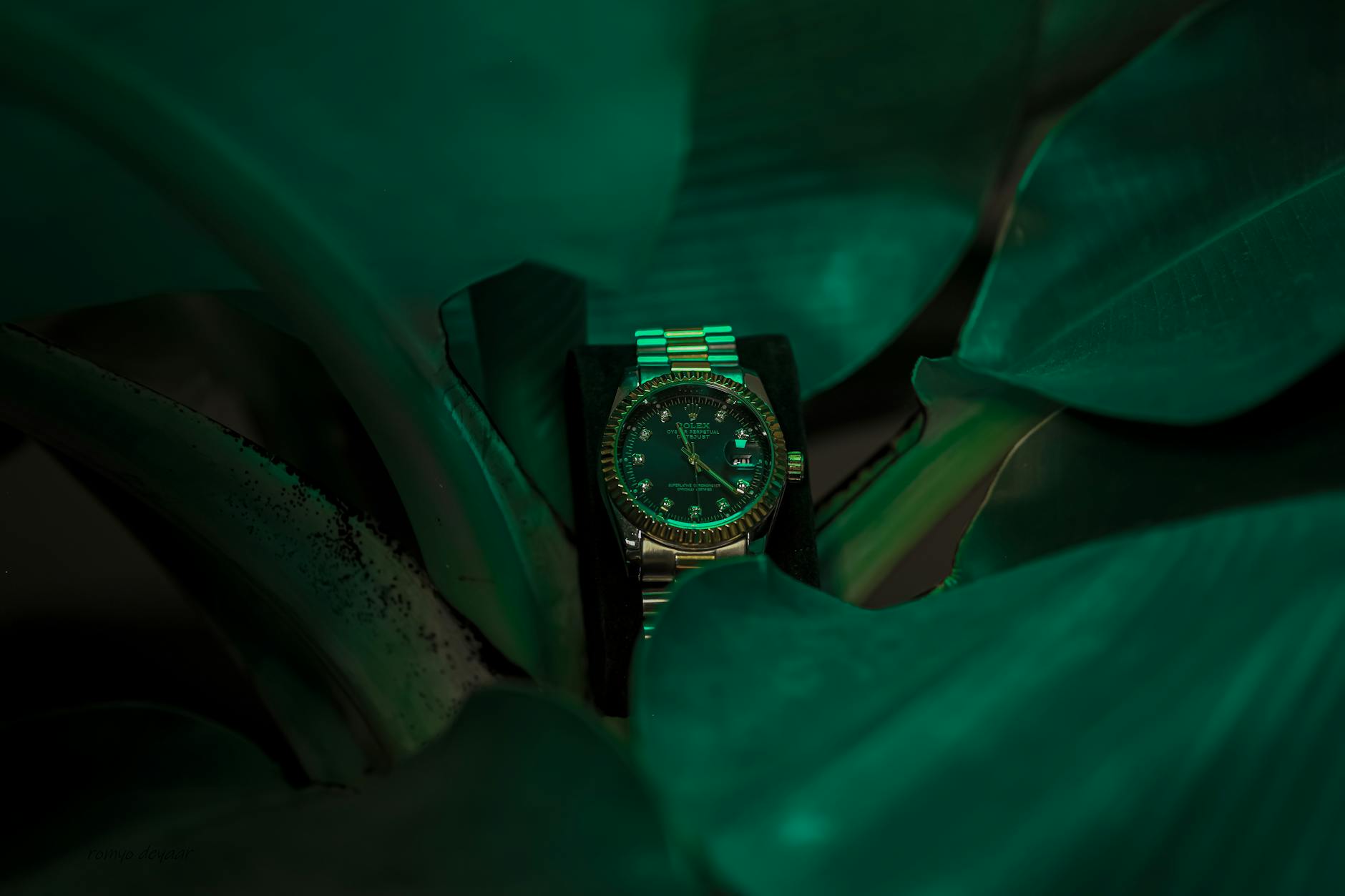
No discussion of men’s watches today is complete without acknowledging the Rolex Submariner’s dominance. The 2026 specifications tell why: the Submariner Date 126610LN combines a 41mm Oystersteel case with 300 meters of water resistance, a ceramic Cerachrom bezel insert that resists scratching, and a Perpetual Rotor automatic movement that has been refined across generations. It is, in essence, a tool watch that happens to cost what a luxury car did a decade ago. The Submariner Date Blue Dial, known affectionately as the “Bluesy,” carries a $18,900 MSRP and represents Rolex’s mid-range luxury offering—not quite entry-level, but more attainable than stainless steel sports models in precious metals.
The Submariner’s power lies in its unchanging design philosophy. The watch looks nearly identical to the model from 1965, yet it incorporates modern materials and movements invisible to the casual observer. This creates a peculiar market phenomenon: the Submariner is simultaneously timeless and perpetually current. A limitation worth mentioning is that at $11,350 to $18,900 retail, the Submariner is inaccessible to most buyers without significant financial commitment. Moreover, because Rolex restricts availability and prices have risen consistently, many potential buyers instead look to alternatives like Tudor’s Black Bay Fifty-Eight, which delivers similar design language and Swiss movement for below $3,500.
Premium Alternatives That Rival Rolex Without the Waitlist
Rolex does not own the luxury watch market, despite its dominance. OMEGA’s Seamaster Diver 300M, the watch worn by James Bond, retails at $5,600 and can be found pre-owned for $4,000. It offers a co-axial automatic movement and 300 meters of water resistance in a package that feels equally durable to the Submariner but with a distinctive personality. OMEGA has also proven its technical credibility repeatedly—the Seamaster Professional is the official watch of NASA and has been worn on multiple space missions, lending it credibility that transcends marketing.
Tudor, Rolex’s sister brand, has emerged as perhaps the smartest alternative for buyers priced out of the Submariner. The Black Bay Fifty-Eight costs below $3,500 through authorized dealers and uses a Tudor MT5402 in-house movement with a traditional sunburst dial and steel construction. It sacrifices none of the durability and gains a distinct visual identity. At the higher end, IWC’s Ingenieur Perpetual Calendar at $44,000 and Cartier’s platinum Historiques collections at $120,000 serve different purposes—they’re status symbols and horological achievements, not everyday tools. Each represents a specific watchmaking philosophy: IWC’s emphasis on engineering precision, Cartier’s on classical design transcending time.
Building a Meaningful Collection Without Luxury Watch Prices
Not every man needs or wants to spend four-figure amounts on a watch, and the good news is that 2026 offers genuinely excellent affordable options. The Orient Bambino, at approximately $200, pairs a 40mm case with an automatic Cal. F6724 movement and a classical dress watch aesthetic. The Hamilton Khaki Field Automatic costs just under $500 but incorporates Swiss-made manufacturing and an H-10 movement with 80-hour power reserve—specifications that speak to genuine quality.
The Seiko 5 Sports, also under $500, delivers automatic movement and reliable timekeeping in a sportier package. What these affordable watches share with their luxury counterparts is the presence of sapphire crystal and ceramic bezels. These were once exclusive to expensive models but have become industry standard, meaning a $500 watch now features material technology that a luxury watch from 2000 might have lacked. A practical limitation: affordable watches typically don’t hold resale value like luxury watches, and if a movement fails after warranty, repair costs can approach the original purchase price. However, for a man who wants a reliable daily watch without financial risk, the Khaki Field or Seiko 5 offer excellence without pretense.
Materials, Movements, and the Features That Truly Matter
Modern watch design varies dramatically in approach, and understanding these differences prevents purchasing a watch optimized for something you don’t need. Case sizes have expanded across the industry—2026 models range from 36mm to 44mm. A 36mm Rolex Submariner feels almost dainty on a wrist that accommodates 42mm, while a 44mm IWC feels substantial. This is purely personal preference, but it’s worth trying on examples before committing. Water resistance exists on a spectrum that often exceeds actual need: the Submariner’s 300 meters allows diving, which most owners never do.
A $500 watch with 100 meters of water resistance is perfectly adequate for swimming and snorkeling, though not diving. The shift toward in-house movements represents a significant 2026 trend. Rolex, Omega, Tudor, and IWC all manufacture their own movements, meaning they control quality and can repair them at any service center. Brands that rely on ETA movements (common in affordable watches) depend on outside suppliers and can face obsolescence if a supplier discontinues a movement. Sapphire crystals, now standard even in affordable watches, resist scratching far better than acrylic but are more prone to catastrophic cracking under impact. Ceramic bezels resist fading and scratching compared to aluminum, making them superior for watches exposed to sun and salt water.
2026’s Major Watch Releases and What They Mean for the Market
Two releases define 2026’s innovation: Audemars Piguet’s Neo Frame Jumping Hour debuted the first modern self-winding jumping hour movement—a complication that was mechanically possible but never manufactured at scale until this release. At the other end of complexity, Jaeger-LeCoultre released the Reverso Tribute Monoface, a contemporary interpretation of the original reversible case design from 1931. These releases signal that luxury watchmaking continues innovating, not merely repeating historical success.
The significance of these releases extends beyond novelty. Audemars Piguet’s jumping hour movement required solving problems that previous manufacturers considered unsolved—a reminder that even after 150 years of watch history, genuine innovation still occurs. Jaeger-LeCoultre’s Reverso honors mid-century design logic while incorporating modern materials, proving that classical design isn’t obsolete. For buyers, these releases reinforce that 2026 remains an excellent time to purchase: the brands leading the market are simultaneously respecting tradition and pushing technical boundaries.
The Future of Men’s Watches—What Comes Next
The watch industry faces an interesting tension. Smartphones provide time and offer superior accuracy, making mechanical watches inherently anachronistic from a functional standpoint. Yet luxury watch sales remain robust and 2026 shows no sign of slowdown, suggesting that the watch market has shifted entirely into the territory of personal expression, mechanical appreciation, and investment. The brands winning in this landscape—Rolex, Omega, Patek Philippe, Audemars Piguet—excel not at timekeeping but at craftsmanship and heritage storytelling.
This transition protects the mechanical watch’s future. As watches became recognized as mechanical art and personal investment vehicles rather than time-telling tools, their market actually strengthened. A man who owns a Rolex Submariner isn’t buying it primarily to know the time; he’s acquiring a mechanical machine that required hundreds of hours of skilled labor to assemble, a design that has remained relevant for seven decades, and an asset that appreciates. This shift means the best watches for men in 2026 and beyond are those that match your personal collecting philosophy—whether that’s investing in Rolex at secondary market prices, discovering value in Tudor or Omega, or building affordable variety with Hamilton and Seiko.
Conclusion
The best watches for men right now are defined not by a single price point or brand but by clarity about what you actually want from a watch. If you’re seeking investment and status, the Rolex Submariner Date remains unmatched in reputation and appreciation potential, though it requires either luck at retail or acceptance of secondary market premiums. If you value engineering and craftsmanship without the Rolex mystique, the OMEGA Seamaster or Tudor Black Bay Fifty-Eight deliver genuine horological excellence at lower cost. If you want a reliable daily watch without financial commitment, a Hamilton Khaki Field Automatic or Seiko 5 Sports performs admirably at under $500.
The most important step is deciding whether you’re collecting for investment, wearing for daily function, or pursuing mechanical appreciation. That determination matters more than any specific model number. Once you’ve decided, the 2026 watch market offers unprecedented variety—affordable watches feature technology that was exclusive to luxury brands a decade ago, while luxury brands continue innovating with movements like Audemars Piguet’s jumping hour. Whether your budget is $300 or $300,000, an excellent watch exists that matches your needs and values.