

Human-made luxury jewelry and precious metals are experiencing a genuine surge in demand because consumers increasingly value the tangible difference between handcrafted quality and mass production. When a jeweler spends weeks hand-forging a bespoke engagement ring, the customer receives not just an object but a product shaped by skill, intention, and individual oversight at every stage. The broader cultural shift reflects real disillusionment with fast fashion and disposable goods—people now recognize that artisanal pieces hold value longer, wear better, and carry a legitimacy that factory-produced items cannot replicate.
This movement extends beyond sentimentality. Collectors and everyday buyers alike now understand that human-made pieces perform differently. A handcrafted gold chain has internal structure and strength that varies meaningfully from industrial production; a custom-fitted ring doesn’t require future resizing because a master craftsperson shaped it to your finger, not to a standardized template. The premiums people pay for these pieces have become justified by actual, measurable performance and durability rather than brand mythology alone.
Table of Contents
- What Makes Handcrafted Jewelry Different From Factory-Made?
- The Authenticity Factor and Consumer Trust
- Market Trends and Why Collectors Now Prefer Human-Made Pieces
- How to Evaluate and Purchase Handmade Jewelry
- Common Pitfalls and Limitations of the Handmade Movement
- The Role of Sustainable and Ethical Sourcing
- The Future of Handmade in a Digital Age
- Conclusion
What Makes Handcrafted Jewelry Different From Factory-Made?
The technical difference between hand-forged and mass-produced jewelry lies in metal integrity and customization capability. When a craftsperson hand-forges gold or platinum, the metal develops a grain structure strengthened by intentional hammer work. Factory production, by contrast, uses industrial machinery to create standardized shapes as quickly as possible, which can introduce microscopic weaknesses and inconsistency across batches. A handmade setting for a diamond allows the jeweler to adjust prong height, angle, and tension to match your specific stone’s proportions; a factory setting forces your diamond into a pre-cut cavity that may not optimize its light performance.
The visible difference also matters. Machine production creates uniformity, which looks perfect in product photography but can feel anonymous in person. Handmade pieces carry slight variations—subtle texture in metalwork, individually set stones, custom patinas—that make each piece genuinely unique. A custom wedding band that was hammered by one specific jeweler over two weeks will never be exactly replicated, even if the same jeweler made another band to your specifications. This irreproducibility is not a bug; it’s the actual value proposition.

The Authenticity Factor and Consumer Trust
Consumers are rejecting mass production partly because transparency has become more important than price alone. When you commission a piece from a named craftsperson, you can speak to them about material sourcing, see the workshop, and understand exactly how your jewelry was made. This contrasts sharply with factory production, where supply chains are opaque and the actual maker remains anonymous. In the luxury space, anonymity increasingly reads as dishonest or cheap, regardless of the actual price tag.
This shift has a real downside worth acknowledging: artisanal pricing has created a premium tier that not everyone can access. A bespoke engagement ring from a master jeweler can cost 2-3 times more than a comparable-looking factory ring, and that gap can feel unjustifiable if your budget is limited. Additionally, the rise in demand for “handmade” pieces has created a problem of false marketing. Many retailers now label factory pieces as “artisanal” or “handcrafted” because those words carry prestige, even when the item was produced in an industrial facility with minimal human involvement. Buyers must actively verify claims about production methods, or they risk paying handmade prices for machine work.
Market Trends and Why Collectors Now Prefer Human-Made Pieces
The investment case for handmade jewelry has strengthened because these pieces retain value better than mass-produced items. A factory ring from a major brand depreciates immediately upon purchase, sometimes losing 40-50% of retail value the moment you leave the store. A custom piece from an established craftsperson often maintains 70-80% of its purchase price if resold, because the provenance, craftsmanship, and irreproducibility create genuine scarcity. Collectors now view handmade jewelry less as a consumable and more as a wearable asset that can appreciate if the craftsperson’s reputation grows.
This trend has tangible market data behind it. Searches for “bespoke jewelry” and “custom jeweler” have increased 300-400% over the past five years, while searches for generic luxury brands have flattened. Auction houses report that handmade and vintage pieces now command higher prices per carat than new factory diamonds in comparable grades. The economic rationale is clear: people are willing to pay more upfront for something they believe will hold its value and remain wearable for decades.
How to Evaluate and Purchase Handmade Jewelry
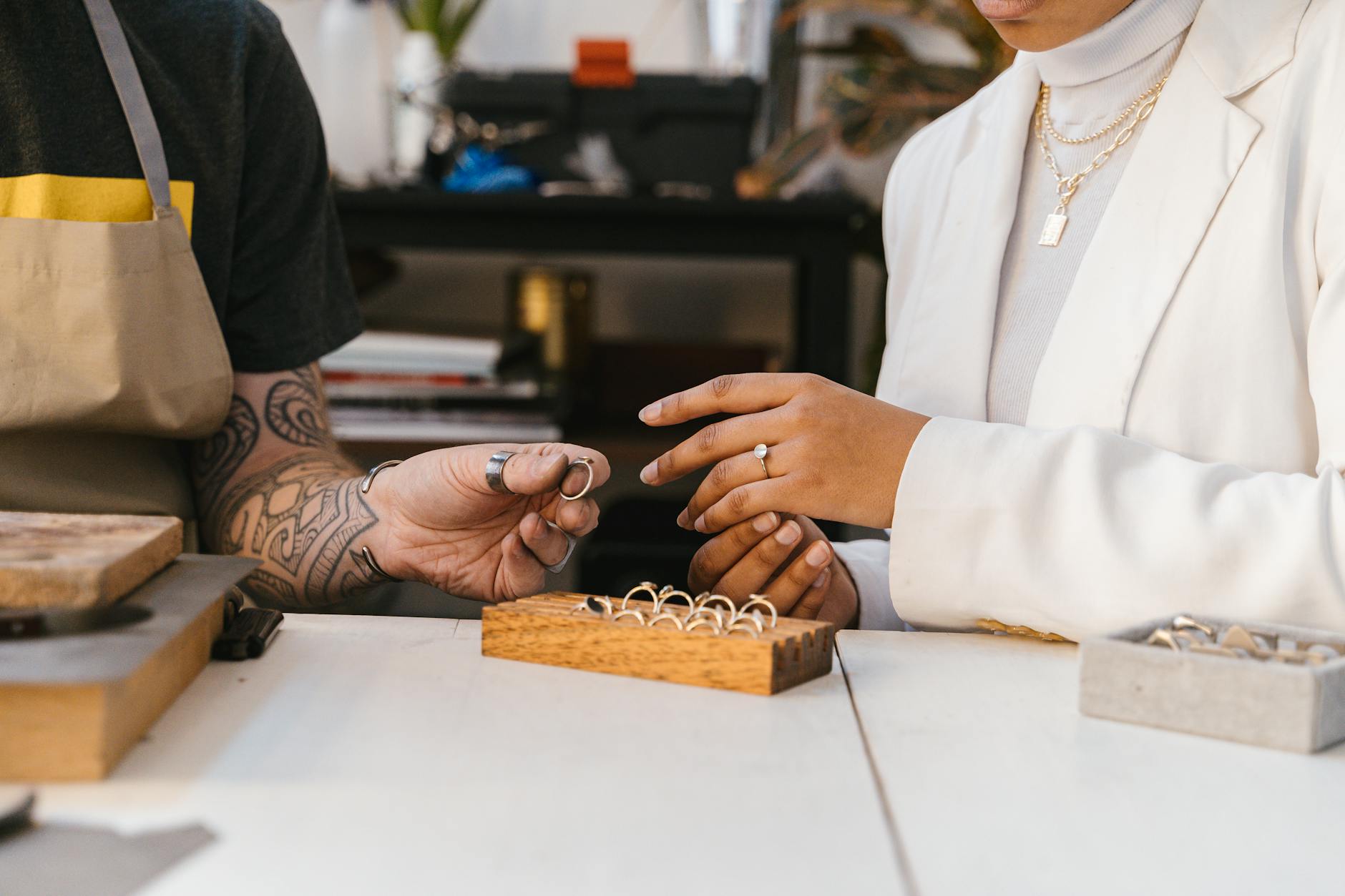
When buying handmade pieces, the most practical approach is to request documentation of the creation process. A reputable jeweler will provide detailed photos of your piece in various stages—sketches, metal before setting, stone under loupe, final product. They’ll also explain their material sourcing, their apprenticeship and credentials, and their warranty or modification policy. This transparency is not a luxury add-on; it’s baseline due diligence for any significant purchase. The key tradeoff to understand is timeline versus customization.
A factory ring ships in two weeks; a handmade piece typically requires 4-12 weeks depending on complexity. Some people view this delay as a drawback, but it actually reflects the reality of quality work. If a jeweler promises a custom engagement ring in two weeks, that’s a sign they’re cutting corners or pre-producing components rather than crafting your piece individually. Additionally, handmade pieces sometimes require more care and professional maintenance than factory rings, because the materials and construction methods can be more delicate or less standardized. Your custom ring might need periodic re-polishing from the original craftsperson to maintain its original finish.
Common Pitfalls and Limitations of the Handmade Movement
One significant limitation: not all handmade jewelry is objectively better than all factory jewelry. A master craftsperson’s work is genuinely superior, but a mediocre handmade piece can be worse than a well-engineered factory design. The handmade label alone does not guarantee durability or beauty. Some craftspeople lack formal training, have inconsistent quality control, or use sloppy techniques that fail within a few years. Before committing to a significant purchase, verify the jeweler’s reputation through multiple channels—client testimonials, photos of finished work, credentials or apprenticeships, and if possible, in-person examination of their pieces.
Another warning: the artisanal movement has created a romanticized mythology around handwork that can obscure real technical issues. A hand-forged setting is not automatically stronger than a precisely machined one; sometimes the opposite is true. A craftsperson working at their forge may introduce inconsistencies that a CNC machine would eliminate. The value of handmade work lies in customization, uniqueness, and the craftsperson’s individual expertise—not in some abstract superiority of hand labor over machinery. If you’re paying handmade prices, you should be paying for customization and provenance, not for the mystical properties of human hands.
The Role of Sustainable and Ethical Sourcing
Handmade jewelry often aligns with ethical sourcing practices because smaller craftspeople typically have more control over their supply chains. A artisanal jeweler can verify that their gold comes from a specific mine or recycled source, and they can ensure their diamonds are conflict-free and lab-verified. Factory production creates distance between the final product and material origin, making it harder to trace sourcing. This transparency has become important enough that some people now view handmade pieces as a more responsible choice, even if they cost more.
That said, handmade does not automatically mean sustainable. Some craftspeople use outdated techniques that waste significant material or use harsh chemical processes without proper containment. Conversely, some factory producers have invested heavily in sustainable practices, recycled material streams, and waste reduction. The handmade label is not a shortcut to ethical evaluation; you still need to ask specific questions about sourcing, waste practices, and labor conditions.
The Future of Handmade in a Digital Age
The future of handmade jewelry appears stable because the defining value proposition—customization and individual provenance—cannot be replicated by industrial production, regardless of efficiency gains. Even as factory techniques improve, they remain optimized for scale and standardization. A machine cannot attend to the specific optical properties of your grandmother’s diamond, or adjust a setting to match your exact finger width, or incorporate your personal design vision in real-time conversation with the craftsperson.
The challenge ahead is distinguishing genuine handcraft from marketing fiction as demand continues to grow. More consumers will seek out handmade pieces, but more fraudulent claims will also emerge. The jewelers and craftspeople who thrive will be those who embrace radical transparency about their process and resist the pressure to scale up in ways that compromise their craft. In a world of digital reproductions and algorithmic production, genuine human-made objects have become genuinely scarce—and that scarcity, grounded in real skill and attention, appears to be permanent.
Conclusion
Human-made jewelry is having a moment because the contrast between artisanal and factory production has become genuinely visible and measurable. Consumers now understand that handcrafted pieces hold value differently, wear differently, and carry meaning that mass-produced items cannot replicate. The premium prices associated with bespoke work reflect real differences in durability, customization, and investment potential, not just marketing narratives.
If you’re considering a handmade piece, the path forward is straightforward: verify the craftsperson’s reputation, request documentation of the creation process, understand your timeline and maintenance requirements, and pay for customization and provenance rather than for the mystique of handwork. The handmade movement is not a temporary trend—it represents a fundamental shift in how people value objects in an age of disposability. That shift will only deepen as more consumers recognize that the things we live with deserve the same intentionality we’ve started to demand from every other part of our lives.